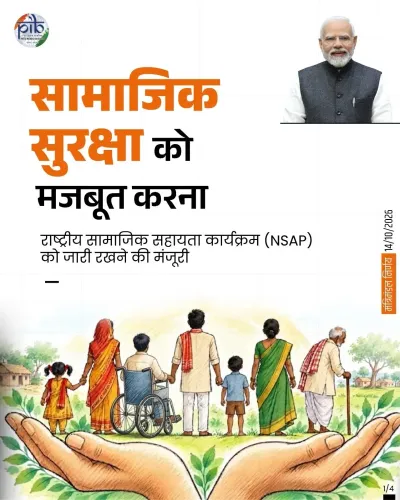
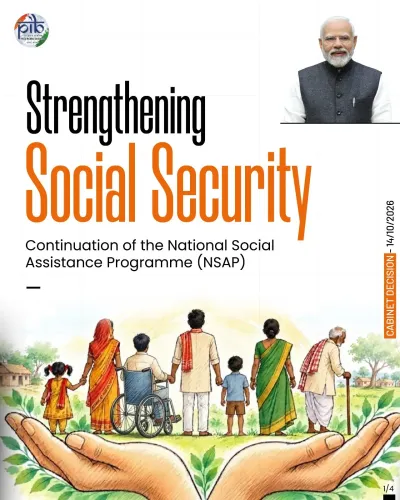
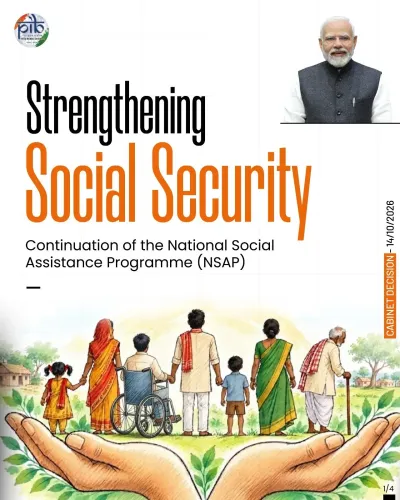
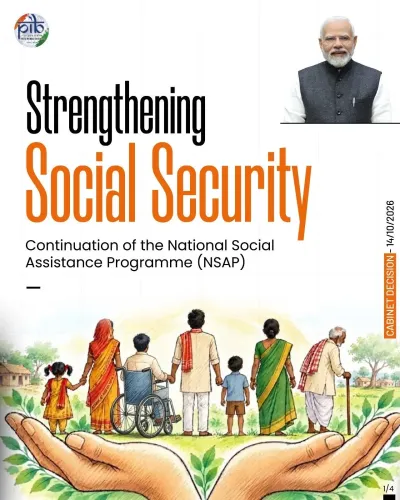
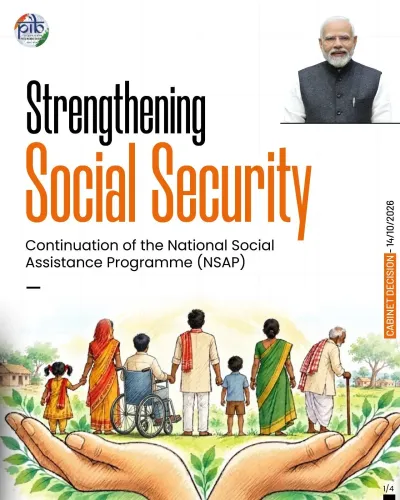
Cabinet Clears NSAP Continuation With ₹53,428 Cr Outlay
Synopsis
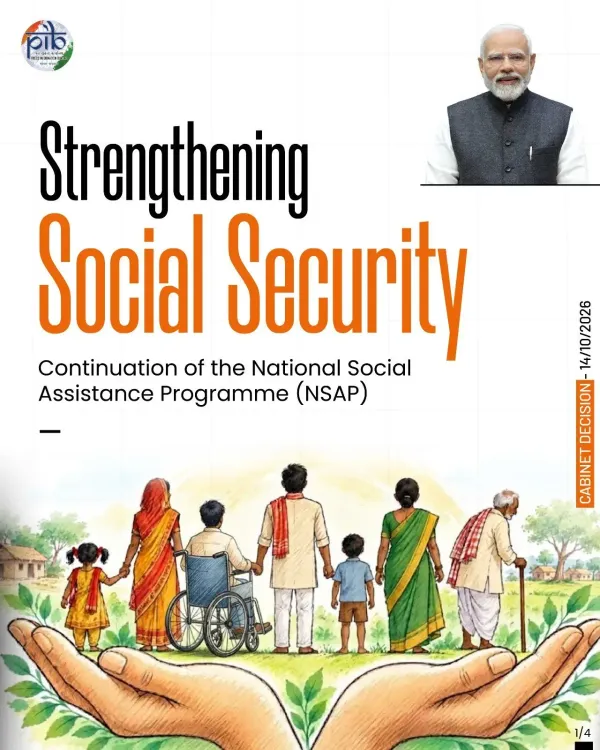
The Union Cabinet has approved the continuation of the National Social Assistance Programme (NSAP) with a ₹53,428 crore outlay for 2026–31. The scheme provides non-contributory pensions to 3.20 crore elderly, widows, and disabled beneficiaries across all 36 States and Union Territories.
Key Takeaways
The Union Cabinet approved continuation of NSAP on October 14, 2026 , under PM Narendra Modi .
Total approved outlay is ₹53,428 crore spanning five fiscal years: 2026–27 to 2030–31 .
The programme covers 3.20 crore beneficiaries — elderly, widows, and persons with disabilities — across all 36 States and UTs .
NSAP is a non-contributory, centrally sponsored pension scheme launched in August 1995 and restructured in 2011–12 .
Implementation guidelines and disbursement details will be issued by the Ministry of Rural Development .
A social safety net covering 3.20 crore of India's most vulnerable citizens — elderly, widows, and persons with disabilities — got a five-year lifeline on Wednesday, October 14, 2026, as the Union Cabinet, under Prime Minister Narendra Modi, approved the continuation of the National Social Assistance Programme (NSAP) with a total outlay of ₹53,428 crore for the period 2026–27 to 2030–31. Union Parliamentary Affairs Minister Kiren Rijiju announced the decision on X, flagging it as a flagship #CabinetDecision.
What NSAP is and who it reaches
Launched in August 1995, the National Social Assistance Programme is a centrally sponsored, non-contributory pension scheme administered by the Ministry of Rural Development. It delivers monthly cash transfers directly to below-poverty-line beneficiaries who meet age or disability eligibility criteria — no premiums, no paperwork beyond proof of identity and income status. The scheme was significantly restructured in 2011–12, expanding coverage and modestly raising pension amounts. It now reaches beneficiaries across all 36 States and Union Territories.
The three primary beneficiary groups are destitute senior citizens, widows, and persons with severe disabilities. For many, the NSAP pension is the only guaranteed monthly income they receive — making each renewal cycle a consequential policy moment, not a formality.
Five years, ₹53,428 crore, 3.20 crore lives
The approved outlay of ₹53,428 crore over five years represents the central government's commitment to sustaining unconditional cash transfers through the end of the decade. The beneficiary base of 3.20 crore spans every corner of the country, from remote northeastern districts — including those in Rijiju's home state of Arunachal Pradesh — to dense urban pockets in large states.
Successive governments have treated NSAP as a non-negotiable floor in India's social protection architecture. The current Cabinet approval continues that multi-year funding tradition, signalling that the programme's core structure — direct, unconditional pension to the poorest — remains intact under the Modi government's third term.
What follows the Cabinet nod
A Cabinet green-light is the starting gun, not the finish line. The Ministry of Rural Development will now issue detailed implementation guidelines covering disbursement timelines, Aadhaar-linked payment protocols, and any revised eligibility norms. State governments — many of which top up central NSAP pensions from their own budgets — will factor the renewed central commitment into their own budget-making for the coming fiscal cycle.
With demographic pressure mounting — India's elderly population is growing faster than at any point in its post-independence history — the scale and consistency of NSAP funding will increasingly define whether the country's social floor holds or frays at the edges.
Point of View
Giving state governments confidence to plan matching top-ups. The ₹53,428 crore figure, averaged over five years, reflects continuity rather than a step-change expansion, suggesting the government's priority is programme stability over structural reform. As India's elderly demographic grows, the adequacy of monthly pension amounts — not just the scheme's survival — will become the sharper political and humanitarian question heading into the next electoral cycle. Rijiju's role in broadcasting the decision underscores the Cabinet's intent to position welfare continuity as a visible governance achievement.
NationPress
14 Oct 2026
Frequently Asked Questions
What is the National Social Assistance Programme (NSAP)?
NSAP is a centrally sponsored, non-contributory pension scheme launched in August 1995 by the Ministry of Rural Development. It provides monthly cash assistance to below-poverty-line elderly citizens, widows, and persons with disabilities across India.
How much money has been approved for NSAP and for how long?
The Union Cabinet approved a total outlay of ₹53,428 crore for NSAP covering five years, from 2026–27 to 2030–31.
How many people benefit from NSAP?
The programme will benefit 3.20 crore beneficiaries spread across all 36 States and Union Territories of India.
Who is eligible for NSAP benefits?
NSAP targets below-poverty-line beneficiaries in three categories: destitute elderly persons, widows, and persons with severe disabilities, subject to eligibility criteria set by the Ministry of Rural Development.
What happens after the Cabinet approves NSAP continuation?
The Ministry of Rural Development will issue detailed implementation guidelines covering disbursement protocols, Aadhaar-linked payment processes, and eligibility norms. State governments will also incorporate the renewed central commitment into their own budgetary planning for top-up contributions.