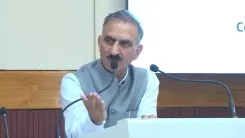
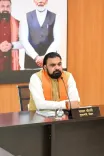
CM Mohan Yadav Hails Cabinet Nod for PM Viksit Gram Swaraj Yojana
Synopsis
The Union Cabinet under PM Modi has approved the Pradhan Mantri Viksit Gram Swaraj Yojana for 2026–31, targeting stronger village-level governance. MP CM Dr. Mohan Yadav welcomed the decision as a key step in realising the Viksit Bharat vision at the grassroots.
Key Takeaways
The Union Cabinet chaired by PM Narendra Modi approved the Pradhan Mantri Viksit Gram Swaraj Yojana on 28 October 2026 .
The scheme will run for five years, from 2026–27 to 2030–31 , focusing on strengthening rural governance and Panchayati Raj institutions.
Mohan Yadav publicly welcomed the cabinet decision and linked it to the broader Viksit Bharat vision.
The yojana builds on the Rashtriya Gram Swaraj Abhiyan approved in 2018 , continuing India's long-term investment in local self-government capacity.
State-level implementation guidelines and fund releases are the critical next steps to watch as the scheme year approaches.
Madhya Pradesh , with one of India's largest rural populations, stands to be a significant beneficiary of the new scheme.
Rural governance in India is about to get a structured, five-year push — and Madhya Pradesh Chief Minister Dr. Mohan Yadav wants every village to feel it. On Wednesday, 28 October 2026, Dr. Yadav took to X to welcome a landmark cabinet decision: the Union Cabinet, under Prime Minister Narendra Modi, has approved the 'Pradhan Mantri Viksit Gram Swaraj Yojana' for implementation from 2026–27 to 2030–31.
In his post, Dr. Yadav called it 'ग्रामीण सुशासन को सशक्त बनाने की दिशा में महत्वपूर्ण पहल' — 'an important initiative in the direction of empowering rural governance' — and expressed gratitude to the Prime Minister for what he framed as a decisive step towards carrying the Viksit Bharat (Developed India) vision down to the village level.
What the Yojana Targets at the Village Level
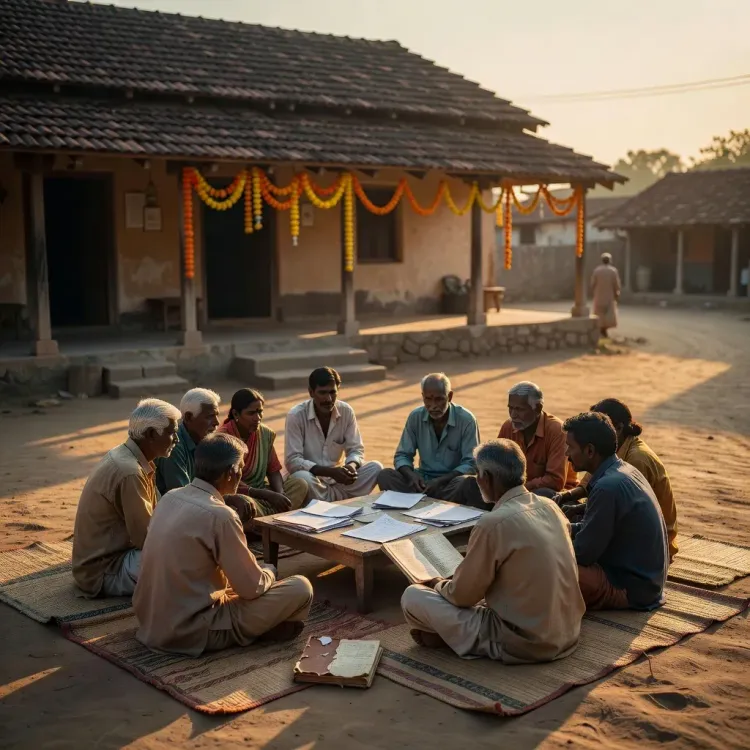
The scheme slots directly into India's Panchayati Raj architecture — the constitutionally mandated three-tier local self-government system that governs roughly 2.5 lakh gram panchayats across the country. Its stated aim is to consolidate governance capacity at the grassroots: elected representatives, village-level administrators, and the delivery pipelines that connect central funds to local beneficiaries.
This is not the first time New Delhi has committed to this goal. The Rashtriya Gram Swaraj Abhiyan, approved in 2018, laid earlier groundwork — funding training programmes, connectivity infrastructure, and digital tools for panchayats. The new yojana, spanning a fresh five-year cycle, signals that the government views that foundation as worth building upon rather than replacing.
The Viksit Bharat Thread Running Through the Decision
Prime Minister Modi's Viksit Bharat agenda — anchored on India reaching developed-nation status by 2047, the centenary of Independence — has increasingly emphasised 'last-mile' governance as non-negotiable. The argument is straightforward: macro growth targets mean little if village-level institutions cannot plan, spend, and account for public money competently.
Dr. Yadav's endorsement carries extra weight given that Madhya Pradesh is home to one of India's largest rural populations, and the state has historically been a significant recipient of centrally sponsored panchayat-strengthening funds. For the state's village bodies, the next five years of structured central support could translate into better-staffed panchayat offices, improved grievance redressal, and faster convergence of welfare scheme delivery.
What Comes Next: Guidelines, Funds, and State Roll-Out
Cabinet approval is the starting gun, not the finish line. The real test will come when the Ministry of Panchayati Raj releases state-level implementation guidelines and the first tranche of scheme funds — steps that typically follow within months of a cabinet nod. States will then need to map their existing panchayat-strengthening programmes onto the new framework to avoid duplication and maximise absorption.
Observers will watch whether the yojana sets measurable governance benchmarks — audit completion rates, panchayat meeting frequency, asset-mapping progress — or remains a broad capacity-building fund. The difference between those two designs has historically determined whether such schemes leave a traceable impact or fade into administrative paperwork.
Five years, thousands of villages, one clear mandate: make local self-government work. The clock starts in 2026–27.
Point of View
The cabinet signals that the 2047 development timeline cannot be met from the top down alone. For BJP-governed states like Madhya Pradesh, swift endorsement by CM Yadav also serves a political function: it ties state leadership visibly to a nationally branded flagship. The scheme's real test will be whether it embeds measurable accountability benchmarks into village-level governance, or becomes another well-funded capacity-building effort that struggles to convert outlay into outcomes.
NationPress
28 Oct 2026
Frequently Asked Questions
What is the Pradhan Mantri Viksit Gram Swaraj Yojana?
The Pradhan Mantri Viksit Gram Swaraj Yojana is a central government scheme approved by the Union Cabinet to strengthen rural governance and Panchayati Raj institutions across India. It is scheduled to run from 2026–27 to 2030–31.
When was PM Viksit Gram Swaraj Yojana approved?
The Union Cabinet approved the scheme on 28 October 2026 under the chairmanship of Prime Minister Narendra Modi.
How is this scheme different from the Rashtriya Gram Swaraj Abhiyan?
The Rashtriya Gram Swaraj Abhiyan was approved in 2018 and targeted foundational panchayat capacity, including digital tools and training. The new PM Viksit Gram Swaraj Yojana is a fresh five-year cycle that continues and potentially expands on those objectives within the Viksit Bharat framework.
How does this scheme connect to Viksit Bharat?
The Viksit Bharat vision aims to make India a developed nation by 2047. The new scheme attempts to embed that ambition at the village level by building the administrative and governance capacity of panchayats — the institutions closest to rural citizens.
What will Madhya Pradesh gain from the PM Viksit Gram Swaraj Yojana?
Madhya Pradesh, which has one of India's largest rural populations, is expected to benefit from improved panchayat capacity, better-staffed village offices, and stronger convergence of welfare scheme delivery over the five-year scheme period.