HP CM Office Directs PG/SS Policy Revamp for Job Trainee Doctors
Synopsis
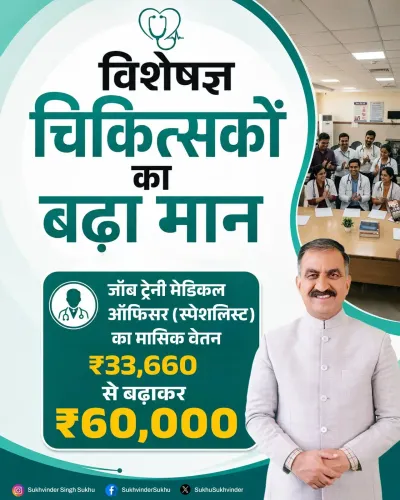
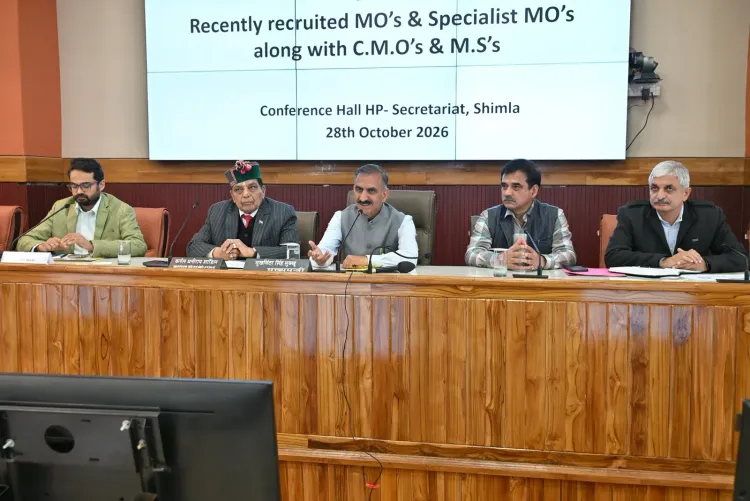
The Himachal Pradesh Chief Minister's Office met newly appointed medical officers on October 28, 2026, and directed the health department to amend the PG/SS policy so that Job Trainee Medical Officers qualify under the 66.6 percent in-service GDO quota for postgraduate seats.
Key Takeaways
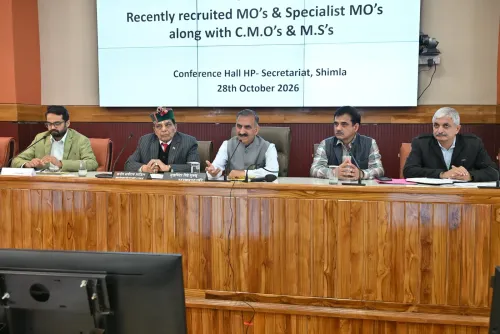
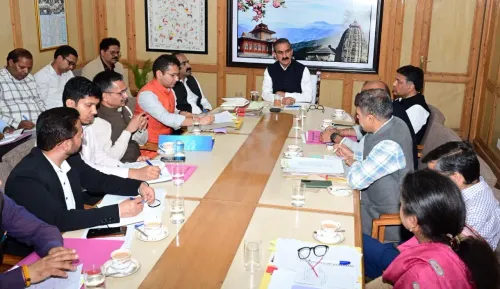
The Chief Minister's Office of Himachal Pradesh held a dialogue with newly appointed medical officers and super-specialist medical officers on October 28, 2026 .
The health department was directed to amend the PG/SS policy to include Job Trainee Medical Officers under the 66.6 percent quota reserved for in-service General Duty Officers.
The move aims to provide structured postgraduate and super-specialist upgrade pathways to contractual or trainee government doctors.
The policy correction addresses a friction point that can drive government doctors out of the public health system after their training.
Himachal Pradesh faces chronic specialist shortages in district and sub-district hospitals, making retention incentives a strategic priority.
A direct conversation between Himachal Pradesh's Chief Minister's Office and newly appointed medical officers and super-specialist medical officers on Wednesday, October 28, 2026 has set off a tangible policy correction — one that could reshape career pathways for hundreds of government doctors across the state.
The 66.6% Quota at the Centre of the Debate
The Chief Minister's Office announced that the health department has been directed to carry out 'necessary amendments' in the PG/SS (Post-Graduate / Super-Specialist) policy. The specific trigger: Job Trainee Medical Officers were not being accommodated within the 66.6 percent quota reserved for in-service General Duty Officers (GDOs) seeking PG and super-specialist seats. The post stated the directive clearly — fix the policy so that Job Trainee Medical Officers are brought under that reserved quota.
The distinction matters enormously on the ground. In-service GDOs who clear postgraduate entrance exams benefit from this reservation as a reward for serving in remote and under-resourced postings. If Job Trainee Medical Officers — a contractual or probationary category filling staffing gaps — are excluded from this quota, they effectively compete on a harder footing despite serving the public health system. Closing that gap is the stated intent of the directive.
Dialogue Over Diktat — The Method Behind the Meeting
The CMO framed this as a sanvaad — a dialogue, not a briefing. Newly recruited medical officers and super-specialists were in the room, and the policy instruction emerged from that exchange. It signals an approach where frontline doctors are positioned as policy stakeholders, not just recipients of orders.
Super-specialist Medical Officers are a particularly scarce resource in a hill state like Himachal Pradesh, where geography complicates both recruitment and retention. Engaging them at the point of onboarding — before disillusionment with career mobility sets in — is a deliberate retention signal.
What the Amendment Would Mean for Government Doctors
Once the amendment is carried out, Job Trainee Medical Officers serving under the state health department would be eligible to apply for PG and super-specialist seats under the 66.6 percent in-service GDO quota. This effectively opens a structured upgrade pathway: serve the state, earn the right to specialise within the state system, and return that expertise to public hospitals — rather than exit the government service for a private career after training.
The directive, if implemented swiftly, could reduce one of the most cited friction points among government doctors: the perception that contractual or trainee service years do not count toward career advancement.
For a state that has consistently struggled to staff its district and sub-district hospitals with specialists, getting the incentive architecture right is not a bureaucratic footnote — it is the whole story.
Frequently Asked Questions
What is the 66.6 percent GDO quota in Himachal Pradesh medical policy?
It is a reservation of 66.6 percent of postgraduate and super-specialist medical seats for in-service General Duty Officers (GDOs) employed by the Himachal Pradesh government, rewarding doctors who serve in state facilities — often in remote postings — with priority access to further specialisation.
Who are Job Trainee Medical Officers in Himachal Pradesh?
Job Trainee Medical Officers are doctors appointed on a contractual or probationary basis to fill staffing shortfalls in government hospitals in Himachal Pradesh. They perform general duties but have historically not been classified under the in-service GDO category for quota purposes.
What change did the HP Chief Minister's Office direct on October 28, 2026?
The Chief Minister's Office of Himachal Pradesh directed the health department to amend the PG/SS policy so that Job Trainee Medical Officers are eligible under the 66.6 percent in-service GDO quota for postgraduate and super-specialist seats.
Why does this policy matter for Himachal Pradesh hospitals?
Himachal Pradesh faces a chronic shortage of medical specialists, especially in district and sub-district hospitals. Giving Job Trainee Medical Officers a clear pathway to specialise within the government system improves retention and reduces the incentive for doctors to exit public service after their training.
Has the PG/SS policy amendment been implemented yet?
As of October 28, 2026 , the Chief Minister's Office has issued the directive to the health department. The formal amendment process is yet to be completed.