HP CM Office Reviews Health Dept, Announces NPA for Super-Specialists
Synopsis
The Chief Minister's Office of Himachal Pradesh announced on June 19, 2026 that the state will provide Non-Practicing Allowance to super-specialty doctors, a decision taken after a Health Department review meeting that also assessed ongoing medical recruitment progress.
Key Takeaways
The Chief Minister's Office of Himachal Pradesh announced a Non-Practicing Allowance (NPA) for super-specialty doctors in the state's public health system on June 19, 2026 .
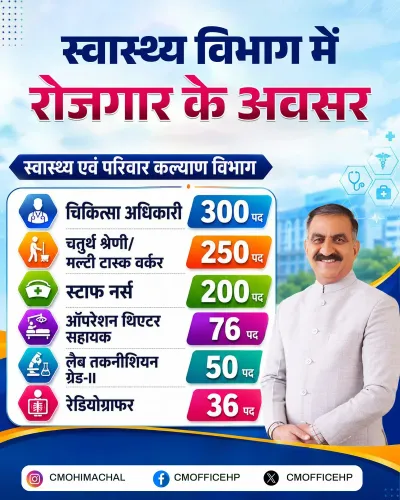
The announcement followed a Health Department review meeting that assessed the current state of health services and the progress of ongoing recruitment drives.
NPA is designed to compensate super-specialists for foregoing private practice, incentivising exclusive commitment to government service.
The move aligns with a broader pattern across northern hill states using targeted allowances to attract and retain high-skill doctors in difficult terrain.
Exact NPA rates, eligibility criteria, and budgetary allocation have not yet been disclosed.
Rural and semi-urban patients in Himachal Pradesh stand to benefit if the allowance successfully improves super-specialist availability at district-level public hospitals.
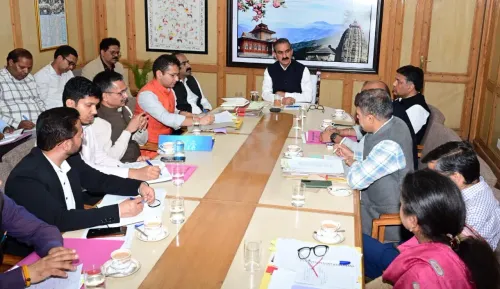
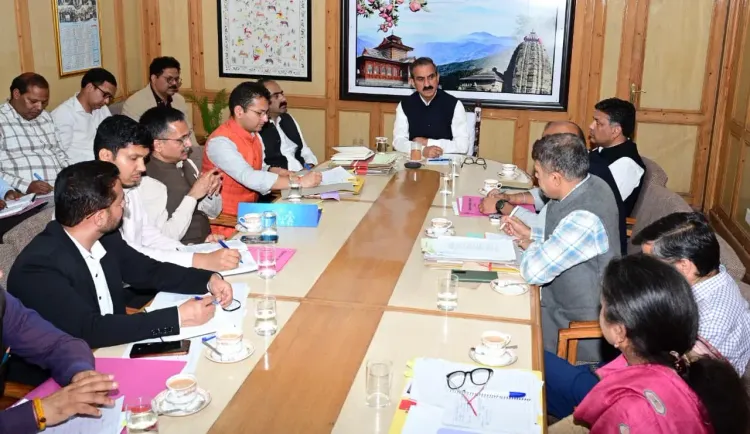
The Chief Minister's Office of Himachal Pradesh on Friday, June 19, 2026 announced that the state government will provide a Non-Practicing Allowance (NPA) to super-specialty doctors in the public health system, a decision that emerged from a review meeting of the Health Department where officials assessed the current status of health services and the progress of ongoing recruitment drives.
The post, shared by the official CMO Himachal Pradesh account, stated in Hindi: 'स्वास्थ्य विभाग की समीक्षा बैठक में मौजूदा स्थिति तथा चल रही भर्ती प्रक्रिया की प्रगति का जायजा लिया' — ('The current situation and the progress of the ongoing recruitment process were reviewed at the Health Department review meeting') — followed by the announcement that the state government will provide Non-Practicing Allowance to super-specialty doctors to further strengthen health services in Himachal Pradesh.
Context
Himachal Pradesh is a northern hill state where dispersed rural populations and difficult terrain have historically made specialist healthcare access a persistent challenge. Retaining qualified super-specialists in government hospitals — particularly at the district level — has been an ongoing concern for the Health and Family Welfare Department, which oversees public hospitals, medical recruitment, and state-level tertiary care policy. The review meeting assessed both the ground-level status of health services and the trajectory of active recruitment processes, signalling a dual-track approach: filling vacancies while simultaneously improving compensation to make public-sector roles more attractive.Policy Backdrop
The Non-Practicing Allowance is not a new instrument in Indian health administration. Central Government doctors have long received NPA under central health service rules as a mechanism to ensure exclusive commitment to public-sector service — effectively compensating specialists for foregoing private practice income. Several Indian states have extended or adapted this model to address human-resource gaps in their own systems, particularly in hilly and remote geographies. Himachal Pradesh's move follows a pattern visible across northern hill states, where post-pandemic efforts to strengthen public tertiary care have led to targeted allowances and recruitment incentives aimed at drawing super-specialists away from better-paying private sector positions. The announcement places Himachal Pradesh within a broader national trend of states competing to retain high-skill medical professionals in the public system.Stakeholders and Impact
The primary beneficiaries of the NPA announcement are super-specialty doctors currently serving in or being recruited into the state's public health infrastructure. For rural and semi-urban patients across Himachal Pradesh — who often travel long distances to access tertiary care — the downstream benefit would be improved availability of specialists at government facilities closer to home. The ongoing recruitment drive, whose progress was reviewed at the meeting, adds urgency to the compensation announcement: attracting candidates to apply is only half the challenge; ensuring they join and remain in government service is where allowances like NPA become decisive. Super-specialty disciplines such as cardiology, neurology, oncology, and nephrology are among those where public-sector vacancies tend to be most acute in hill states.What's Next
The immediate questions that will determine the real-world impact of this announcement are the exact NPA rates, the eligibility criteria across different super-specialty disciplines, and the budgetary allocation the state government assigns to the scheme. The outcomes of the current recruitment cycle — including final appointment numbers — will serve as an early indicator of whether the allowance is translating into actual staffing gains at district hospitals. If the NPA structure is competitive and the recruitment pipeline delivers, Himachal Pradesh could see measurable improvements in super-specialty outpatient and procedural volumes at public facilities — a metric that health administrators and patient advocacy groups will be watching closely in the months ahead.Point of View
The CMO signals an intent to move beyond ad hoc recruitment toward a systemic compensation framework. The move fits a post-pandemic policy arc in which several Indian states have recognised that filling vacancies alone is insufficient without addressing the income gap between public and private practice. The real test will be in the implementation details — rates, eligibility, and budget — which will determine whether this becomes a model for other hill states or remains a well-intentioned declaration.
NationPress
22 Sept 2026
Frequently Asked Questions
What is Non-Practicing Allowance for doctors in India?
Non-Practicing Allowance (NPA) is a financial benefit paid to government doctors in lieu of private practice income, ensuring their exclusive commitment to public-sector service. It has long been part of central government health service rules and is now being extended by several state governments to super-specialty doctors.
Why is Himachal Pradesh giving NPA to super-specialty doctors?
Himachal Pradesh is introducing NPA for super-specialty doctors to strengthen retention and recruitment in the state's public health system, where difficult terrain and competition from the private sector have historically made it hard to keep specialists in government hospitals.
Which doctors will benefit from the HP government's NPA announcement?
Super-specialty doctors serving in or being recruited into Himachal Pradesh's public health infrastructure are the intended beneficiaries. Exact eligibility criteria across disciplines have not yet been officially specified.
What was reviewed at the Himachal Pradesh Health Department meeting on June 19 2026?
The review meeting assessed the current status of health services in the state and the progress of the ongoing medical recruitment process, according to the official CMO Himachal Pradesh post on X.
How does NPA help improve healthcare in hill states like Himachal Pradesh?
By compensating specialists for foregoing private practice income, NPA makes government postings financially viable for super-specialty doctors, improving their availability at district-level public hospitals and ultimately expanding access for rural and semi-urban patients in difficult terrain.