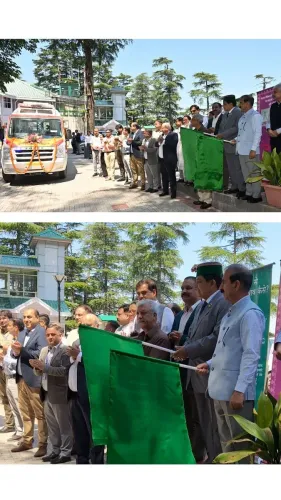
HP CM Office Flags ALS Ambulances as Mobile Life-Support Hubs
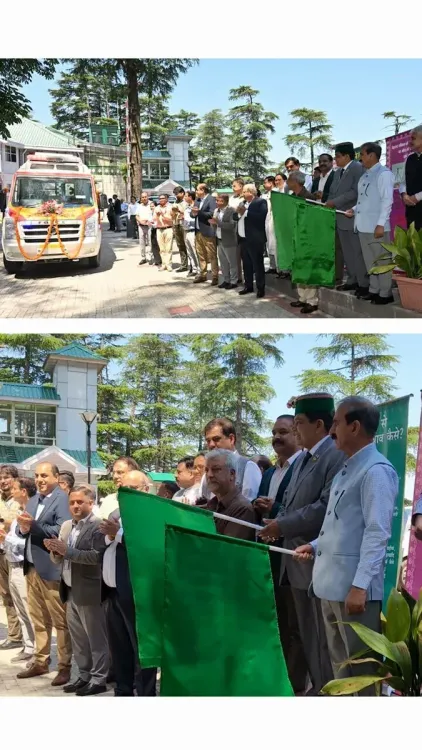
Synopsis
The Chief Minister's Office of Himachal Pradesh has declared Advanced Life Support ambulances a top state priority, describing them as mobile life-saving centres that will deliver advanced medical care at emergency sites — a move aimed at bridging the critical gap in pre-hospital care across the state's difficult mountain terrain.
Key Takeaways
The Chief Minister's Office of Himachal Pradesh announced on 8 June 2026 that ALS ambulances are the government's highest health priority.
ALS ambulances are described as mobile life-saving centres capable of providing advanced medical care at the scene of an emergency, not just during transit.
The announcement targets a long-standing gap in emergency care caused by Himachal Pradesh's mountainous terrain and dispersed rural population.
The state's emergency services are integrated with the 108 Emergency Response Service , India's flagship toll-free ambulance network.
Key details — including fleet size, district-wise deployment, and procurement timelines — have not yet been officially disclosed.
The policy aligns with a broader national trend of upgrading state ambulance fleets from basic to advanced life support under the National Health Mission .
The Chief Minister's Office of Himachal Pradesh declared on Monday, 8 June 2026 that Advanced Life Support (ALS) ambulances are a top government priority, describing them as mobile life-saving centres capable of delivering critical medical care at the scene of an emergency. The announcement, made via the official CMO account, underscores the state government's stated commitment to protecting the health and lives of every citizen.
Context
The post, written in Hindi, states: 'जन-जन के स्वास्थ्य एवं जीवन की सुरक्षा हमारी सरकार की सर्वोच्च प्राथमिकता है' ('Protecting the health and life of every person is our government's highest priority'). It goes on to describe ALS ambulances as 'चलते-फिरते जीवनरक्षक केंद्र' — 'moving life-saving centres' — that will be capable of providing advanced and rapid medical care to patients at the site of an incident. The emphasis on on-scene stabilisation signals a deliberate policy shift toward pre-hospital care in a state where mountainous terrain routinely extends transport times to hospitals.
Himachal Pradesh is a northern Himalayan state whose dispersed rural population and difficult road network make rapid emergency response particularly challenging. When minutes matter in cardiac events, trauma, or stroke, the distance to the nearest district hospital can be the difference between survival and death.
Policy Backdrop
India's emergency ambulance infrastructure is anchored in the 108 Emergency Response Service, a toll-free network first piloted in Andhra Pradesh in 2005 and later adopted by Himachal Pradesh. The service began with basic life support vehicles and has progressively upgraded selected units to Advanced Life Support standards, a process encouraged under successive health action plans linked to the National Health Mission — the central government programme (formerly the National Rural Health Mission, launched in 2005) that funds state-level emergency transport and pre-hospital care.
ALS ambulances differ from standard units in their capacity to carry out time-critical interventions — including defibrillation, advanced airway management, and intravenous drug administration — before the patient reaches a hospital. For hilly states, where road journeys to referral centres can stretch to an hour or more, this on-scene capability is especially valuable. State governments across India have been expanding ALS fleets precisely because longer transit times increase the clinical value of stabilising a patient at the point of emergency.
Stakeholders and Impact
The primary beneficiaries of an expanded ALS fleet are rural residents of Himachal Pradesh, along with road accident victims and patients experiencing cardiac or neurological emergencies in remote areas. District health services will need to integrate any new ALS vehicles with existing 108 call-centre dispatch protocols to ensure the advanced units are routed efficiently.
Frontline paramedics and emergency medical technicians staffing these ambulances will also require specialised training to operate ALS equipment, meaning the announcement has implications for the state's health workforce pipeline as well as its vehicle fleet.
What's Next
The CMO's statement does not specify the number of new ALS ambulances being sanctioned, the districts earmarked for deployment, or the procurement and commissioning timeline. Clarity on these details is expected to emerge through state budget documents or formal health department releases. Observers will watch whether the commitment translates into measurable fleet expansion and whether district-level deployment schedules are published to allow public accountability.
For a state that has long grappled with the geography-driven gap in emergency care, a well-resourced ALS rollout could meaningfully reduce preventable deaths — but the scale and pace of implementation will determine how far the policy intent converts into lives saved on Himachal Pradesh's mountain roads.
Point of View
Where terrain is a genuine barrier to timely care, the policy direction is sound; the test will be whether the rhetoric is followed by verifiable fleet numbers and district deployment data. Until those specifics are public, the announcement remains a statement of intent rather than a measurable commitment.
NationPress
26 Oct 2026
Frequently Asked Questions
What is an ALS ambulance and how is it different from a normal ambulance?
An Advanced Life Support (ALS) ambulance carries specialised equipment and trained paramedics who can perform critical interventions — such as defibrillation, advanced airway management, and intravenous medication — at the scene of an emergency, whereas a basic ambulance primarily provides transport and first aid.
Why does Himachal Pradesh need more ALS ambulances?
Himachal Pradesh's mountainous terrain and dispersed rural settlements mean that reaching a hospital can take an hour or more; ALS ambulances allow paramedics to stabilise patients on the spot, reducing the risk of death or serious deterioration during long transit times.
What is the 108 Emergency Response Service in Himachal Pradesh?
The 108 service is India's toll-free emergency ambulance network, first piloted in Andhra Pradesh in 2005 and later adopted by Himachal Pradesh; it dispatches ambulances in response to emergency calls and has progressively added ALS-equipped vehicles to its fleet.
How many new ALS ambulances is the Himachal Pradesh government adding?
The Chief Minister's Office has not yet disclosed the exact number of new ALS ambulances being sanctioned; details on fleet size, districts, and timelines are expected in forthcoming state health department announcements.
Which government scheme funds ALS ambulances in Indian states?
The National Health Mission — the central government programme launched in 2005 — provides funding to states for emergency transport and pre-hospital care services, including the procurement and upgrading of ambulance fleets to Advanced Life Support standards.