HP CM Office launches 3T MRI at Chamiana super-speciality institute
Synopsis
The Himachal Pradesh government has commissioned a three-tesla MRI machine at Super Speciality Ayurvigyan Sansthan, Chamiana, eliminating the need for patients to travel to other hospitals for advanced diagnostic scans and strengthening in-state tertiary healthcare.
Key Takeaways
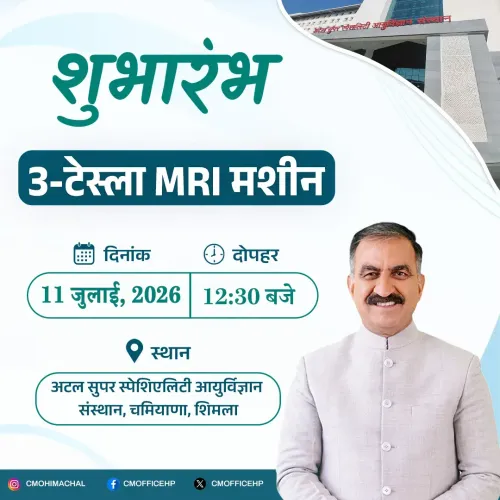
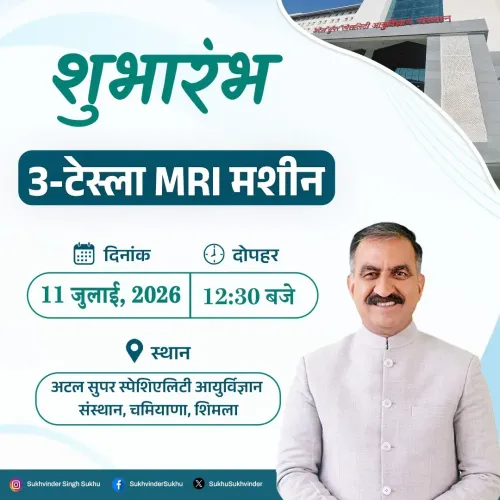
The Chief Minister's Office of Himachal Pradesh announced the launch of a three-tesla (3T) MRI machine on 11 July 2026 .
The machine has been installed at the Super Speciality Ayurvigyan Sansthan, Chamiana , a state-run tertiary care institute.
Patients will no longer need to visit other hospitals for MRI scans, reducing travel burden for those from remote hilly areas.
A 3T MRI provides higher-resolution imaging than standard units, improving diagnostic accuracy for neurological, oncological, and musculoskeletal conditions.
The move aligns with a broader pattern of hill states upgrading in-house diagnostic infrastructure to cut referrals to Chandigarh , Delhi , and PGIMER .
Further upgrades across other districts of Himachal Pradesh will depend on state budget allocations and health department tenders.
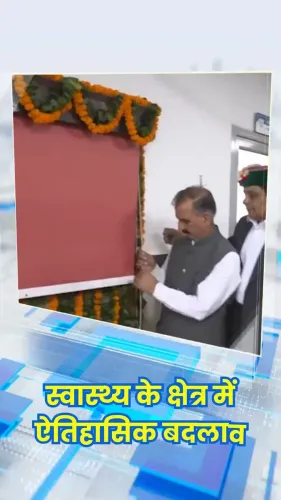
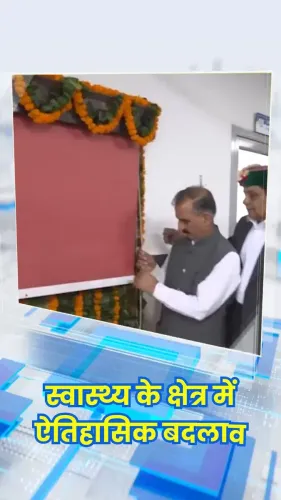
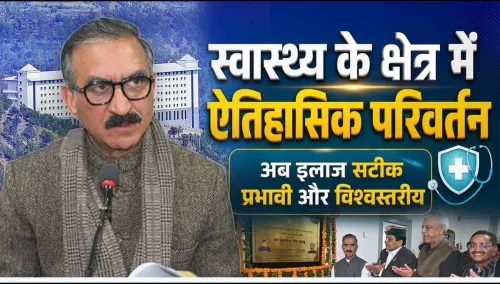
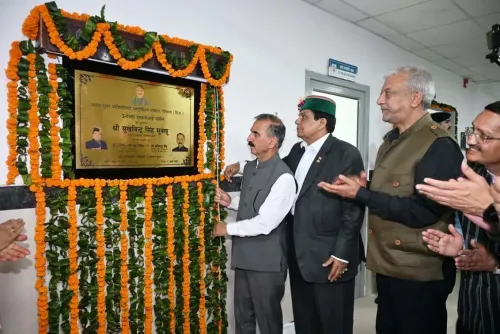
The Chief Minister's Office of Himachal Pradesh announced on Saturday, 11 July 2026 that the state government has commissioned a three-tesla (3T) MRI machine at the Super Speciality Ayurvigyan Sansthan, Chamiana, marking a significant upgrade to tertiary diagnostic care in the hill state.
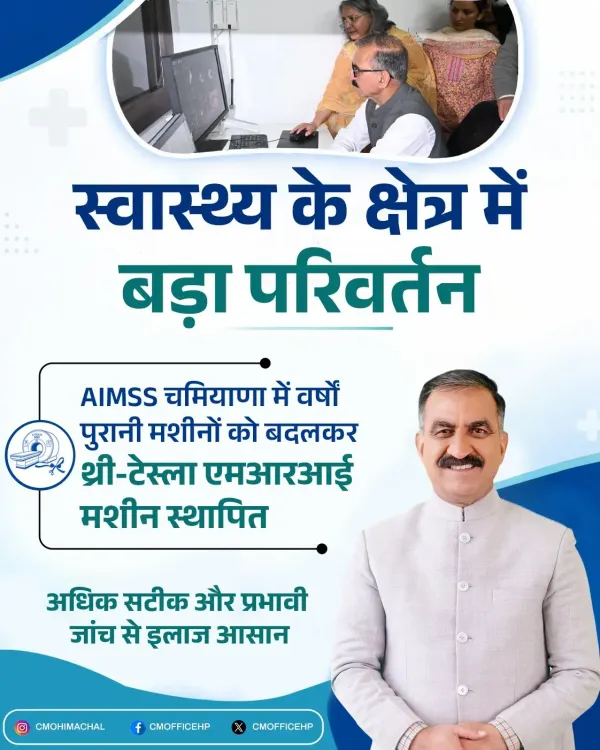
The official post, shared in Hindi, stated: 'स्वास्थ्य व्यवस्था की पहचान बेहतर स्वास्थ्य सुविधाओं से होती है' ('A health system is defined by better healthcare facilities'). It added that patients will no longer need to visit other hospitals for MRI scans, and that timely diagnosis will now be possible at the institute itself.
Context
The Super Speciality Ayurvigyan Sansthan at Chamiana was established to provide advanced tertiary care within Himachal Pradesh, reducing the dependence of patients on facilities outside the state. Prior to this installation, patients requiring high-field MRI scans often had to travel to referral centres, adding financial and logistical burden on families from remote and hilly areas.
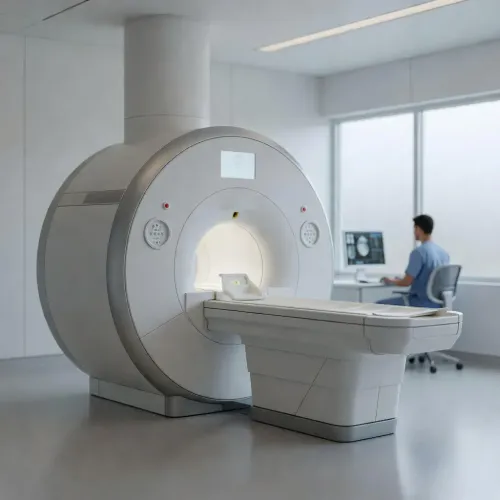
A 3T MRI machine — operating at three tesla magnetic field strength — offers significantly sharper imaging than standard 1.5T units, enabling more accurate diagnosis of neurological, musculoskeletal, and oncological conditions. Its commissioning at Chamiana brings this level of diagnostic capability within the state's own public health infrastructure.
Policy Backdrop
Indian hill states have progressively worked to install high-field MRI and CT scanners at district and super-speciality centres to reduce referrals to Chandigarh, Delhi, or PGIMER. Himachal Pradesh has followed this broader pattern by upgrading its own tertiary institutes rather than depending solely on central government hospitals.
This approach mirrors similar equipment roll-outs undertaken in Uttarakhand and Jammu and Kashmir as part of health infrastructure modernisation drives across India's mountainous regions, where terrain makes patient referrals especially burdensome.
Stakeholders and Impact
The most direct beneficiaries are patients from Himachal Pradesh's hilly and remote districts who previously had to undertake long journeys for MRI-based diagnostics. Timely access to 3T imaging at a state-run facility is expected to improve outcomes for conditions that require rapid diagnosis, including strokes, tumours, and spinal disorders.
The state health department and medical staff at Chamiana stand to handle a higher volume of complex cases in-house, potentially easing the referral load on external tertiary centres. Patients are also spared the out-of-pocket costs associated with private MRI facilities or inter-state travel.
What's Next
Attention will now turn to whether the Himachal Pradesh government extends similar diagnostic upgrades to other districts and state-run hospitals. Budget allocations and health department tenders for additional 3T MRI or CT units elsewhere in the state will be a key indicator of how far this infrastructure push extends.
Any subsequent data from the Himachal health directorate on diagnostic waiting times and patient footfall at Chamiana will offer a clearer picture of the machine's real-world impact on public healthcare delivery in the state.
Point of View
Measurable step in Himachal Pradesh's effort to build self-sufficient tertiary care rather than routing complex cases out of state. For a geographically challenging state where referrals to Chandigarh or Delhi impose real hardship on patients, in-situ high-field imaging carries genuine policy weight. The announcement fits a wider pattern of hill-state governments using equipment upgrades as visible proof of health governance, though the true test will be utilisation rates and maintenance continuity over time. Whether this remains a one-off installation or signals a systematic district-level rollout will define its lasting significance.
NationPress
10 Oct 2026
Frequently Asked Questions
What is the 3T MRI machine launched in Himachal Pradesh?
A three-tesla MRI machine is a high-field magnetic resonance imaging scanner that produces sharper and more detailed images than standard 1.5T units. The Himachal Pradesh government launched one at Super Speciality Ayurvigyan Sansthan, Chamiana, on 11 July 2026 to provide advanced diagnostics within the state.
Where is Super Speciality Ayurvigyan Sansthan Chamiana located?
Super Speciality Ayurvigyan Sansthan is located at Chamiana in Himachal Pradesh. It is a state-run tertiary care medical institute set up to deliver advanced healthcare services to patients across the hill state.
Will MRI scans at Chamiana be free for patients?
The post from the Chief Minister's Office does not specify whether scans will be free or subsidised. Patients should contact the hospital directly or check with the Himachal Pradesh health department for details on charges and eligibility.
Why did Himachal Pradesh patients need to go outside for MRI scans earlier?
Before this installation, the Super Speciality Ayurvigyan Sansthan at Chamiana did not have a high-field 3T MRI unit, so patients requiring advanced imaging were referred to hospitals in Chandigarh, Delhi, or PGIMER, adding significant travel and financial burden.
What other health infrastructure upgrades are planned in Himachal Pradesh?
No specific future upgrades have been officially announced alongside this launch. Observers will watch state budget allocations and health department tenders for additional MRI or CT units in other districts of Himachal Pradesh.