HP CM to Launch 3-Tesla MRI at Atal Super Speciality Shimla
Synopsis
The Himachal Pradesh Chief Minister will inaugurate a three-Tesla MRI machine at Atal Super Speciality Ayurvigyan Sansthan in Chamiyana, Shimla on 11 July 2026, boosting the state's public tertiary-care diagnostic capacity and reducing patient referrals to distant metros.
Key Takeaways
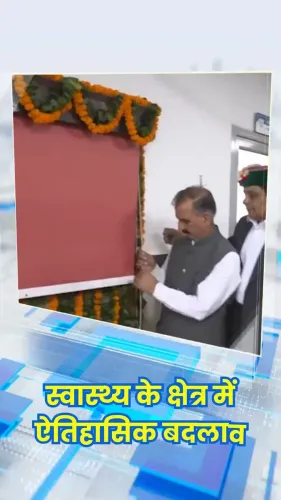
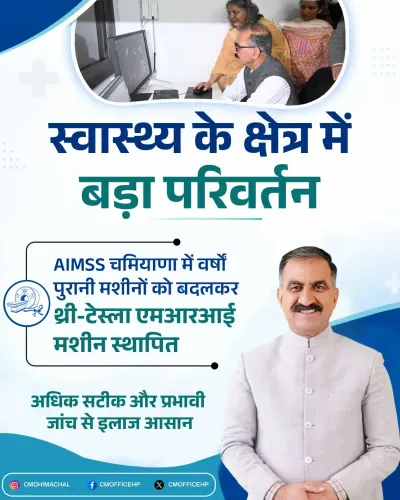
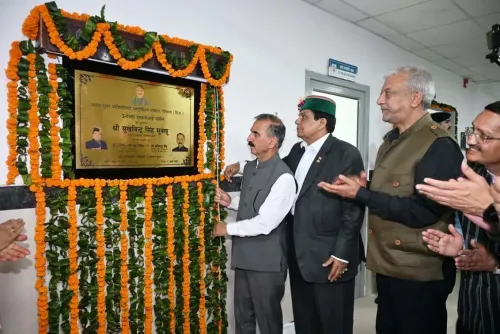
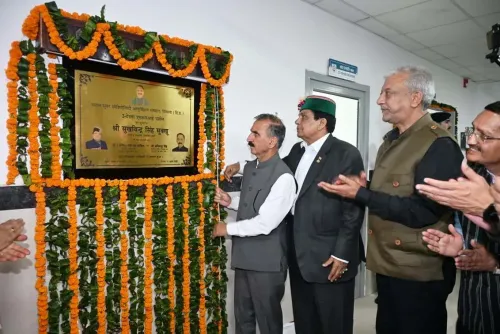
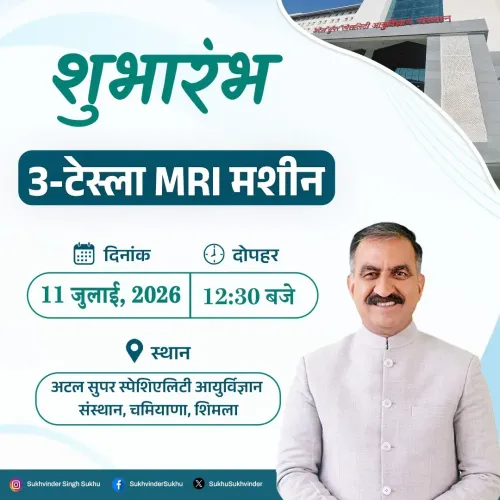
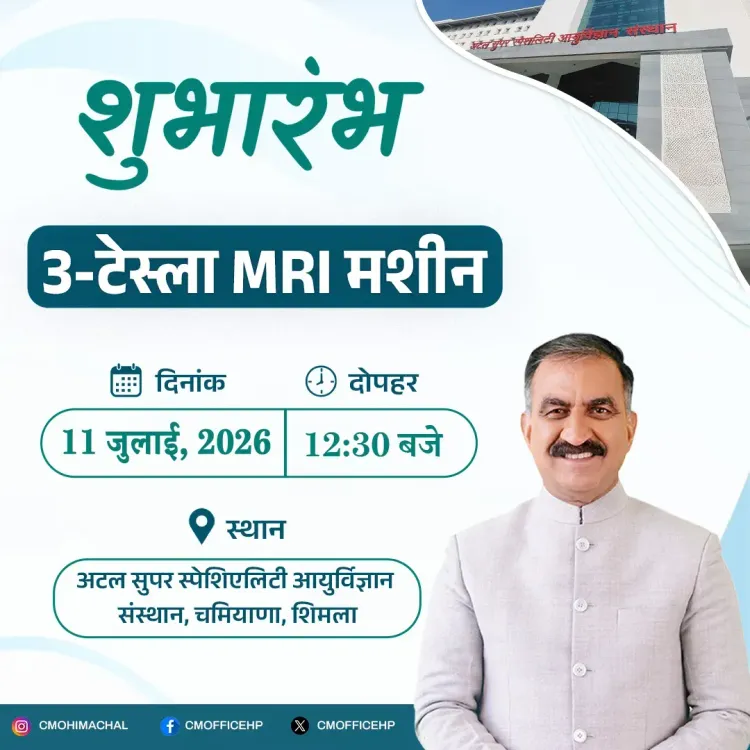
The Himachal Pradesh Chief Minister will inaugurate a three-Tesla MRI machine at Atal Super Speciality Ayurvigyan Sansthan, Chamiyana, Shimla on 11 July 2026 .
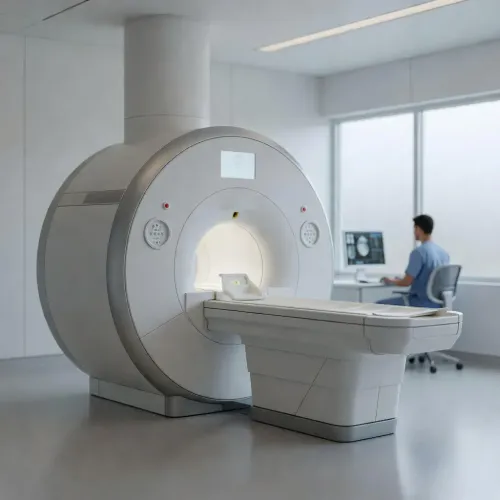
A 3T MRI offers sharper resolution and faster scan times than standard 1.5-Tesla machines, enabling more accurate diagnosis of neurological, oncological, and orthopaedic conditions.
The installation addresses a long-standing challenge in Himachal Pradesh : difficult terrain forces patients to travel to Delhi or Chandigarh for advanced imaging, adding cost and delay.
Atal Super Speciality Ayurvigyan Sansthan serves as a tertiary-care referral centre for patients across the state's hilly districts.
The move aligns with a nationwide pattern of state governments equipping public hospitals with high-field MRI scanners to strengthen in-house diagnostic capacity.
Further rollout to remote districts and possible integration with Ayushman Bharat digital health records are being watched as next steps.
The Chief Minister's Office of Himachal Pradesh announced on Saturday, 11 July 2026 that the Chief Minister will inaugurate a three-Tesla MRI machine at Atal Super Speciality Ayurvigyan Sansthan, Chamiyana, Shimla — marking a significant upgrade to the state's public tertiary-care diagnostic infrastructure.
Context
The official post, shared in Hindi, states: 'Aaj Atal Super Speciality Ayurvigyan Sansthan, Chamiyana, Shimla mein Three-Tesla MRI machine ka shubhaarambh karunga' ('Today I will inaugurate a Three-Tesla MRI machine at Atal Super Speciality Ayurvigyan Sansthan, Chamiyana, Shimla'). The announcement adds that this state-of-the-art facility will add 'new capability in the direction of accurate disease detection and effective treatment' — and that 'when advanced medical technology meets public service, it opens new possibilities for patients.'
Atal Super Speciality Ayurvigyan Sansthan in Chamiyana is a public tertiary-care institute in Shimla district designed to deliver advanced diagnostics and specialised treatment to patients from across Himachal Pradesh's hilly districts, many of whom have historically had to travel to metropolitan centres for high-end medical imaging.
Policy Backdrop
A 3-Tesla (3T) MRI is among the most powerful clinical magnetic resonance imaging systems in routine hospital use, offering sharper resolution and faster scan times than the more common 1.5-Tesla machines. Its installation in a government hospital in a Himalayan state is notable: terrain, altitude, and weather conditions have long made equipment logistics and patient referrals to plains-based metros a persistent challenge for Himachal Pradesh.
State governments across India have progressively equipped regional and district hospitals with high-field MRI scanners to strengthen in-house diagnostic capacity and reduce costly, time-consuming referrals. For a hill state like Himachal Pradesh, where a patient journey to Delhi or Chandigarh for an MRI scan can mean days of travel and significant out-of-pocket expense, localising such technology carries outsized public-health value.
Stakeholders and Impact
The primary beneficiaries are patients in the Shimla region and residents of Himachal Pradesh more broadly — particularly those suffering from neurological, orthopaedic, oncological, and cardiac conditions that require high-resolution imaging for diagnosis and treatment planning. Faster, more accurate local diagnostics can reduce delays between symptom onset and treatment commencement.
Medical staff at Atal Super Speciality Ayurvigyan Sansthan will gain access to a diagnostic tool that enables clearer imaging of soft tissue, the brain, spine, and joints. This can reduce the burden on outpatient referral chains and allow the institute to handle a wider range of complex cases in-house, strengthening its role as a regional centre of excellence.
What's Next
Observers will watch whether Himachal Pradesh extends the rollout of similar high-end imaging equipment to other district hospitals across the state, particularly in remote areas such as Lahaul-Spiti, Kinnaur, and Chamba. Integration with national digital health initiatives — including Ayushman Bharat digital health records and telemedicine networks — could further amplify the impact of the new machine by enabling remote radiologist consultations.
The inauguration signals the state government's intent to position public hospitals as credible alternatives to private diagnostic centres, a priority that aligns with the broader national push to make advanced healthcare accessible at the grassroots level.
Point of View
Particularly ahead of electoral cycles. The real test will be in sustained operationalisation: whether the machine is staffed with trained radiologists and maintained to capacity, or whether it joins a list of underutilised assets in government facilities. Integration with digital health infrastructure could be the differentiator that makes this investment durable.
NationPress
10 Oct 2026
Frequently Asked Questions
What is a three-Tesla MRI machine and why is it significant?
A three-Tesla MRI machine uses a magnetic field strength of 3 Tesla, roughly double that of the standard 1.5-Tesla scanners found in most hospitals, producing sharper, more detailed images. Its installation at a government hospital in Shimla is significant because it brings top-tier diagnostic imaging to a public facility in a Himalayan state where patients have historically had to travel to distant cities for such scans.
Where is Atal Super Speciality Ayurvigyan Sansthan located?
Atal Super Speciality Ayurvigyan Sansthan is located in Chamiyana, in Shimla district, Himachal Pradesh. It is a public tertiary-care institute providing advanced diagnostics and specialised treatment to patients from across the state.
Who inaugurated the 3T MRI machine in Shimla?
The Chief Minister of Himachal Pradesh inaugurated the three-Tesla MRI machine at Atal Super Speciality Ayurvigyan Sansthan, Chamiyana, Shimla on 11 July 2026, as announced by the Chief Minister's Office on X.
How will the new MRI machine benefit patients in Himachal Pradesh?
The machine will allow accurate, high-resolution imaging for neurological, orthopaedic, oncological, and cardiac conditions at a local government hospital, reducing the need for patients to travel to Delhi or Chandigarh for advanced scans and cutting both cost and treatment delays.
Will more hospitals in Himachal Pradesh get advanced MRI machines?
The state government has not made a formal announcement on further rollout as of this report, but health observers are watching whether similar high-field MRI equipment will be extended to remote districts such as Lahaul-Spiti, Kinnaur, and Chamba in subsequent phases.