Jaishankar Highlights Four Major Cabinet Decisions
Synopsis
The Union Cabinet, chaired by PM Modi, approved four decisions on 29 October 2026: a Rs 1,857 crore sports goods manufacturing scheme, a 3% DA hike for 1.17 crore employees, a Rs 10,000 crore container manufacturing scheme, and a Rs 7,395.55 crore rural governance yojana.
Key Takeaways
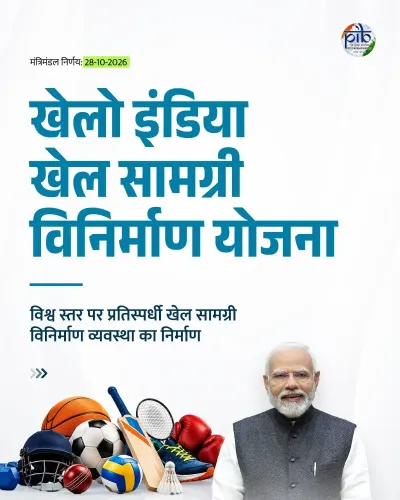
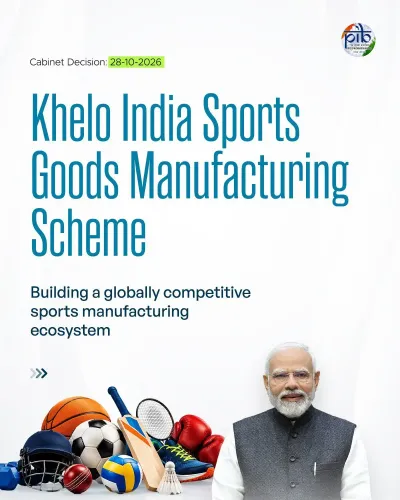
The Khelo India Sports Goods Manufacturing Scheme was approved with an outlay of Rs 1,857 crore to boost domestic production and cut imports.
A 3% Dearness Allowance and Dearness Relief hike will benefit over 1.17 crore central government employees and pensioners.
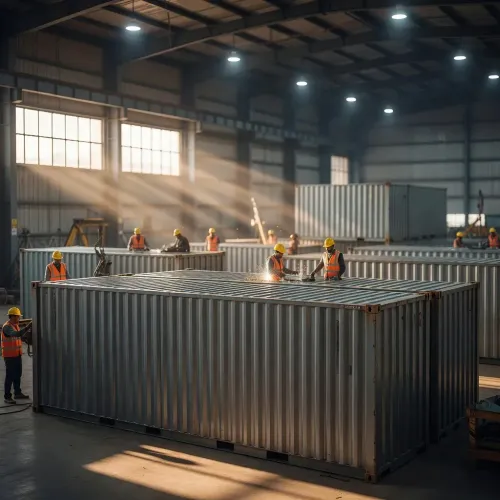
The Container Manufacturing Promotion Scheme , backed by Rs 10,000 crore , aims to expand domestic container capacity by nearly tenfold .
The Pradhan Mantri Viksit Gram Swaraj Yojana receives Rs 7,395.55 crore to strengthen grassroots governance and rural planning.
The combined outlay across all four decisions exceeds Rs 21,252 crore .
All four approvals align with the government's broader Atmanirbhar Bharat and Make in India policy framework.
Four sweeping decisions from the Union Cabinet — spanning sports manufacturing, soldier-era welfare, container production, and grassroots governance — landed on Thursday, 29 October 2026, as Union External Affairs Minister Dr. S. Jaishankar laid out the full package approved under Prime Minister Narendra Modi. The combined outlay: over Rs 21,252 crore committed in a single sitting.
Rs 1,857 crore to put India on the sports goods map
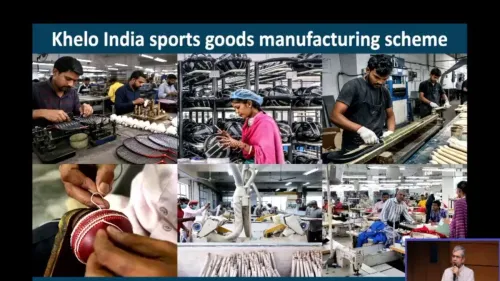
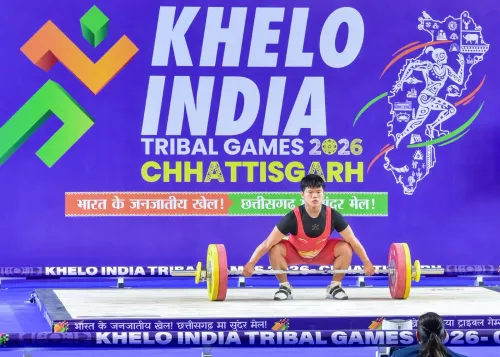
The Khelo India Sports Goods Manufacturing Scheme, approved with an outlay of Rs 1,857 crore, targets the domestic production of sports equipment — a sector India has long imported rather than made at home. The scheme sits squarely within the lineage of the Khelo India programme, launched in 2017, which built talent pipelines and sports infrastructure; the new manufacturing arm is designed to close the loop by growing the industry behind those athletes. The government's stated goals: boost exports, generate employment, and cut import dependence.
1.17 crore employees get a 3% DA hike
A 3% hike in Dearness Allowance (DA) and Dearness Relief (DR) will benefit more than 1.17 crore central government employees and pensioners. DA revisions are a routine but politically significant instrument — governments adjust them periodically to compensate public servants for inflation, and each hike directly lifts the monthly take-home of one of India's largest organised workforces. The timing, ahead of a winter session of Parliament, keeps the measure squarely in the public eye.
Rs 10,000 crore to build a container industry from scratch
Perhaps the most ambitious industrial bet of the four: the Container Manufacturing Promotion Scheme, backed by Rs 10,000 crore, is designed to expand domestic container manufacturing capacity by nearly tenfold. India's dependence on imported containers — a vulnerability that became painfully visible during the global supply-chain crunch — is the explicit target. A tenfold capacity expansion would fundamentally reshape India's logistics cost structure and is the clearest signal yet of the Atmanirbhar Bharat push moving from ambition into hard industrial numbers.
Rs 7,395 crore to rewire Panchayati governance
Rounding out the package, the Pradhan Mantri Viksit Gram Swaraj Yojana receives an outlay of Rs 7,395.55 crore to strengthen grassroots governance and rural development planning. The scheme draws on a policy lineage that includes the Rashtriya Gram Swaraj Abhiyan of 2018, which sought to empower Panchayati Raj institutions. The new Yojana signals a continuing bet that effective rural welfare delivery depends not just on money but on the institutional capacity of the bodies closest to the ground.
Together, the four approvals trace a coherent arc: manufacturing self-reliance (sports goods, containers), welfare indexation (DA hike), and governance depth (Gram Swaraj). Detailed implementation guidelines and funding notifications are expected through subsequent parliamentary or finance ministry channels — but the direction, in both rupees and intent, is now on the record.
Point of View
Sports goods), welfare maintenance (DA), and state-capacity deepening (Gram Swaraj) packaged as a unified political message. The container scheme's tenfold capacity target is the most structurally consequential — if executed, it addresses a logistics vulnerability that exposed India during global supply disruptions. The DA hike, while routine, keeps public-sector sentiment aligned heading into what could be a budget-heavy parliamentary cycle. Gram Swaraj's funding continuation signals that the Centre views local governance reform as a long-term project, not a single-term gesture.
NationPress
29 Oct 2026
Frequently Asked Questions
What is the Khelo India Sports Goods Manufacturing Scheme?
It is a cabinet-approved scheme with an outlay of Rs 1,857 crore to boost domestic sports equipment production in India, increase exports, create employment, and reduce dependence on imported sports goods.
How much is the DA hike approved in October 2026 and who benefits?
The Union Cabinet approved a 3% hike in Dearness Allowance and Dearness Relief, benefiting over 1.17 crore central government employees and pensioners.
What is the Container Manufacturing Promotion Scheme?
It is a scheme approved with an outlay of Rs 10,000 crore to expand India's domestic container manufacturing capacity by nearly tenfold, reducing the country's reliance on imported containers.
What is the Pradhan Mantri Viksit Gram Swaraj Yojana?
It is a scheme approved with an outlay of Rs 7,395.55 crore aimed at strengthening grassroots Panchayati Raj governance and enabling more effective rural development planning across India.
What was the total outlay approved by the Cabinet on 29 October 2026?
The four schemes approved by the Union Cabinet on 29 October 2026 carry a combined outlay exceeding Rs 21,252 crore.