Cabinet Extends PM-KISAN to 2031, Clears ₹3.15 Lakh Crore
Synopsis
The Union Cabinet has approved PM-KISAN's continuation through 2030-31 with a ₹3.15 lakh crore outlay, extending annual ₹6,000 DBT support to eligible farmer families. Cumulative transfers since 2019 have already crossed ₹4.47 lakh crore. Coal Minister G. Kishan Reddy announced the decision, crediting PM Modi's farmer-welfare agenda.
Key Takeaways
The Union Cabinet approved continuation of PM-KISAN from 2026-27 to 2030-31 with a financial outlay of ₹3.15 lakh crore .
Eligible farmer families will continue receiving ₹6,000 annually via Direct Benefit Transfer (DBT) in three instalments.
Since its February 2019 launch, PM-KISAN has transferred over ₹4.47 lakh crore directly to farming families.
The scheme aims to reduce dependence on informal credit and strengthen agricultural investment in rural India.
Kishan Reddy announced the cabinet decision, attributing it to PM Modi's commitment to farmer welfare.
A single cabinet decision just committed ₹3.15 lakh crore to India's farmers — and it will run all the way to 2030-31. The Union Cabinet, chaired by Prime Minister Narendra Modi, approved the continuation of the Pradhan Mantri Kisan Samman Nidhi (PM-KISAN) scheme on Friday, 31 July 2026, locking in five more years of direct income support for eligible farming families across the country.
Union Coal and Mines Minister G. Kishan Reddy, who also serves as BJP Telangana state president, shared the decision publicly, calling it a reflection of Prime Minister Modi's 'unwavering commitment to the welfare of Bharat's Annadata's' — a term of reverence meaning 'provider of food.'
₹6,000 a Year, Straight to the Farmer
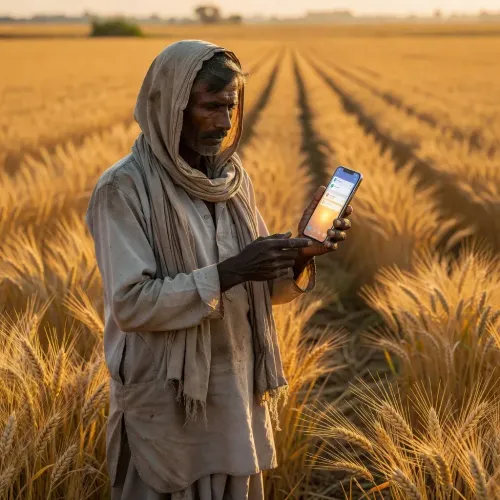
The mechanics of PM-KISAN are deliberately simple. Eligible landholding farmer families receive ₹6,000 annually, disbursed in three instalments of ₹2,000 each, directly into their bank accounts through the Direct Benefit Transfer (DBT) framework — no middlemen, no delays built into the design. Since the scheme's launch in February 2019, cumulative transfers have crossed ₹4.47 lakh crore, reaching crores of farming families. The DBT route was a deliberate policy choice: successive central governments have leaned on it precisely to reduce leakages that plagued older subsidy pipelines and to limit farmers' dependence on informal moneylenders for seasonal cash flow. The new ₹3.15 lakh crore outlay for the 2026-27 to 2030-31 window signals that this architecture stays intact — and scales up.What the Extension Means for Rural India
Farm households in India have historically been caught between volatile crop prices, erratic monsoons, and high-interest informal credit. PM-KISAN was designed as a floor — not a ceiling — providing predictable income that farmers could plan around. The cabinet's decision to extend rather than wind down the scheme through the next five Union Budget cycles removes a layer of uncertainty that had begun to build as the original framework approached its horizon. Kishan Reddy framed the extension in terms of four downstream effects: stronger agricultural investment, enhanced financial security, reduced informal borrowing, and a more resilient rural economy. Each of those levers connects: when a farmer is not scrambling for a moneylender's loan to buy seed, the money saved either stays in the household or cycles back into local rural commerce.PM-KISAN's Place in India's Farmer-Welfare Architecture
PM-KISAN did not arrive in a vacuum. It was part of a broader pivot — visible across the late 2010s and into the 2020s — toward direct cash transfers as the preferred instrument for agricultural welfare, replacing or supplementing older input subsidies. The scheme's longevity across multiple budget cycles has made it one of the most consistently funded central sector programmes in the agriculture space. With this extension, the government is also signalling continuity ahead of the next general election cycle — a point that will not be lost on political observers. Rural voter sentiment and farm income have historically moved together in Indian electoral outcomes. Five more years of guaranteed income support. Over three lakh crore rupees on the line. The Annadata, it appears, remains firmly at the centre of New Delhi's political and policy calculus.Point of View
The decision insulates the scheme from annual budget uncertainty and signals continuity to a farm electorate that has grown accustomed to the guaranteed instalment cycle. It also reinforces the DBT architecture as the government's preferred delivery mechanism, deepening the institutional infrastructure for future cash-transfer programmes. The timing — well ahead of the next electoral cycle — positions farmer welfare as a sustained policy commitment rather than a pre-election announcement.
NationPress
31 Jul 2026
Frequently Asked Questions
What is PM-KISAN and who is eligible?
PM-KISAN (Pradhan Mantri Kisan Samman Nidhi) is a central government scheme that provides ₹6,000 per year to eligible landholding farmer families across India, disbursed in three instalments of ₹2,000 directly into bank accounts via DBT. Eligibility is based on landholding criteria set by the central government.
How long has PM-KISAN been extended and what is the new outlay?
The Union Cabinet has extended PM-KISAN from 2026-27 to 2030-31 — a five-year continuation — with a total financial outlay of ₹3.15 lakh crore approved for the period.
How much has PM-KISAN transferred to farmers since its launch?
Since its launch in February 2019, PM-KISAN has directly transferred over ₹4.47 lakh crore to farming families across India through the Direct Benefit Transfer mechanism.
Who announced the PM-KISAN extension?
Union Coal and Mines Minister and BJP Telangana president G. Kishan Reddy announced the cabinet decision on social media on 31 July 2026, crediting Prime Minister Narendra Modi for the move.
Why does PM-KISAN use Direct Benefit Transfer instead of subsidies?
The DBT route is designed to eliminate middlemen and reduce leakages that historically affected subsidy delivery in India. It also aims to reduce farmers' dependence on informal moneylenders by providing predictable, timely cash support directly to their bank accounts.