Puri Hails Cabinet Nod for UP Highway, Delhi Tunnel
Synopsis
The Union Cabinet chaired by PM Modi has approved a 117.7-km access-controlled highway on NH-34 between Kanpur and Kabrai in Uttar Pradesh, and a 6-lane road tunnel linking Dwarka Expressway to Nelson Mandela Marg, Vasant Kunj in Delhi, boosting connectivity and regional economic growth.
Key Takeaways
The Union Cabinet chaired by PM Narendra Modi approved two major road infrastructure projects on 1 July 2026 .
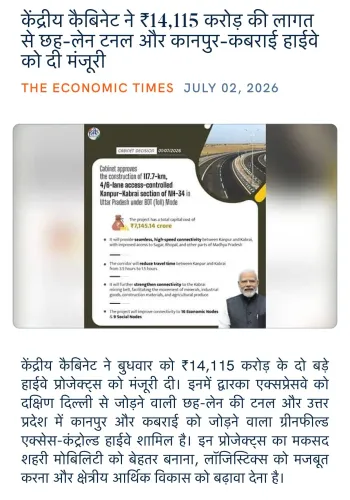
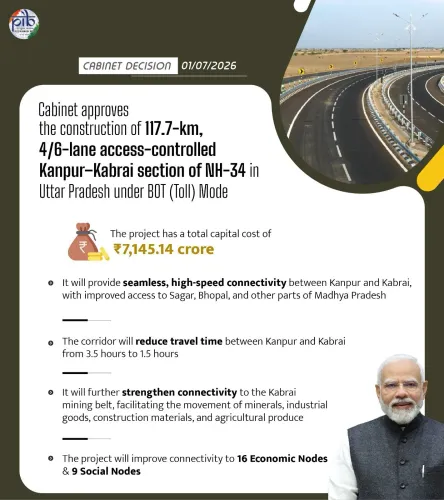
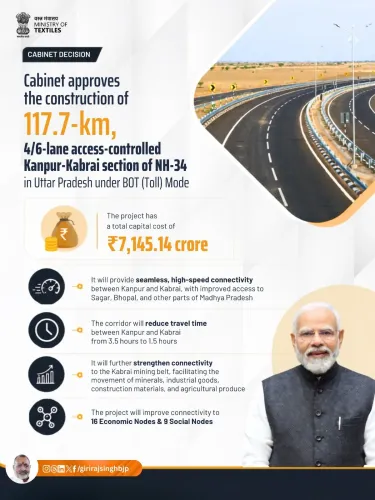
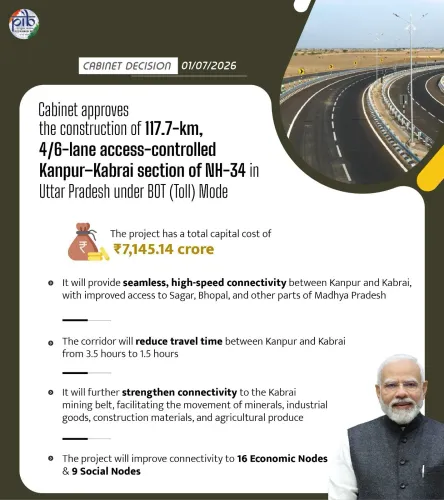
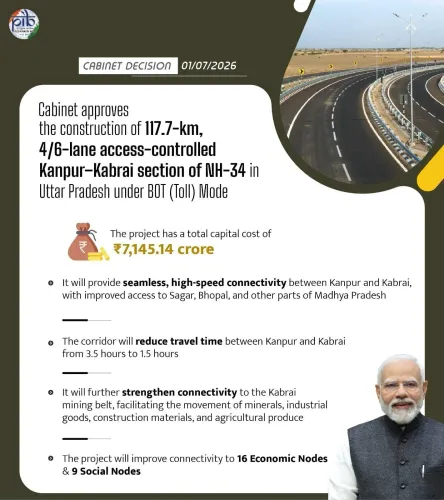
A 117.7-km , 4/6-lane access-controlled corridor on NH-34 between Kanpur and Kabrai in Uttar Pradesh has been cleared.
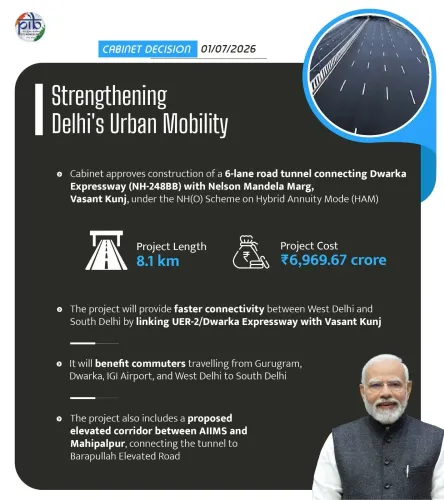
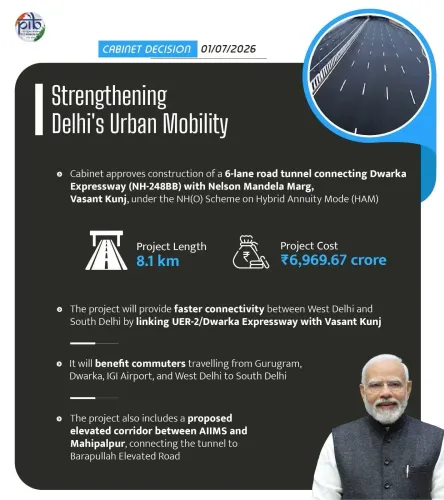
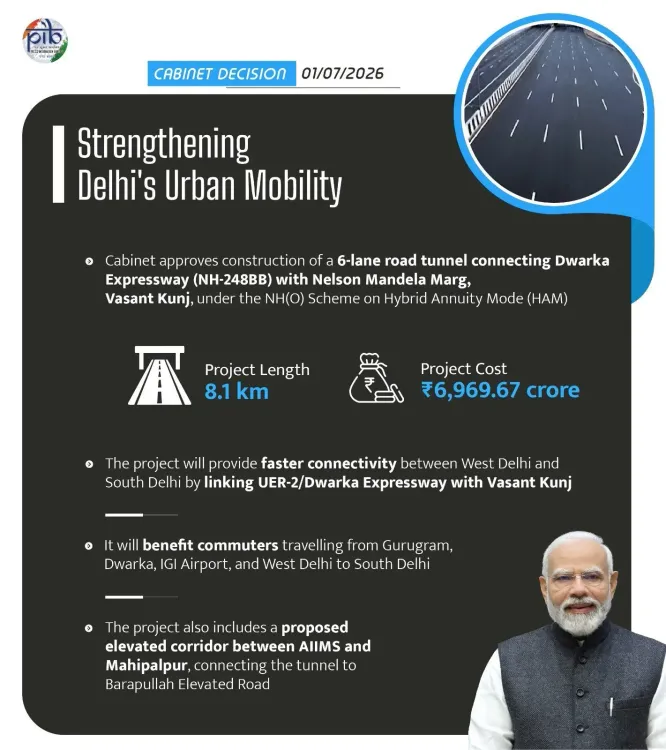
A 6-lane road tunnel under NH-148AE connecting Dwarka Expressway to Nelson Mandela Marg, Vasant Kunj in Delhi has been approved.
Both projects fall under the Bharatmala Pariyojana framework, the government's national highway development programme launched in 2017 .
The decisions are aimed at improving connectivity, reducing travel time, enhancing road safety, and stimulating regional economic activity.
NHAI tendering and land acquisition will be the next critical milestones for both corridors.
Union Petroleum Minister Hardeep Singh Puri on Wednesday, 1 July 2026 welcomed two major infrastructure decisions taken by the Union Cabinet chaired by Prime Minister Narendra Modi, covering a new national highway corridor in Uttar Pradesh and a six-lane road tunnel in Delhi.
Context
Posting on X in Hindi, Puri said the Cabinet had taken an 'important decision to give new momentum to safe movement and traffic ease' by approving the two projects. The post, tagged #CabinetDecisions, highlighted that the approvals would accelerate connectivity, faster and safer travel, and regional economic activity.
The first clearance covers the construction of a 117.7-kilometre, four- and six-lane access-controlled corridor on NH-34 between Kanpur and Kabrai in Uttar Pradesh. The second clears a 6-lane road tunnel under NH-148AE that will link the Dwarka Expressway to Nelson Mandela Marg, Vasant Kunj in Delhi.
Policy Backdrop
Both approvals sit within the broader Bharatmala Pariyojana framework, the Union government's flagship highway development programme approved in 2017 to develop 34,800 km of national highways and economic corridors across India. The programme has been the primary vehicle for shifting high-density routes from two-lane to access-controlled, multi-lane standards.
Since 2014, successive Union Cabinets have steadily cleared expressway and 4/6-laning projects aimed at cutting travel time and improving road safety. The Dwarka Expressway corridor in the Delhi-NCR region has been a focus of this push, given chronic congestion in south-west Delhi.
Stakeholders and Impact
The Kanpur–Kabrai stretch is expected to benefit highway users and businesses across the Bundelkhand region of Uttar Pradesh, improving freight and passenger movement on a corridor that connects the industrial city of Kanpur to the Bundelkhand hinterland. Access-controlled design means fewer at-grade intersections, directly reducing accident risk.
In Delhi, the tunnel linking Dwarka Expressway to Nelson Mandela Marg targets one of the capital's most congested south-west arterials. Vasant Kunj and surrounding residential and commercial zones stand to gain significantly from reduced travel times and decongestion of surface roads. Delhi-NCR commuters, logistics operators, and airport-bound travellers are among the primary beneficiaries.
What's Next
The immediate focus will shift to the National Highways Authority of India (NHAI), which will initiate tendering processes and land acquisition for both stretches. Progress on land acquisition — historically a bottleneck for highway projects — will determine how quickly construction can begin.
Both projects are likely to feature in the government's infrastructure pipeline disclosures in the coming parliamentary session and could be referenced in the next Union Budget as evidence of accelerated capital expenditure on roads. Monitoring of NHAI tendering timelines will be a key indicator of execution momentum.
Point of View
With the Kanpur-Kabrai corridor targeting the historically under-served Bundelkhand region and the Delhi tunnel addressing a long-standing urban bottleneck. The fact that a senior minister from the Petroleum portfolio amplified the Cabinet decision underscores the BJP's coordinated communication strategy around infrastructure wins ahead of electoral cycles. Both projects reinforce the Bharatmala arc, but the real test will be execution speed — land acquisition and tendering timelines have repeatedly slipped on comparable corridors. If NHAI moves swiftly, these approvals could become tangible campaign-ready deliverables within the current government's term.
NationPress
30 Sept 2026
Frequently Asked Questions
What did the Union Cabinet approve for Uttar Pradesh on 1 July 2026?
The Union Cabinet approved the construction of a 117.7-km, 4/6-lane access-controlled highway on NH-34 between Kanpur and Kabrai in Uttar Pradesh, aimed at improving connectivity and reducing travel time in the Bundelkhand region.
What is the Delhi tunnel project approved by the Cabinet?
The Cabinet cleared a 6-lane road tunnel under NH-148AE that will connect the Dwarka Expressway to Nelson Mandela Marg, Vasant Kunj in Delhi, easing congestion in south-west Delhi.
What is Bharatmala Pariyojana and how are these projects linked to it?
Bharatmala Pariyojana is the Union government's flagship national highway development programme approved in 2017, targeting 34,800 km of highways and economic corridors. Both the Kanpur-Kabrai and Delhi tunnel projects are part of this broader framework.
Who is Hardeep Singh Puri and why did he post about road projects?
Hardeep Singh Puri is the Union Minister of Petroleum and Natural Gas and a senior BJP leader. As a Cabinet minister, he shared the Cabinet's infrastructure decisions on X as part of the government's communication of key policy approvals.
What happens after the Cabinet approves a highway project in India?
After Cabinet approval, the National Highways Authority of India (NHAI) initiates the tendering process and land acquisition, which are the critical next steps before construction can begin.