CAG: Planning gaps double Maharashtra Jal Jeevan Mission cost to ₹26,410 crore
Synopsis
A CAG audit has found that Maharashtra spent nearly twice its original budget on Jal Jeevan Mission — ₹26,410 crore against an initial ₹13,668 crore estimate — while leaving three in four water supply schemes unfinished. The culprit: a baseline survey that was never done, schemes sanctioned without verified water sources, and cost revisions that added ₹9,608 crore alone.
Key Takeaways
The CAG found 75.30 per cent of Maharashtra's Jal Jeevan Mission schemes — 38,857 out of 51,560 — remained incomplete between 2019 and 2024 .
Mission expenditure nearly doubled from an initial estimate of ₹13,668 crore to actual spending of ₹26,410.51 crore .
A mandatory baseline survey was never conducted; schemes were sanctioned without verified, sustainable water sources.
1,08,000 households were left out of District Action Plans entirely, bypassing them for tap water access.
13,835 schemes ( 27 per cent ) required cost revisions, adding ₹9,608.87 crore to the overall bill.
The CAG has recommended stronger fund-flow planning, stricter timelines for unspent-balance remittance, and tighter internal controls.
The Comptroller and Auditor General of India (CAG) has delivered a damning assessment of the Jal Jeevan Mission (JJM) in Maharashtra, revealing that 75 per cent of water supply schemes launched between August 2019 and March 2024 remained incomplete, while poor planning caused the mission's expenditure to nearly double its original estimates, ballooning to ₹26,410.51 crore against an initial projection of ₹13,668 crore.
Scale of the Shortfall
Of the 51,560 water supply schemes initiated across Maharashtra during the five-year review period, only 12,703 — a mere 24.64 per cent — were completed. The remaining 38,857 schemes, representing 75.30 per cent of the total, were found languishing at various stages of implementation, according to the CAG report.
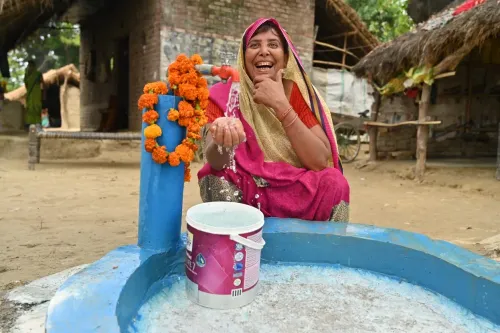
At the mission's launch in August 2019, Maharashtra had 138.54 lakh rural households, of which 48.44 lakh already had tap connections. The state's target was to extend coverage to 1.46 crore rural households; by March 2024, it had provided Functional Household Tap Connections (FHTCs) to 1.25 crore households — falling short of the goal. More critically, the audit found that 1,08,000 households were omitted entirely from District Action Plans, effectively denying them any access to the scheme.
Root Causes: Weak Planning and Missing Surveys
The CAG identified weak planning as the central failure. A mandatory baseline survey — foundational to any large-scale infrastructure rollout — was never conducted. Village action plans were prepared without incorporating sustainability parameters, and district action plans were not drawn up for the entire duration of the scheme.
Critically, schemes were sanctioned without first securing verified, sustainable water sources. These foundational lapses, the CAG noted, triggered repeated mid-course corrections that compounded delays and inflated costs.
Cost Revisions and Financial Overruns
The state ultimately allocated ₹27,559.26 crore against the original ₹13,668 crore estimate, with actual expenditure reaching ₹26,410.51 crore — nearly twice the initial budget. The CAG found that 27 per cent of all state-level schemes — 13,835 out of 51,560 — required aggressive cost revisions.
These revisions were driven by changes in project scope to accommodate additional inhabitants, shifts in water sources and land locations, execution of extra works, and contracts awarded well above tender rates. Together, these factors inflated project costs by an additional ₹9,608.87 crore. This is not an isolated pattern; CAG audits of centrally sponsored schemes across states have repeatedly flagged similar cycles of under-planning followed by cost escalation.
CAG Recommendations to Maharashtra
The CAG has put forward three principal recommendations. First, it has called for strengthening fund-flow planning to ensure the timely release and optimal utilisation of both Central and State fiscal allocations. Second, it recommended enforcing strict timelines for remitting interest earned on unspent balances to the Consolidated Fund, alongside swift submission of Utilisation Certificates (UCs) and audited accounts. Third, it urged the state to devise a rigorous regulatory mechanism with tighter internal controls to prevent inadmissible expenditure and boost regular monitoring.
With a significant number of schemes still mid-execution, how Maharashtra responds to these findings will determine whether the mission's original promise of universal rural tap water access can be meaningfully salvaged.
Point of View
Making cost overruns and mid-course corrections almost inevitable. The ₹9,608 crore added through revisions alone is not a rounding error; it is the price of institutional shortcuts. What the report does not fully resolve is accountability — who approved schemes without verified water sources, and whether any corrective action has been initiated against responsible officials. Without that, the CAG's recommendations risk becoming another audit footnote.
NationPress
9 Oct 2026
Frequently Asked Questions
What did the CAG find about Jal Jeevan Mission in Maharashtra?
The CAG found that 75.30 per cent of water supply schemes — 38,857 out of 51,560 — launched under the Jal Jeevan Mission in Maharashtra between 2019 and 2024 remained incomplete. Poor planning, missing baseline surveys, and frequent cost revisions caused expenditure to nearly double, reaching ₹26,410.51 crore against an initial estimate of ₹13,668 crore.
Why did the Jal Jeevan Mission cost double in Maharashtra?
The CAG attributed the cost escalation to inadequate initial planning, the absence of a mandatory baseline survey, schemes sanctioned without verified water sources, and frequent scope revisions. These factors collectively added ₹9,608.87 crore through mid-course corrections, with 27 per cent of schemes requiring aggressive cost revisions.
How many households received tap connections under the mission by March 2024?
By March 2024, Maharashtra had provided Functional Household Tap Connections to 1.25 crore rural households, against a target of 1.46 crore. The CAG also found that 1,08,000 households were omitted entirely from District Action Plans and thus excluded from the scheme.
What are the CAG's key recommendations for Maharashtra?
The CAG recommended three measures: stronger fund-flow planning for timely utilisation of Central and State funds; strict enforcement of timelines for remitting interest on unspent balances and submitting Utilisation Certificates; and a robust regulatory mechanism with tighter internal controls to prevent inadmissible expenditure.
What is the Jal Jeevan Mission?
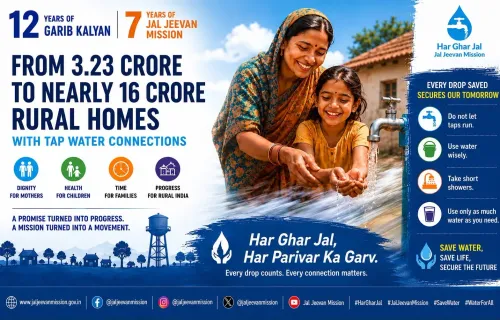
The Jal Jeevan Mission is a flagship Central government scheme launched in August 2019 with the goal of providing Functional Household Tap Connections to every rural household in India. In Maharashtra, the scheme targeted 1.46 crore rural households and was tracked by the CAG from its launch through March 2024.