CAG flags ghost hostels, ₹1.62 crore fraud in Maharashtra's student welfare scheme
Synopsis
A CAG audit covering 2022–2024 found six Maharashtra government-aided hostels to be entirely fake — locked, empty, yet drawing ₹1.62 crore in state funds. With ₹2,321 crore spent and students still sitting on floors to eat, the report lays bare a welfare system that exists more on paper than in practice.
Key Takeaways
The CAG inspected 18 government and 21 aided hostels in Maharashtra , covering the period 2022–2024 .
Six aided hostels were found to be fake — locked or under construction with no students or staff — yet received ₹1.62 crore in state funds over four years.
The state spent ₹2,321 crore on hostels during the audit period; ₹56.65 crore of the 2023–24 allocation went unutilised.
Only 46 of 280 biometric attendance systems were operational; 49 hostels lacked superintendents.
Male superintendents were found appointed in five girls' hostels across Vashi, Ambad, Kuhi, Khamgaon, and Ahmedpur.
The state's target of 500 hostels by 2020 was missed; only 443 exist, leaving 8,930 students across 117 talukas without facilities.
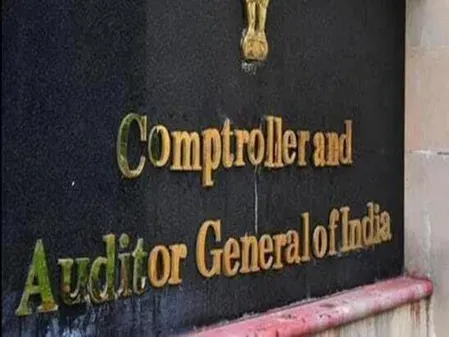
A sweeping audit by the Comptroller and Auditor General (CAG) has exposed rampant mismanagement, missing infrastructure, and outright financial fraud across government-run and government-aided student hostels in Maharashtra, with six aided hostels found to be entirely non-functional — yet still drawing state funds. The report, submitted to the Maharashtra state legislature on 10 July 2025 at the close of the three-week monsoon session, covers the audit period from 2022 to 2024.
Scale of the Audit
As of March 2024, Maharashtra operates 443 government-run and 2,388 government-aided hostels, collectively serving 1,21,971 boys and 40,543 girls from backward and economically weaker sections. The CAG conducted direct physical inspections of 18 government and 21 aided hostels, supplementing a financial audit of the same period. Despite the state disbursing ₹2,321 crore on these facilities during the audited period, the ground reality was found to be starkly at odds with stated welfare objectives.
Ghost Hostels and Financial Misappropriation
Of the 21 aided hostels physically inspected, six were found to be either permanently locked or still under construction, with no staff or students present. The CAG has formally flagged these as 'fake hostels'. Despite their non-functional status, the Department of Social Justice and Special Assistance disbursed ₹1.62 crore to these entities over four years — a finding the report characterises as a blatant misappropriation of public funds.
Among the specific cases cited: Modikhan Hostel in Jalna was found operating out of a dilapidated, locked building with no signs of habitation, yet hostel records listed 38 students and one superintendent. The state continued disbursing ₹18 lakh in honorariums here over four years. Jafrabad Hostel, built for a capacity of 24 students, was found with dust-laden, unused beds and zero occupancy. Similar ghost setups were documented in Golapangri, Belora, Sindkhed Raja, and Latur.
Lack of Essential Infrastructure
The CAG documented a severe absence of basic amenities across inspected facilities. Dining halls, computer labs, libraries, daily newspapers, televisions, CCTV networks, and power inverters were found missing in multiple locations. Regular medical check-ups for students were described as virtually non-existent. In four locations, students were forced to eat while sitting on the floor due to a complete absence of dining tables and chairs; some facilities lacked a dedicated dining space altogether.
Of 280 government hostels equipped with biometric attendance systems, only 46 were found operational. Audited premises consistently lacked adequate washrooms, quality food, clean drinking water, proper lighting, and the mandatory one-month buffer stock of food grains.
Safety and Compliance Violations
Accessibility norms were openly flouted. Regulations mandate ground-floor accommodation for differently-abled students, but facilities in Moshi, Ahmednagar, Dharashiv, Jat, Jalna, and Manish Nagar (Nagpur) had assigned such students rooms on upper floors without any accessibility infrastructure in place.
The report further noted that nearly 49 government hostels are running without superintendents. In five girls' hostels — located in Vashi, Ambad, Kuhi (Nagpur), Khamgaon, and Ahmedpur — male superintendents had been appointed, in violation of prescribed norms.
Policy Failures and Unspent Funds
The CAG also flagged significant budgetary lapses. Of the ₹487 crore allocated for government hostels in 2023–24, ₹56.65 crore was left entirely unutilised. A policy commitment to establish a hostel in every taluka has not been followed through, leaving approximately 8,930 students across 117 talukas without access to hostel facilities.
The state government's long-term plan to construct 500 government hostels by 2020 also fell short — only 443 were established by that deadline. The CAG observed that despite funds being sanctioned, severe construction delays have ensured the welfare vision exists largely on paper. The report is expected to trigger scrutiny from opposition benches and civil society groups in the weeks ahead.
Point of View
From fund disbursement to on-ground supervision. The fact that ₹1.62 crore flowed to locked, empty buildings for four consecutive years points to an accountability vacuum that routine audits clearly failed to catch. More troubling is the ₹56.65 crore left unspent in 2023–24: the state simultaneously underspends its budget and misdirects what it does spend. Until Maharashtra links hostel grants to third-party physical verification — not departmental self-reporting — the next audit cycle is likely to surface the same ghost units with different addresses.
NationPress
13 Jul 2026
Frequently Asked Questions
What did the CAG find in its audit of Maharashtra's student hostels?
The CAG found severe mismanagement, missing basic infrastructure, and financial fraud across government-run and government-aided student hostels in Maharashtra. Six aided hostels were identified as entirely fake — locked or under construction with no students or staff — yet received ₹1.62 crore in state funds over four years.
How much did Maharashtra spend on student hostels during the audit period?
The state spent ₹2,321 crore on government-run and aided hostels between 2022 and 2024. Of the ₹487 crore allocated specifically for government hostels in 2023–24, ₹56.65 crore was left entirely unutilised.
Which hostels were flagged as fake by the CAG?
Six of the 21 aided hostels physically inspected were found to be non-functional. Specific cases include Modikhan Hostel in Jalna — a locked, dilapidated building whose records still listed 38 students — and Jafrabad Hostel, which had dust-laden, unused beds and zero occupancy. Similar ghost setups were found in Golapangri, Belora, Sindkhed Raja, and Latur.
What safety violations were recorded in Maharashtra's government hostels?
Accessibility norms were violated in multiple locations, including Moshi, Ahmednagar, Dharashiv, Jat, Jalna, and Manish Nagar (Nagpur), where differently-abled students were assigned upper-floor rooms without accessibility infrastructure. Male superintendents were also found appointed in five girls' hostels across Vashi, Ambad, Kuhi, Khamgaon, and Ahmedpur.
How many students are deprived of hostel facilities due to policy gaps?
Approximately 8,930 students across 117 talukas remain without hostel facilities due to the state's failure to implement its policy of establishing a hostel in every taluka. The government's own target of 500 hostels by 2020 was also missed — only 443 have been established to date.