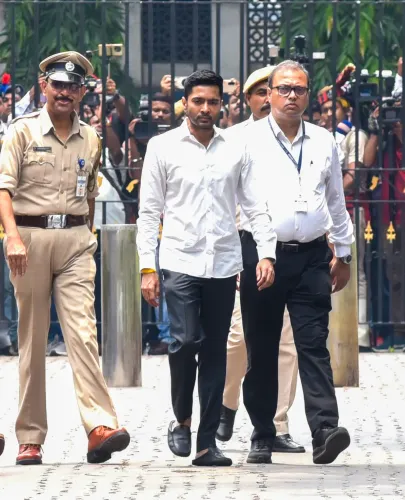
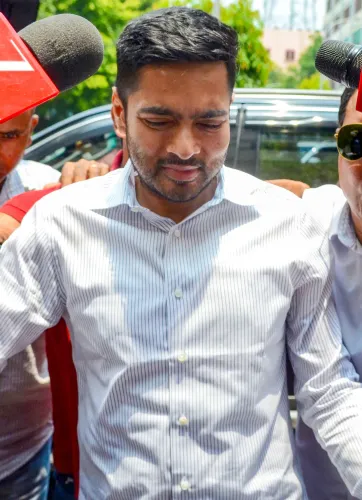
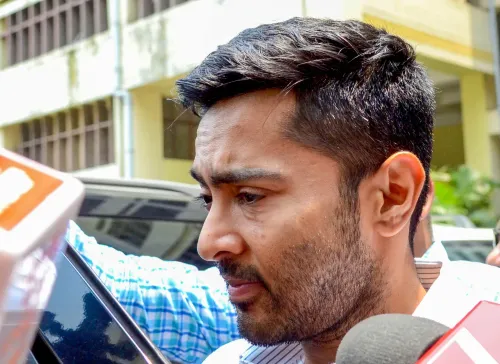
Calcutta HC judge recuses from Abhishek Banerjee's media gag petition
Synopsis
Trinamool Congress General Secretary Abhishek Banerjee has moved the Calcutta High Court seeking a ban on media reporting of ongoing CBI, ED and CID probes against him, alleging systematic leaks of interrogation details and personal information. On Thursday, the presiding judge recused himself — without dismissing the petition — flagging the need for an appropriate bench. The case puts a rare spotlight on the right-to-privacy versus public-accountability fault line in high-profile political investigations.
Key Takeaways
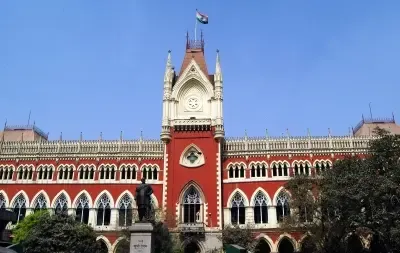
Calcutta High Court judge Justice Krishna Rao recused himself on 8 October 2026 from hearing Abhishek Banerjee's petition against media reporting of probes.
Banerjee, TMC General Secretary and nephew of former West Bengal CM Mamata Banerjee , alleged that confidential interrogation details and personal information were being leaked to media by investigating agencies.
The petition seeks a court-imposed ban on publishing news related to the investigations against him.
The judge did not dismiss the petition; Banerjee has been advised to approach an appropriate bench .
Banerjee faces multiple probes by the CBI , ED , and the state CID , with CID questioning him several times since a government change in West Bengal earlier this year.
A judge of the Calcutta High Court on Thursday, 8 October 2026, recused himself from hearing a petition filed by Trinamool Congress (TMC) General Secretary Abhishek Banerjee, who has sought a court order barring the publication of news related to ongoing investigations against him by state and central agencies. The recusal does not dismiss the petition; Banerjee has been directed to approach an appropriate bench.
What the Petition Seeks
Abhishek Banerjee, also the nephew of former West Bengal Chief Minister Mamata Banerjee, alleged in his petition that confidential information — including interrogation details, investigation progress, foreign travel records, and other personal matters — is being systematically leaked to the media by investigating agencies. He argued that these leaks violate his fundamental right to privacy, dignity, and reputation, and that they are hampering the integrity of the investigation itself.
His counsel contended that specific details of interrogation sessions — including the precise questions put to Banerjee — were finding their way into news reports, and that coverage of his personal foreign travel bore no direct relevance to the cases against him. On these grounds, the petition urged the court to impose a ban on publishing such material.
Justice Krishna Rao's Recusal
Justice Krishna Rao declined to hear the matter without elaborating on the reasons for his recusal. Crucially, he did not dismiss the petition. Instead, he advised Banerjee's legal team to present the matter before an appropriate bench, noting that the allegations in the petition directly implicate the investigating agencies in the leaking of information — a consideration that likely informed the procedural direction.
The Probes Against Abhishek Banerjee
The backdrop to the petition is a cluster of long-running investigations. Central agencies — the Central Bureau of Investigation (CBI) and the Enforcement Directorate (ED) — have been probing Banerjee across multiple cases for a considerable period. Following the change of government in West Bengal after the state Assembly elections earlier this year, the state's own Criminal Investigation Department (CID) also initiated fresh probes in certain matters, and CID officers have questioned Banerjee on multiple occasions.
Why This Case Matters
The petition raises a rarely litigated tension in Indian legal proceedings: the right of an accused or a person under investigation to control the flow of information about their case, set against the public's right to know about probes involving prominent political figures. Critics argue that such media gag orders, if granted, could shield powerful individuals from legitimate scrutiny. Banerjee's counsel, however, frames it as a due-process issue — arguing that pre-trial publicity prejudices the accused and compromises investigation integrity.
Notably, this is not the first time the intersection of political investigations and media reporting has come before courts in West Bengal; similar petitions have periodically tested the limits of judicial restraint in high-profile probe matters. The next step will depend on which bench the petition is placed before and whether that bench agrees to admit it for hearing.
Point of View
Courts have historically been reluctant to issue sweeping media gag orders in cases involving public figures, and for good reason. The real question is whether the alleged leaks, if proven, would be better addressed by disciplinary action against investigating officers rather than by restraining the press. Justice Krishna Rao's recusal, though procedural, delays a ruling on that question and leaves open whether any bench will be willing to set such a precedent at a politically charged moment in West Bengal.
NationPress
8 Oct 2026
Frequently Asked Questions
What did Abhishek Banerjee petition the Calcutta High Court for?
Abhishek Banerjee petitioned the Calcutta High Court to impose a ban on news organisations publishing reports related to ongoing CBI, ED and CID probes against him. He alleged that confidential interrogation details and personal information were being leaked by investigating agencies to the media, violating his right to privacy and reputation.
Why did Justice Krishna Rao recuse himself?
Justice Krishna Rao recused himself from hearing the petition on 8 October 2026 without detailing his reasons. He did not dismiss the petition but directed Banerjee to approach an appropriate bench, noting that the petition's allegations directly implicate the investigating agencies.
What probes is Abhishek Banerjee currently facing?
Banerjee is facing multiple investigations — by the CBI and the ED at the central level, and by the state CID following the change of government in West Bengal after Assembly elections earlier in 2026. The CID has questioned him on several occasions in connection with these probes.
What happens to the petition now?
The petition remains active and has not been dismissed. Banerjee's legal team is expected to place it before another bench of the Calcutta High Court for admission and hearing. The timeline will depend on the listing schedule of the appropriate bench.
Why is this petition legally significant?
The petition tests a rarely litigated question in India: whether a person under investigation can seek a court order restricting media coverage of their case on privacy grounds. If granted, it could set a precedent with implications for press freedom and public accountability in high-profile political investigations.