Elon Musk asks if 'Ambani is real boss of India' over Starlink licence delay
Synopsis
Elon Musk's pointed X post asking whether 'Ambani is the real boss of India' has turned a bureaucratic satellite licensing delay into a geopolitical flashpoint. The Indian government says MHA security clearance — not corporate lobbying — is the only holdup, and that every satcom player, including Airtel's OneWeb, is in the same queue. The episode lays bare the tension between India's digital ambitions and the layers of security-first regulation that global tech entrants must navigate.
Key Takeaways
Elon Musk publicly questioned why Starlink has not received final commercial approvals in India after five years of compliance efforts.
Musk posted on X asking whether 'Ambani is the real boss of India,' escalating the dispute after an initial allegation of unnamed 'oligarchs' blocking entry.
The Centre called the allegations 'baseless and misconceived,' stressing that security clearance is mandatory for all satcom licensees.
Minister of State Chandra Sekhar Pemmasani confirmed the delay lies with the Ministry of Home Affairs (MHA) and affects all satcom companies, not just Starlink.
Bharti Airtel chairman Sunil Bharti Mittal confirmed that his own OneWeb venture is also awaiting regulatory approvals.
Starlink holds a satellite communications licence in India but still requires MHA security clearance before commercial launch.
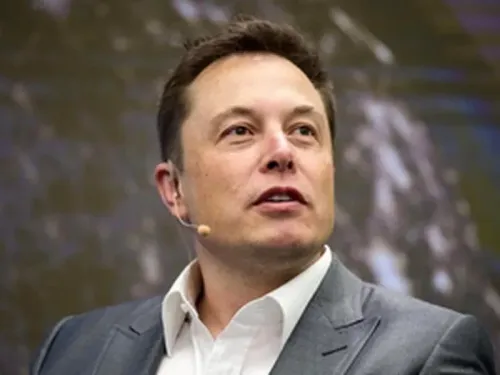
SpaceX and Tesla chief executive Elon Musk on 8 October 2026 publicly questioned why Starlink has not yet received final regulatory approvals to begin commercial satellite internet operations in India, asserting that the company has spent five years complying with the country's laws and regulations. The remarks quickly drew a sharp government rebuttal and reignited a high-stakes standoff between the world's wealthiest entrepreneur and India's telecom regulatory establishment.
Musk's escalating allegations
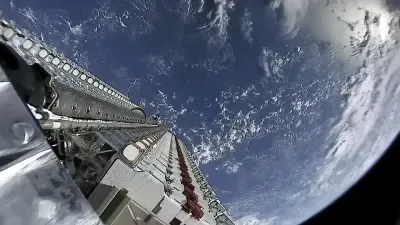
Musk's comments initially accused unnamed 'oligarchs' of deliberately blocking Starlink's entry into India, alleging that entrenched business interests were seeking to protect their dominant position in the country's telecom market. He did not identify any company or individual by name at first. The remarks came in response to a post on X arguing that Starlink's low-earth-orbit satellite service could meaningfully expand internet access in rural and remote parts of India where traditional telecom infrastructure remains difficult or prohibitively expensive to build.
Within hours of the Indian government's rebuttal, Musk escalated further, posting on X to ask whether 'Ambani is the real boss of India' — a thinly veiled reference to Reliance Industries chairman Mukesh Ambani, whose group controls Jio, the country's largest telecom operator. The post drew enormous attention and immediately became a trending topic across Indian social media.
Government pushes back firmly
The Centre rejected Musk's framing in strong terms, describing suggestions of a discriminatory regulatory regime as 'baseless and misconceived.' Officials stressed that demonstrating compliance with national security norms is an absolute requirement for every satellite communications licensee operating in India, regardless of their country of origin or corporate stature.
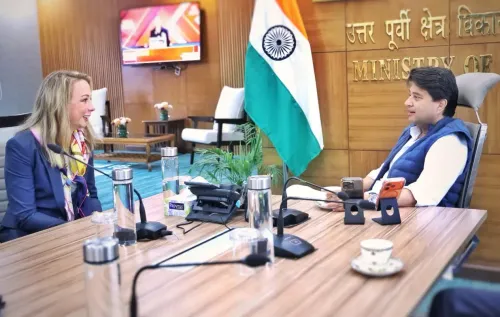
Minister of State for Communications Chandra Sekhar Pemmasani addressed reporters on the sidelines of the India Mobile Congress, clarifying that the pending approvals involved the Ministry of Home Affairs (MHA) and were not specific to Starlink alone. 'The Department of Telecom has issued licences to all satcom companies as well as provisional spectrum. Now the issue is pending with MHA for security clearance. As soon as it is cleared, they will get it. It has nothing to do with one company,' Pemmasani said.
Where Starlink's approval process stands
Starlink has already secured a licence to provide satellite communication services in India, but the company still requires security-related clearances and additional approvals from the MHA before it can commercially launch. Notably, this bottleneck is not unique to Starlink — other global and domestic satcom players are also in the queue.
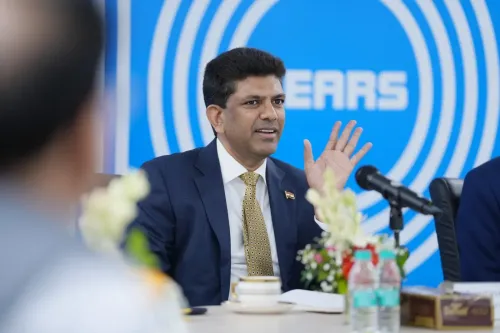
Bharti Airtel chairman Sunil Bharti Mittal, whose group backs rival satellite venture OneWeb, acknowledged that his own company was similarly waiting for regulatory approvals to come through. Mittal's remarks lend credibility to the government's position that the clearance process is uniformly applied, rather than selectively targeted at Musk's company.
Why this standoff matters for India's internet landscape
India's satcom licensing logjam carries real consequences for the country's digital ambitions. Satellite internet is widely seen as the most viable route to closing the connectivity gap in hilly, forested, and island regions where fibre and tower rollouts remain uneconomical. Starlink's entry — along with that of OneWeb and Amazon's Project Kuiper — could inject meaningful competition into a market dominated by a handful of legacy operators.
This is the latest in a series of friction points between global technology platforms and Indian regulators, following earlier controversies over data localisation, content moderation, and spectrum allocation. How New Delhi handles the Musk episode will be closely watched by foreign investors assessing India's openness to disruptive technology businesses.
Point of View
Backed by Mittal's own admission that OneWeb faces the same queue, deflates the narrative of selective targeting. The deeper issue is structural: India's MHA security clearance process for satcom was never designed for the speed at which low-earth-orbit constellations need to deploy to be commercially viable. If the bottleneck persists, India risks being the last major market where Starlink launches — handing incumbents exactly the moat Musk is accusing them of engineering, even if that outcome is the product of bureaucratic inertia rather than deliberate obstruction.
NationPress
8 Oct 2026
Frequently Asked Questions
Why has Starlink not launched commercially in India yet?
Starlink has a satellite communications licence in India but is still awaiting security-related clearances from the Ministry of Home Affairs (MHA). The Department of Telecom has already issued the licence and provisional spectrum; the MHA security clearance is the remaining step, and it applies to all satcom companies, not just Starlink.
What did Elon Musk post on X about Ambani and India?
After initially alleging that unnamed 'oligarchs' were blocking Starlink's entry into India, Musk posted on X asking whether 'Ambani is the real boss of India' — an apparent reference to Reliance Industries chairman Mukesh Ambani, whose Jio network is India's largest telecom operator. Musk did not name Ambani or any company directly in his initial remarks.
How did the Indian government respond to Musk's allegations?
The Centre rejected Musk's claims as 'baseless and misconceived,' reaffirming that compliance with national security norms is mandatory for every satcom licensee. Minister of State for Communications Chandra Sekhar Pemmasani stated that the pending clearance lies with the MHA and affects all satcom players equally.
Is Starlink the only company waiting for satcom approval in India?
No. Bharti Airtel chairman Sunil Bharti Mittal confirmed at the India Mobile Congress that his own satellite venture, OneWeb, is also waiting for regulatory approvals. This corroborates the government's position that the clearance process is uniformly applied across the industry.
Why does satellite internet matter for India?
Satellite internet — offered by services like Starlink and OneWeb — is widely considered the most practical way to connect remote, hilly, and island regions where fibre and mobile tower infrastructure is difficult or uneconomical to build. Multiple approved satcom players could also introduce competition into a telecom market currently dominated by a small number of large operators.