32,425 cancer cases reported in the last three years in J&K?
Synopsis
The alarming rise in cancer cases in Jammu and Kashmir has prompted a government response. With over 32,425 reported cases in three years, health officials emphasize the need for public awareness and early detection strategies. Learn how the region is tackling this health crisis and the initiatives in place to combat cancer.
Key Takeaways
32,425 cancer cases reported in Jammu and Kashmir over three years.
Common cancers include lung , breast , and cervical cancer .
Government initiatives focus on public awareness and early detection.
Advanced treatment facilities are available at SKIMS and other institutes.
Collaboration with NGOs and educational institutions is vital for cancer prevention.
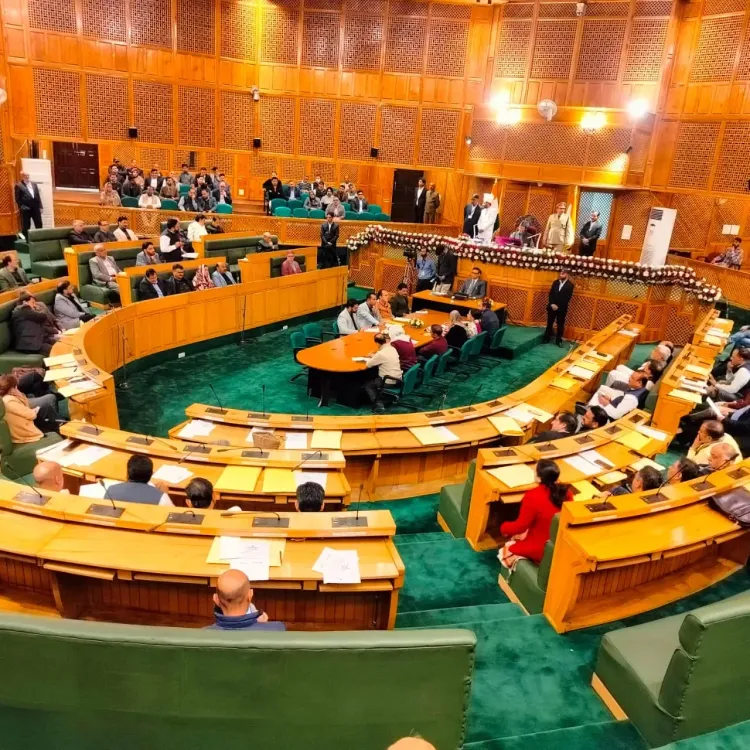
Jammu, Feb 13 (NationPress) The government of Jammu and Kashmir disclosed to the Legislative Assembly on Friday that a total of 32,425 cancer cases have been documented in the union territory over the past three years.
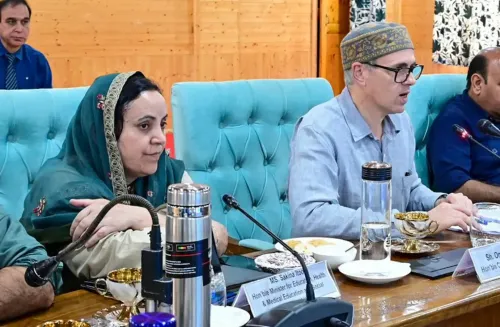
The Health Minister, Sakina Itoo, responded to a query from PDP MLA, Waheed-ur-Rehman Para, stating that the most prevalent cancers include lung, oral, cervical, prostate, and pancreatic cancer.
She highlighted that in the Jammu division, there were 6,804 cases recorded from 2023 to 2025, with 2,036 in 2023, 2,187 in 2024, and 2,581 in 2025. Meanwhile, 25,621 cancer cases were identified in the Kashmir division during the same period, including 8,021 in 2022, 8,621 in 2023, and 8,979 in 2024.
“The most frequently occurring cancers are lung, breast, oral, cervical, prostate, and pancreatic. No specific unusual disease has been reported. However, various cancer types, including gastrointestinal malignancies (oesophagus, stomach, and colorectal), are commonly detected,” she elaborated.
Institutions such as the Sher-i-Kashmir Institute of Medical Sciences (SKIMS) and the State Cancer Institute (SCI) at Government Medical College, Jammu, deliver comprehensive, multidisciplinary cancer care, covering medical oncology, surgical oncology, radiation oncology, and clinical hematology.
These facilities are equipped with state-of-the-art diagnostic and treatment technologies, including PET-CT, CT scans, and modern radiotherapy systems.
“Significant emphasis is placed on public awareness concerning early cancer warning signs and modifiable risk factors like smoking cessation, healthy eating, and lifestyle adjustments to aid in cancer prevention and early treatment,” she added.
Efforts for early cancer detection involve awareness campaigns and screenings through outpatient services and health camps; early diagnosis utilizing available diagnostic tools such as X-ray, ultrasound, CT scan, MRI, endoscopy, EGD, colonoscopy, colposcopy, EBUS, and histopathology; the execution of the National Programme for Prevention and Control of Non-Communicable Diseases (NPCDCS); and referral of patients needing advanced oncological care to higher tertiary care centers.
A high-level meeting led by a member of NITI Aayog, attended by representatives from ICMR, DHR, Tata Memorial Hospital, and PGI Chandigarh, was convened to develop cancer prevention and treatment policies for Jammu & Kashmir. Patients with cancer and other terminal illnesses receive care at SKIMS, Soura, Government Medical Colleges (GMCs), and their related hospitals, as well as at district hospitals and Community Health Centres (CHCs).
“As needed, patients are referred to GMCs and other tertiary care institutions for specialized treatment. In the Jammu area, specialized oncology services are provided at GMC Jammu, the State Cancer Institute, Jammu, and other associated hospitals, while the Kashmir region benefits from advanced care at SKIMS, Soura. Well-established oncology services are available at Government Medical Colleges in Jammu and Srinagar. Cancer treatment services are accessible at GMC Jammu, the State Cancer Institute, Jammu, Bone & Joint Hospital, SMGS Hospital, and at GMC Srinagar through SMHS Hospital,” she stated.
“Currently, specialized oncology services are available only at GMCs and are not offered at district hospitals or CHCs. The PET scan facility is operational at SKIMS, Soura, while GMC Srinagar and its associated hospitals do not have this facility. Recently, the Health & Medical Education Department has authorized JKMSCL to procure a PET scan unit costing Rs 16 crore for GMC Srinagar, which is not available at any district hospital or sub-district hospital (SDH). In the Jammu division, PET scan services are provided at the State Cancer Institute, Jammu, and Narayana Super Specialty Hospital, Kakryal (Katra), alongside the American Oncology Institute, ASCOM, in the private sector,” she concluded.
Point of View
It's imperative to acknowledge the concerning statistics surrounding cancer in Jammu and Kashmir. The government’s transparent reporting provides insight into a growing health crisis. This situation requires immediate attention and collaborative efforts across health sectors, ensuring that both awareness and treatment services are prioritized.
NationPress
22 Sept 2026
Frequently Asked Questions
What types of cancer are most common in Jammu and Kashmir?
The most prevalent types of cancer reported include lung , breast , oral , cervical , prostate , and pancreatic cancer .
How many cancer cases have been reported in the last three years?
A total of 32,425 cancer cases have been documented in Jammu and Kashmir over the past three years.
What initiatives are in place for cancer detection and treatment?
Initiatives include awareness campaigns, screening through outpatient services, and referral to specialized centers for advanced oncological care.
Are there specialized oncology services available in Jammu and Kashmir?
Yes, specialized oncology services are available at GMCs and the State Cancer Institute, alongside facilities like SKIMS.
What is being done to improve public awareness of cancer?
Efforts include education on early warning signs, modifiable risk factors, and observance of national and international cancer awareness days.