CBI arrests J&K probationary sub-inspector for ₹10,000 bribe in Jammu

Synopsis
A probationary J&K Police sub-inspector was caught red-handed by the CBI accepting ₹10,000 to bury an FIR in a marital dispute — a direct test of the investigative powers the agency gained over J&K after Article 370 was abrogated in 2019. The arrest at Janipur Police Station underscores how centralised anti-corruption enforcement has changed on the ground in the Union Territory.
Key Takeaways
The CBI arrested probationary sub-inspector Danish Hamid of J&K Police on Sunday, 17 August in Jammu district .
Hamid allegedly demanded ₹20,000 , later negotiated to ₹10,000 , to suppress an FIR related to a marital dispute.
He was posted at Janipur Police Station and has been booked for extortion .
The CBI gained jurisdiction over J&K public servants after the abrogation of Article 370 on 5 August 2019 .
Unlike the earlier Anti-Corruption Bureau (ACB) , the CBI requires no prior permission to act against officers caught red-handed.
The case will be tried before a dedicated CBI anti-corruption court in Jammu or Srinagar.
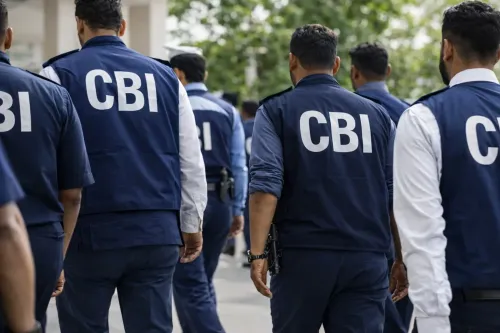
The Central Bureau of Investigation (CBI) on Sunday, 17 August arrested a probationary sub-inspector of the Jammu and Kashmir Police while he was allegedly accepting a bribe of ₹10,000 in Jammu district. The officer, identified as Danish Hamid, was posted at Janipur Police Station in Jammu at the time of his arrest.
How the Trap Was Laid
According to officials, Danish Hamid had allegedly demanded ₹20,000 from a complainant to suppress a threatened First Information Report (FIR) linked to a marital dispute. The complainant subsequently negotiated the amount down to ₹10,000, following which the CBI moved in and caught Hamid red-handed while the money was being exchanged.
'He was caught red-handed accepting a bribe of ₹10,000 to drop a threatened First Information Report related to a marital dispute,' an official said. Hamid has been booked for extortion for allegedly refusing to lodge an FIR in a personal dispute.
Why CBI Has Jurisdiction in J&K
The arrest marks a direct exercise of powers that the CBI acquired following the abrogation of Article 370 and the reorganisation of Jammu and Kashmir in August 2019. Prior to that, the CBI did not hold jurisdiction over state officials in J&K involved in corruption matters.
The CBI now operates in the Union Territory under the Delhi Special Police Establishment (DSPE) Act, backed by state consent and supported by dedicated anti-corruption courts in Jammu and Srinagar. The Jammu and Kashmir High Court has reaffirmed that the CBI holds valid general consent to probe offences under the Prevention of Corruption Act and related penal codes within the region.
Shift From the Pre-2019 Framework
Before 5 August 2019, the Anti-Corruption Bureau (ACB) was the primary body with jurisdiction over public servants in J&K. Crucially, the ACB required prior permission to proceed against central services officers — including those from the IAS, IPS, and IFS — before initiating a trial.
The CBI faces no such constraint. Its independent authority to act against public servants caught accepting bribes does not require prior sanction, giving it a significantly faster operational mandate. Notably, for a serving officer caught red-handed accepting a bribe, no prior permission is required regardless of seniority.
What Happens Next
The case against Danish Hamid will be tried before a specialised CBI anti-corruption court. Centralised tracking of graft cases through these dedicated courts — established after the 2019 reorganisation — is intended to accelerate prosecution timelines in J&K. The arrest signals that the CBI is actively monitoring police conduct at the ground level in the Union Territory.
Point of View
000 shakedown is a small case with a large institutional signal: the CBI is exercising its post-2019 jurisdiction at the most granular level of policing in J&K. What is notable is not the amount — it is the rank. A probationary sub-inspector at a local police station is the furthest point from the kind of high-profile IAS or IPS target that anti-corruption drives typically showcase. That the CBI is operating at this level suggests a broader surveillance posture, not merely headline-chasing. The real test of the new framework will be whether prosecution timelines at dedicated anti-corruption courts are meaningfully shorter than the ACB's record — something that has not yet been independently verified.
NationPress
17 Aug 2026
Frequently Asked Questions
Who is Danish Hamid and why was he arrested?
Danish Hamid is a probationary sub-inspector of the Jammu and Kashmir Police posted at Janipur Police Station in Jammu. The CBI arrested him on 17 August after he was caught red-handed allegedly accepting a ₹10,000 bribe to suppress an FIR related to a marital dispute.
How much bribe did the J&K sub-inspector demand?
Danish Hamid allegedly demanded ₹20,000 initially, which the complainant negotiated down to ₹10,000. He was arrested at the moment of accepting the reduced amount.
Does the CBI have jurisdiction over J&K police officers?
Yes. Following the abrogation of Article 370 and the reorganisation of Jammu and Kashmir in August 2019, the CBI gained full jurisdiction to investigate corruption and bribery offences in the Union Territory under the Delhi Special Police Establishment (DSPE) Act. The Jammu and Kashmir High Court has reaffirmed this authority.
What was the Anti-Corruption Bureau's role before 2019?
Before 5 August 2019, the Anti-Corruption Bureau (ACB) was the primary anti-corruption body in J&K. It required prior permission to proceed against central services officers such as IAS, IPS, and IFS cadres before initiating a trial — a hurdle the CBI does not face.
Where will Danish Hamid's case be tried?
The case will be heard before a specialised CBI anti-corruption court, either in Jammu or Srinagar. These dedicated courts were established after the 2019 reorganisation to centralise and expedite the trial of graft cases in the Union Territory.