CBI arrests absconding telecom exchange accused after 21 years in Kochi case
Synopsis
A man who allegedly ran an illegal telecom exchange on SRM Road, Kochi — routing international calls as local ones to cheat the exchequer — evaded justice for 21 years after a 2005 CBI case. His arrest in Thiruvananthapuram on 23 September closes one of the agency's longest-running absconder hunts and revives a charge sheet that has been waiting since 2008.
Key Takeaways
The CBI arrested Suresh Kumar Padmini Bini alias Bini S.P. in Thiruvananthapuram on 23 September 2026 , nearly 21 years after the original case was registered.
The accused allegedly impersonated K.
Sunil using forged documents to obtain connections and run an illegal telecom exchange on SRM Road, Kochi .
The illegal operation allegedly caused a wrongful government loss of approximately ₹12.69 lakh and raised national security concerns .
The CBI filed a charge sheet on 25 March 2008 ; the accused had been continuously absconding since the case registration.
A court in Ernakulam remanded the accused to 14 days of judicial custody .
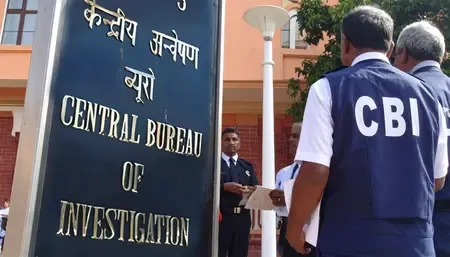
The Central Bureau of Investigation (CBI) has arrested a key accused in a long-running illegal telecom exchange racket in Kochi, nearly 21 years after he first went absconding, the agency confirmed on Thursday, 24 September 2026. The accused, Suresh Kumar Padmini Bini alias Bini S.P., was apprehended in Thiruvananthapuram on 23 September, executing a Non-Bailable Warrant issued by the Court of the Chief Judicial Magistrate (CJM), Ernakulam.
Background of the Case
The CBI originally registered the case on 31 January 2005. Investigations established that during 2004–05, the accused allegedly impersonated a person named K. Sunil and used forged documents to fraudulently obtain telephone and internet connections. Those connections were then used to operate an illegal telecom exchange from rented premises on SRM Road, Kochi.
According to the CBI, the accused was unlawfully routing incoming international long-distance (ISD) calls through internet-based channels, bypassing authorised telecom gateways and regulatory mechanisms — a practice known as SIM box or grey-route call termination.
Financial and National Security Dimensions
By illegally terminating international calls as local calls, the operation allegedly caused a wrongful loss of approximately ₹12.69 lakh to the government exchequer. Beyond the revenue angle, CBI officials said the clandestine hub raised serious national security concerns, as unmonitored international call routing can obscure the origin and identity of callers — a red flag for intelligence agencies.
A charge sheet was filed against the accused on 25 March 2008, but he had remained untraceable and continuously evaded the judicial process from the time the case was first registered.
How the CBI Tracked Him Down
After years of sustained intelligence gathering and persistent follow-up, CBI investigators were able to establish the whereabouts of the accused. The agency did not disclose specifics of the surveillance operation, citing ongoing legal proceedings. His arrest after more than two decades underscores the agency's stated commitment to closing long-pending warrants even in legacy cases.
This is the latest in a pattern of CBI closures on cases that had gone cold — a reminder that absconding from a charge sheet does not permanently foreclose legal accountability.
Court Proceedings
After completing the required legal formalities, the accused was produced before the competent court in Ernakulam on 23 September. The court remanded him to 14 days of judicial custody. The next phase of proceedings is expected to focus on framing of charges, given that the charge sheet was filed as far back as 2008.
Point of View
And it raises legitimate questions about how systematically the CBI pursued this absconder over those two decades. The ₹12.69 lakh loss figure is modest by fraud standards, but the national security dimension — unmonitored international call routing — was arguably the more serious element, and it deserved faster closure. The case also illustrates the structural weakness of India's legacy warrant-execution machinery: charge sheets filed in 2008 should not require another 17 years to produce an arrest. The CBI's eventual success is worth noting, but so is the timeline.
NationPress
24 Sept 2026
Frequently Asked Questions
Who is Suresh Kumar Padmini Bini and why was he arrested?
Suresh Kumar Padmini Bini, also known as Bini S.P., is the key accused in a 2005 CBI case involving an illegal telecom exchange in Kochi. He was arrested on 23 September 2026 in Thiruvananthapuram after evading law enforcement for nearly 21 years, in execution of a Non-Bailable Warrant issued by the CJM, Ernakulam.
What was the illegal telecom exchange racket in Kochi?
The accused allegedly used forged documents to obtain telephone and internet connections under a false identity and operated an illegal exchange from SRM Road, Kochi, routing incoming international ISD calls through internet channels to bypass authorised gateways. This made international calls appear as local calls, allegedly causing a government loss of ₹12.69 lakh and raising national security concerns.
When was the CBI case registered and when was the charge sheet filed?
The CBI registered the case on 31 January 2005, and filed a charge sheet against the accused on 25 March 2008. The accused had been absconding continuously since the case was first registered, making the 23 September 2026 arrest more than 21 years in the making.
What is the current legal status of the accused?
After being arrested on 23 September 2026 and produced before a court in Ernakulam, the accused was remanded to 14 days of judicial custody. Proceedings are now expected to move toward framing of charges under the charge sheet filed in 2008.
Why did the case raise national security concerns?
Illegally routing international calls as local calls bypasses authorised telecom gateways and regulatory oversight, making it difficult for intelligence agencies to monitor the origin and identity of callers. The CBI noted that beyond the revenue loss, the clandestine hub posed serious national security concerns for this reason.