BSNL officer convicted in Ranchi DA case, sentenced to 3-year jail
Synopsis
Nearly 18 years after the CBI first registered the case, a Ranchi special court has convicted former BSNL technical officer Ram Vinod Singh for accumulating ₹34 lakh in assets beyond his known income — sentencing him to three years' rigorous imprisonment and a ₹25 lakh fine. The verdict is a reminder that anti-corruption prosecutions, however slow, do reach a conclusion.
Key Takeaways
A special CBI court in Ranchi convicted former BSNL technical officer Ram Vinod Singh on 29 May in a disproportionate assets case.
Singh was sentenced to three years' rigorous imprisonment and fined ₹25 lakh .
Failure to pay the fine within the stipulated period will attract an additional one year of simple imprisonment .
The CBI originally registered the case in 2007 (RC 02(A)/2007), making the trial nearly 18 years long.
Singh allegedly possessed assets worth approximately ₹34 lakh disproportionate to his known income; searches at Jamshedpur premises recovered ₹68,000 in cash and property documents.
He was convicted under Sections 13(2) and 13(1)(e) of the Prevention of Corruption Act, 1988 .
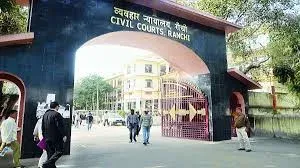
A special CBI court in Ranchi on Friday, 29 May convicted former Bharat Sanchar Nigam Limited (BSNL) technical officer Ram Vinod Singh in a disproportionate assets case, sentencing him to three years' rigorous imprisonment and imposing a fine of ₹25 lakh. The verdict, delivered by Special Judge Yogesh Kumar, marks the conclusion of a corruption probe that was first registered nearly two decades ago.
Background of the Case
The CBI's Anti-Corruption Branch in Ranchi registered the case — bearing reference number RC 02(A)/2007 — in 2007 against Ram Vinod Singh. Investigators alleged that Singh, while serving as a BSNL technical officer, misused his official position to accumulate assets worth approximately ₹34 lakh beyond his known sources of income.
During searches conducted at his premises in Jamshedpur and surrounding areas, the CBI recovered cash of ₹68,000, along with documents pertaining to multiple movable and immovable properties that were found to be disproportionate to his legitimate earnings.
Charges and Court Findings
Following a detailed investigation, the CBI filed a charge sheet and proceeded to trial, presenting documentary evidence and examining multiple witnesses. CBI public prosecutor Davinder Pal Sood argued before the court that Singh had amassed property through corrupt means by abusing his position as a public servant.
The court found Singh guilty under Sections 13(2) and 13(1)(e) of the Prevention of Corruption Act, 1988 — provisions that deal with criminal misconduct by public servants and the possession of disproportionate assets. He was sentenced to three years' rigorous imprisonment along with a fine of ₹25 lakh.
Fine Default Clause
Special Judge Yogesh Kumar specified that if Singh fails to deposit the ₹25 lakh fine within the stipulated period, he will face an additional one year of simple imprisonment. This provision is standard under anti-corruption sentencing guidelines and is intended to ensure compliance with financial penalties.
Significance of the Verdict
The conviction underscores the CBI's sustained focus on public-sector corruption cases, even when trials extend over extended periods. This is one of several disproportionate assets cases the agency has pursued against government-linked officers in Jharkhand. Notably, the case was registered in 2007, meaning the judicial process spanned close to 18 years before a final verdict was reached.
With the verdict now delivered, Singh's legal options include filing an appeal before a higher court. The CBI has indicated it will monitor compliance with the court's directions on the fine.
Point of View
Which dilutes deterrence. When a verdict arrives two decades after the offence, the message to would-be offenders is muted. The CBI's track record in disproportionate assets cases in Jharkhand has been patchy; convictions are relatively rare relative to the volume of cases registered. This verdict is a data point, not a trend.
NationPress
12 Oct 2026
Frequently Asked Questions
Who is Ram Vinod Singh and what was he convicted for?
Ram Vinod Singh is a former technical officer of Bharat Sanchar Nigam Limited (BSNL) who was convicted by a special CBI court in Ranchi on 29 May for possessing assets disproportionate to his known sources of income. He was found guilty under Sections 13(2) and 13(1)(e) of the Prevention of Corruption Act, 1988.
What is the sentence handed to Ram Vinod Singh?
The court sentenced Singh to three years' rigorous imprisonment and imposed a fine of ₹25 lakh. If he fails to deposit the fine within the stipulated period, he will serve an additional one year of simple imprisonment.
When was the CBI case against Singh first registered?
The CBI's Anti-Corruption Branch in Ranchi registered the case in 2007 under reference RC 02(A)/2007, meaning the trial spanned close to 18 years before the final verdict was delivered.
What assets did the CBI find during its investigation?
During searches at Singh's premises in Jamshedpur and other areas, the CBI recovered ₹68,000 in cash along with documents for several movable and immovable properties. The total disproportionate assets were assessed at approximately ₹34 lakh beyond his known income.
What legal provisions was Singh convicted under?
Singh was convicted under Sections 13(2) and 13(1)(e) of the Prevention of Corruption Act, 1988, which pertain to criminal misconduct by a public servant and possession of assets disproportionate to known sources of income.