Have Two Retired SBI Officials Been Sentenced to Jail Over a 15-Year-Old Fraud Case?
Synopsis
In a landmark ruling against banking malfeasance, two retired SBI officials have been sentenced for their role in a significant fraud case involving 5.7 crore rupees. This case sheds light on the vulnerabilities within the banking sector and the lengths to which individuals will go for personal gain.
Key Takeaways
Two retired SBI officials sentenced for a 15-year-old fraud case.
5.7 crore rupees misappropriated from public funds.
Mastermind of the fraud passed away during the trial.
Evidence included WhatsApp chats and handwritten notes .
SBI to recover losses by seizing company assets .
Lucknow, Nov 4 (NationPress) In a significant step towards combating banking fraud, the Special CBI Court (West) in Lucknow issued a verdict on Tuesday, convicting two retired officials from the State Bank of India along with a Lucknow-based construction company for their involvement in a fraud case that dates back fifteen years, which unlawfully drained 5.7 crore rupees from public funds.
Former deputy manager Subhash Chandra Aggarwal and ex-desk officer Joy Chakravarti, both associated with SBI's main branch and local head office, received a sentence of three years of rigorous imprisonment and were each fined thirty thousand rupees.
The third defendant, Addyapolo Projects Private Limited, incurred a corporate penalty of ten lakh rupees. The firm’s director, Kranti Kumar Singh, who orchestrated the fraud, evaded justice by passing away during the trial.
The fraudulent scheme commenced in 2009 when Singh aimed to acquire easy funds for his financially struggling company. He fabricated invoices and balance sheets to establish three fictitious supplier entities: Zassoda Global Marketing, RK Traders, and Sambhav Enterprises.
Utilizing these documents, he convinced Aggarwal and Chakravarti to approve a term loan of 5.7 crore rupees under the pretense of purchasing machinery.
Once the funds were disbursed, Singh transferred all of it into his personal accounts, leaving the bank with worthless contracts, and the promised machinery never materialized.
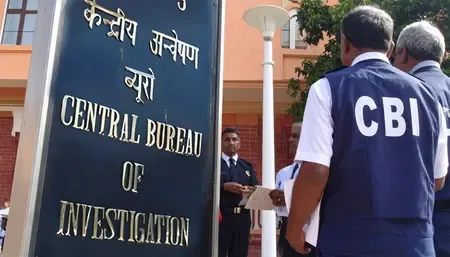
A whistle-blowing complaint from SBI’s deputy general manager reached the CBI on March 26, 2010, prompting investigations across various offices and homes in Lucknow. Investigators found a trail of circular transactions, rubber-stamped approvals, and non-existent machinery.
By November 2011, the CBI had submitted a comprehensive chargesheet outlining cheating, criminal conspiracy, and violation of trust under the Indian Penal Code and Prevention of Corruption Act.
After 312 hearings over fourteen years, Special Judge Anil Kumar Mishra concluded that the evidence was “overwhelming and unbroken.”
In a crowded courtroom, the judge remarked that the officials had “betrayed the sacred trust reposed in them by millions of depositors” while ignoring blatant warning signs for trivial kickbacks.
Prosecutors presented WhatsApp conversations and handwritten notes from Aggarwal’s diary that confirmed the collusion.
Outside the courtroom, CBI spokesperson Rina Mitra informed the media that the ruling conveys a clear message: no individual, whether in a white or khaki collar, is above the law.
SBI’s regional manager assured that efforts would be made to recover the owed amounts by seizing the company's remaining assets, including a half-finished commercial complex located on Gomti Nagar’s VIP Road.
Point of View
It is imperative to recognize the significance of this verdict in reinforcing public trust in the banking system. The actions of these individuals reflect a betrayal of duty that must be addressed with transparency and accountability. The ruling serves as a stark reminder that integrity in banking is not negotiable, and we must continue to uphold the principles of justice and fairness.
NationPress
23 Sept 2026
Frequently Asked Questions
What was the fraud amount involved in the SBI case?
The fraud involved an amount of 5.7 crore rupees.
How long did the trial last?
The trial lasted for fourteen years, consisting of 312 hearings.
What penalties were imposed on the convicted officials?
Both officials were sentenced to three years of rigorous imprisonment and fined thirty thousand rupees each.
What happened to the mastermind of the fraud?
The mastermind, Kranti Kumar Singh, passed away during the trial, evading justice.
What measures will SBI take to recover losses?
SBI plans to attach the remaining assets of the company, including a half-built commercial complex, to recover the dues.