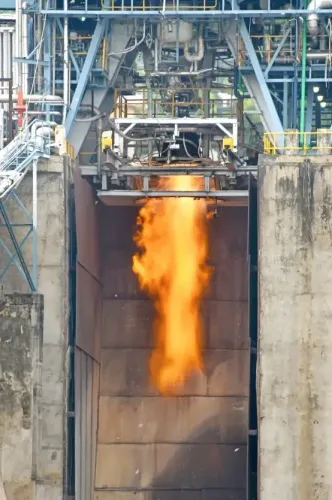
N. Jayan, CE20 cryogenic engine chief, appointed ISRO LPSC Director
Synopsis
The engineer who built India's CE20 cryogenic engine — the technology that gave LVM3 its heavy-lift capability and ended dependence on foreign propulsion — now heads ISRO's engine-development nerve centre. N. Jayan's elevation to LPSC Director arrives precisely as India's next-generation launch vehicle programme moves from blueprint to hardware.
Key Takeaways
Jayan has been appointed Director of ISRO's Liquid Propulsion Systems Centre (LPSC) , announced on 27 June .
Jayan led development of the CE20 cryogenic engine that powers the LVM3 heavy-lift launch vehicle.
He previously served as Project Director of the Cryogenic Stage Project and the Next Generation Launch Vehicle (NGLV) programme.
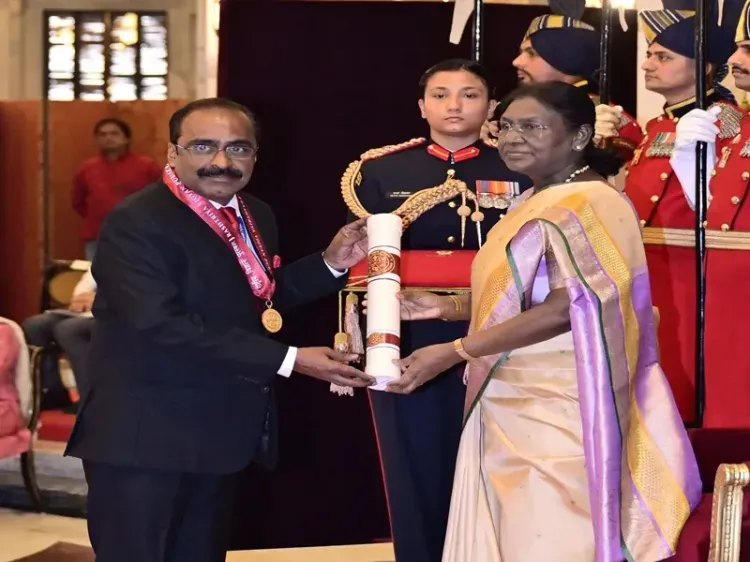
He is a recipient of the Rashtriya Vigyan Puraskar , conferred by the President in 2025 .
Jayan holds a Gold Medal Master's degree in Aerospace Engineering from IISc, Bengaluru .
His appointment comes as ISRO accelerates work on next-generation launch vehicles and deep-space missions.
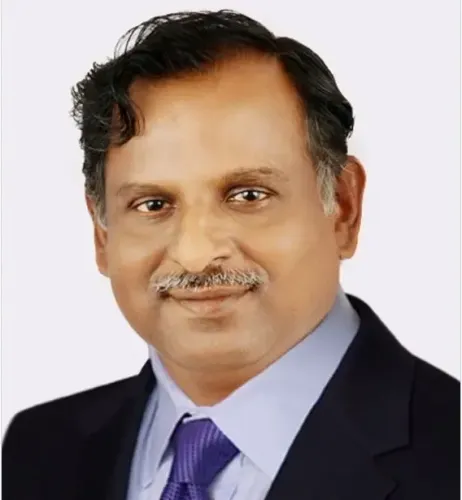
Aerospace engineer N. Jayan, the principal architect behind India's indigenous CE20 cryogenic engine that propels the LVM3 heavy-lift launch vehicle, has been appointed Director of the Liquid Propulsion Systems Centre (LPSC) of the Indian Space Research Organisation (ISRO). The appointment, announced on 27 June, places one of the country's foremost propulsion experts at the helm of ISRO's most strategically critical engine-development establishment in Thiruvananthapuram.
Who Is N. Jayan
Jayan holds a degree in Mechanical Engineering from the College of Engineering, Thiruvananthapuram (CET) and a Gold Medal-winning Master's degree in Aerospace Engineering from the Indian Institute of Science (IISc), Bengaluru. Over a career spanning several decades, he rose through ISRO's propulsion hierarchy, serving as Project Director of the Cryogenic Stage Project and later as Project Director of the Next Generation Launch Vehicle (NGLV) programme at the Vikram Sarabhai Space Centre. He most recently served as Associate Director of LPSC before assuming the top post.
The CE20 Engine: A Defining Breakthrough
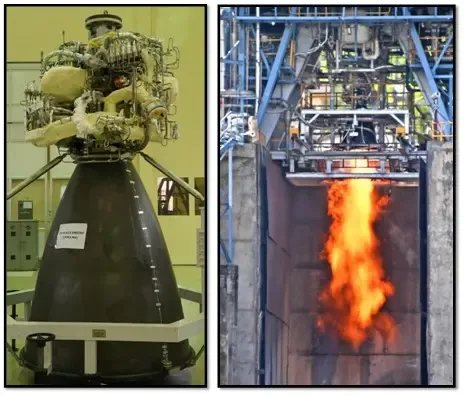
The CE20, developed under Jayan's leadership, powers the cryogenic upper stage of the LVM3 — formerly designated GSLV Mk III — and marked a watershed moment in India's pursuit of self-reliance in advanced space propulsion. The engine significantly expanded India's capacity to launch heavy satellites into geostationary transfer orbit using entirely indigenous technology, ending dependence on foreign cryogenic systems for high-mass missions. The achievement is widely regarded as one of the most consequential milestones in the country's space programme.
Honours and Recognition
Jayan's contributions to Indian space technology have earned him several prestigious honours. These include the Astronautical Society of India Space Gold Medal, three ISRO Team Awards, and the Rashtriya Vigyan Puraskar — India's highest civilian science honour — conferred by the President of India in 2025 for his outstanding contributions to space research.
What His Appointment Signals for ISRO
Jayan takes charge of LPSC at a pivotal juncture. ISRO is currently accelerating development of next-generation launch vehicles, advanced in-space propulsion systems, and deep-space mission architectures. The NGLV programme — in which Jayan played a foundational role — is among the organisation's most ambitious near-term projects, designed to dramatically increase India's payload capacity and launch frequency. His dual experience in cryogenic stage development and next-generation vehicle design makes him a natural fit to lead the centre through this phase. Notably, LPSC is also responsible for propulsion systems for planetary and lunar missions, meaning Jayan's remit extends well beyond launch vehicles alone.
Road Ahead
With India's space sector opening to private players and ISRO's mission cadence intensifying, the LPSC directorship carries greater strategic weight than at any previous point. Jayan's appointment is expected to accelerate indigenous propulsion development timelines and deepen the technology base that underpins India's ambitions as a leading spacefaring nation.
Point of View
ISRO is betting on continuity of technical leadership over bureaucratic rotation — a departure from past practice. The deeper question is whether LPSC, historically a development centre, can also become a production-scale propulsion hub as private launch operators enter the market and demand faster engine supply chains. Jayan's NGLV background gives him the right credentials; the test will be whether institutional structures at LPSC can keep pace with the ambition.
NationPress
26 Sept 2026
Frequently Asked Questions
Who is N. Jayan and why is his appointment significant?
N. Jayan is an aerospace engineer who led the development of India's CE20 cryogenic engine, which powers the LVM3 heavy-lift launch vehicle. His appointment as ISRO LPSC Director is significant because it places the architect of India's most advanced indigenous rocket engine at the head of the organisation's primary propulsion development centre.
What is the CE20 cryogenic engine?
The CE20 is an indigenously developed cryogenic engine that powers the upper stage of ISRO's LVM3 launch vehicle, formerly known as GSLV Mk III. It enables India to launch heavy satellites into geostationary transfer orbit without relying on foreign propulsion technology, and is widely regarded as a landmark achievement in India's space self-reliance programme.
What is the Liquid Propulsion Systems Centre (LPSC)?
The LPSC, headquartered in Thiruvananthapuram, is one of ISRO's most strategic establishments. It is responsible for designing and developing propulsion systems for India's launch vehicles and space missions, including engines for planetary and lunar programmes.
What awards has N. Jayan received?
Jayan has received the Astronautical Society of India Space Gold Medal, three ISRO Team Awards, and the Rashtriya Vigyan Puraskar — India's highest civilian science honour — conferred by the President of India in 2025.
What challenges will Jayan face as LPSC Director?
Jayan takes charge as ISRO accelerates the Next Generation Launch Vehicle (NGLV) programme, expands its deep-space mission portfolio, and navigates a rapidly growing private space sector in India. His primary challenge will be scaling indigenous propulsion development to meet a more ambitious and faster-paced launch cadence.