CEC Gyanesh Kumar meets Mongolian envoy on poll management, election training
Synopsis
India's Chief Election Commissioner Gyanesh Kumar has held back-to-back meetings with envoys from Mongolia, Kazakhstan, Georgia, Uzbekistan, and Sri Lanka — all anchored to IICDEM 2026 commitments. The ECI is systematically converting a multilateral conference into a series of bilateral election-training partnerships, quietly building India's soft power as the world's largest democracy.
Key Takeaways
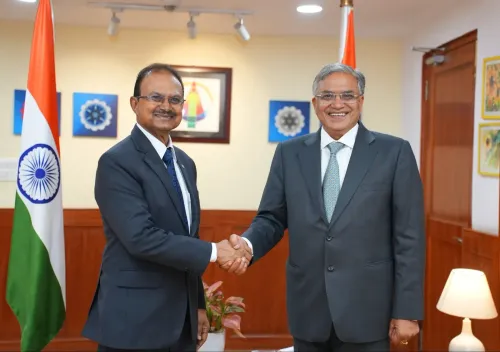
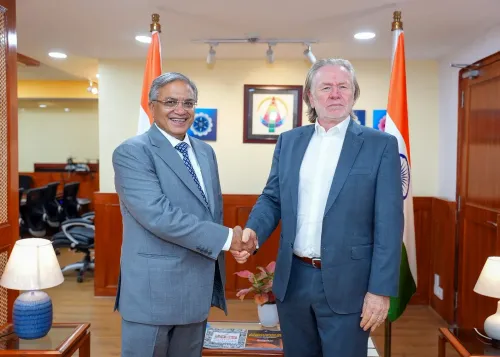
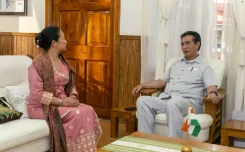
CEC Gyanesh Kumar met Mongolia's Ambassador Ulziit Luvsanjav on 7 August at Nirvachan Sadan, New Delhi .
Both sides committed to deepening collaboration on election management and training of election staff under the IICDEM 2026 framework.
Kumar has held similar meetings this month with envoys from Kazakhstan, Georgia, Uzbekistan, and Sri Lanka .
All engagements are part of the ECI's global outreach to share India's best practices in democratic governance.
The ECI described India's ambition as becoming 'a trusted partner in the region's democratic development.'
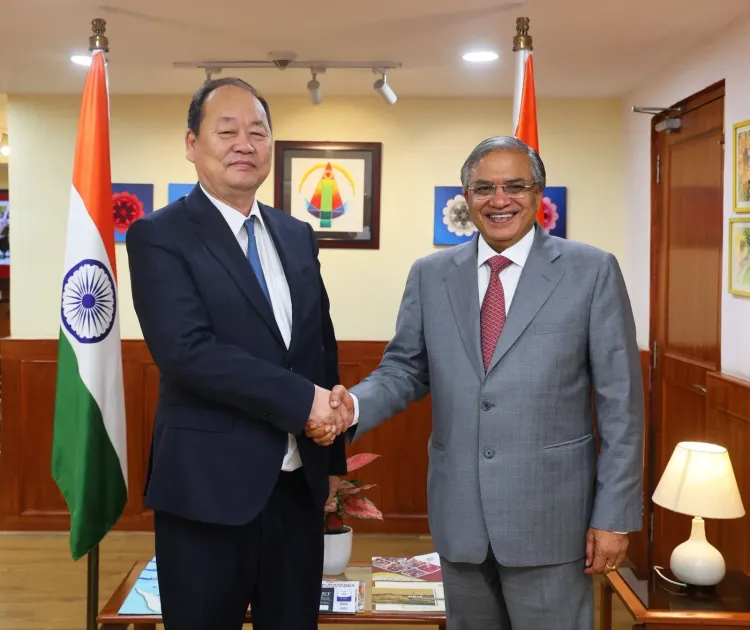
Chief Election Commissioner (CEC) Gyanesh Kumar, who also serves as Chairman of the Council of Member States of International IDEA, on Friday, 7 August met Mongolia's Ambassador Ulziit Luvsanjav at Nirvachan Sadan in New Delhi to discuss democratic cooperation and the training of election staff. The meeting is part of a sustained diplomatic outreach by the Election Commission of India (ECI) to position India as a global reference point for election management.
What Was Discussed
According to an official statement issued by the ECI on social media platform X, both sides 'reaffirmed their shared commitment to strengthening democratic cooperation, in line with the vision set out at IICDEM 2026.' They also agreed to deepen collaboration on election management and the training of election staff. The meeting reflects a growing bilateral interest in institutionalising electoral knowledge-sharing between the two countries.
Part of a Broader Diplomatic Series
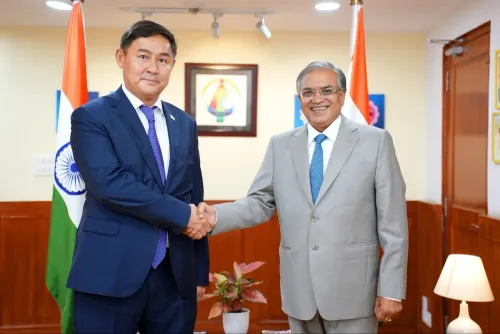
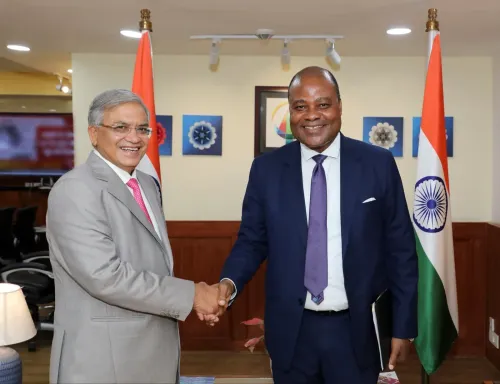
The Mongolia meeting is not an isolated engagement. Earlier this month, CEC Gyanesh Kumar met Kazakhstan's Ambassador Azamat Yeskarayev at Nirvachan Sadan, where both sides echoed a near-identical commitment to democratic cooperation and election staff training, also framed around the IICDEM 2026 agenda.
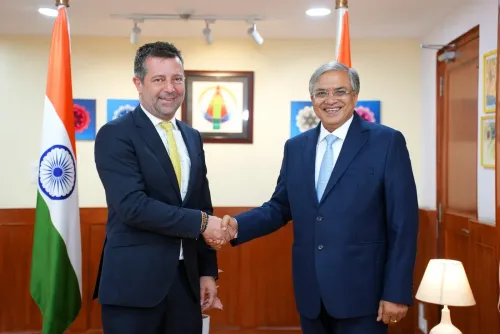
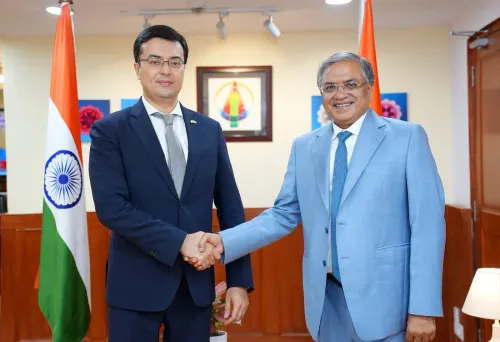
In a separate meeting, Kumar received Georgia's Ambassador Vakhtang Jaoshvili at Nirvachan Sadan, with the ECI confirming discussions on cooperation and election staff training. The CEC has also held meetings with Uzbekistan's Ambassador Sardor Rustambaev and Sri Lanka's Envoy Mahishini Colonne in recent weeks.
India's Role at IICDEM 2026
The International Institute for Democracy and Electoral Assistance (International IDEA) conference — IICDEM 2026 — has served as the common reference point across all these bilateral engagements. The ECI's statement following the Uzbekistan meeting noted that both sides resolved to 'advance the agenda set out at the conference, reinforcing India's role as a trusted partner in the region's democratic development.'
This string of high-level diplomatic meetings signals a deliberate effort by the ECI to leverage India's scale and institutional experience in running the world's largest democratic elections as a model for capacity-building in the wider region.
What This Signals
India's election management diplomacy has accelerated in 2026, with the ECI engaging envoys from at least five countries — Mongolia, Kazakhstan, Georgia, Uzbekistan, and Sri Lanka — within a compressed timeframe. The repeated emphasis on IICDEM 2026 suggests the ECI is translating conference commitments into bilateral action plans. How these agreements translate into concrete training programmes and institutional exchanges will be the metric to watch going forward.
Point of View
All anchored to IICDEM 2026 — is less about courtesy calls and more about building a structured electoral soft-power network. What is notable is the uniformity of language across every bilateral statement: 'election management' and 'training of election staff' appear verbatim in each. That consistency suggests a template-driven strategy rather than bespoke engagement. The real test will be whether these commitments produce funded training programmes and institutional exchanges, or remain aspirational conference follow-ups. India's credibility as a democratic model is genuine, but the ECI will need to move from communiqués to curricula.
NationPress
22 Sept 2026
Frequently Asked Questions
Why did CEC Gyanesh Kumar meet Mongolia's ambassador?
CEC Gyanesh Kumar met Mongolia's Ambassador Ulziit Luvsanjav on 7 August at Nirvachan Sadan to discuss democratic cooperation and the training of election staff, in line with commitments made at IICDEM 2026. The meeting is part of the Election Commission of India's broader global outreach initiative.
What is IICDEM 2026?
IICDEM 2026 is an international conference on democracy and election management that has served as the common reference framework for India's recent bilateral engagements with multiple countries. The Election Commission of India has cited it as the basis for deepening electoral cooperation with nations across Asia and beyond.
Which other countries has CEC Gyanesh Kumar met recently?
In addition to Mongolia, CEC Gyanesh Kumar has met envoys from Kazakhstan, Georgia, Uzbekistan, and Sri Lanka in recent weeks. All meetings focused on election management cooperation and staff training under the IICDEM 2026 agenda.
What is International IDEA and what is Gyanesh Kumar's role in it?
International IDEA — the International Institute for Democracy and Electoral Assistance — is an intergovernmental organisation that supports democratic governance worldwide. CEC Gyanesh Kumar serves as Chairman of its Council of Member States, giving him a multilateral platform to advance India's election management expertise globally.
What outcomes are expected from these diplomatic meetings?
Both the ECI and its bilateral partners have agreed to strengthen collaboration on election management and staff training. According to official statements, the goal is to advance the agenda set at IICDEM 2026, though specific timelines for training programmes or institutional exchanges have not yet been publicly detailed.