Centre reviews Legal Metrology reforms with 6 northern states and 3 UTs

Synopsis
The Centre's push to overhaul India's weights-and-measures regulatory regime is moving into high gear. With northern states now in the loop — following a southern consultation earlier this week — the Department of Consumer Affairs is pressing states to shift from licences to automatic registrations, expand third-party verification, and activate GATC rules, all while keeping consumer fraud enforcement firmly intact.
Key Takeaways
The Department of Consumer Affairs held a review meeting on 31 May 2025 with 6 northern states and 3 Union Territories on Legal Metrology Act reforms.
The Jan Vishwas 'Improvement Notice' mechanism allows businesses to correct first-time procedural violations before penal action is initiated.
The existing licensing regime for weights and measures is being replaced by an automatic registration system to ease business compliance.
States were urged to notify GATC Rules and expand instrument categories under the Government Approved Test Centre framework.
Digitisation efforts, including the e-Maap portal , and capacity building for Legal Metrology officers were also reviewed.
The meeting follows a similar session with southern states earlier the same week, part of an ongoing national rollout.
The Department of Consumer Affairs on 31 May 2025 convened a review meeting with officials from Uttar Pradesh, Uttarakhand, Himachal Pradesh, Punjab, Haryana, and the Union Territories of Chandigarh, Jammu and Kashmir, and Ladakh to assess progress on reforms introduced under the Legal Metrology Act, 2009. The session was chaired by Nidhi Khare, Secretary of the Union Department of Consumer Affairs, and focused on reducing compliance burden while safeguarding consumer interests.
Key Reforms Under Review
A central agenda item was the newly introduced 'Improvement Notice' mechanism, rolled out under the Jan Vishwas reform package. The provision gives businesses a structured opportunity to correct first-time procedural violations before penal action is triggered — a shift designed to encourage voluntary compliance and cut down on avoidable litigation.
The Department also reviewed the transition from a licensing-based to a registration-based system for manufacturers, dealers, and repairers of weights and measures. Officials were explicit that the reform goes beyond a semantic change: registrations are to be granted automatically upon submission of prescribed documents, materially reducing processing delays and lowering the entry barrier for businesses operating under the legal metrology framework.
Verification Infrastructure and GATC Expansion
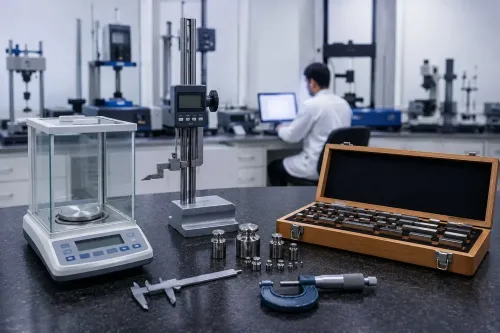
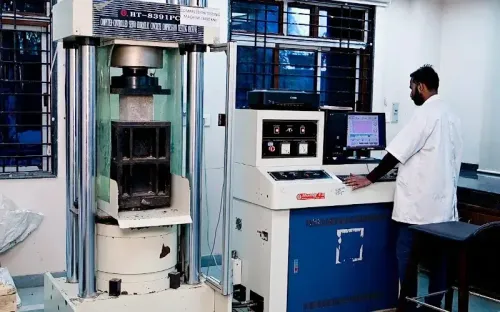
Verification and stamping of weights and measures received significant attention. States were briefed on the expansion of the Government Approved Test Centre (GATC) framework, along with the growing role of self-verification and third-party verification mechanisms. The Department urged all participating states and UTs to notify their GATC Rules at the earliest and to bring additional categories of weighing and measuring instruments within the GATC fold — steps aimed at improving service availability and cutting turnaround time for businesses.
Digitisation and Capacity Building
The meeting also took stock of digitisation initiatives, including the e-Maap portal, capacity building programmes for Legal Metrology officers, and efforts to strengthen verification infrastructure nationwide. States shared updates on amendments to their Enforcement Rules and outlined steps being taken to align local regulatory frameworks with the Centre's recent reforms.
Consumer Protection Remains Non-Negotiable
Despite the push to simplify procedural compliances, the Department was unambiguous that consumer protection will not be diluted. Strict enforcement against fraud, tampering, and deliberate violations will continue under the Legal Metrology framework. This meeting follows a similar consultation with southern states held earlier in the same week, forming part of a structured regional engagement drive to ensure uniform implementation of reforms across the country.
According to the official statement, the regional consultations reflect the Union government's commitment to 'building a modern, transparent and efficient Legal Metrology ecosystem that promotes Ease of Doing Business, encourages voluntary compliance, and strengthens consumer confidence across the country.'
Point of View
But the real test lies in state-level execution — historically uneven on regulatory modernisation. The Jan Vishwas 'Improvement Notice' is a sound decriminalisation tool, yet its effectiveness depends entirely on how states define and document 'first-time' violations, a grey area that could be gamed or inconsistently applied. The GATC expansion is the least visible but arguably most consequential reform: without adequate third-party verification infrastructure, the entire compliance architecture rests on an overloaded government apparatus. The Centre's back-to-back regional consultations signal intent, but intent and implementation have diverged before on consumer-protection reforms.
NationPress
15 Sept 2026
Frequently Asked Questions
What are the Legal Metrology Act reforms being reviewed by the Centre?
The Centre is reviewing a set of reforms under the Legal Metrology Act, 2009, that include a new 'Improvement Notice' mechanism for first-time violations, a shift from licensing to automatic registration for weights and measures businesses, and expansion of the Government Approved Test Centre (GATC) framework. The reforms aim to reduce compliance burden and improve Ease of Doing Business while maintaining consumer protection.
What is the Jan Vishwas 'Improvement Notice' mechanism?
The 'Improvement Notice' is a provision introduced under the Jan Vishwas reform package that allows businesses to rectify first-time procedural violations before penal action is initiated. It is intended to promote voluntary compliance and reduce unnecessary litigation under the Legal Metrology framework.
Which states and UTs participated in the 31 May 2025 meeting?
The meeting included officials from Uttar Pradesh, Uttarakhand, Himachal Pradesh, Punjab, and Haryana, along with the Union Territories of Chandigarh, Jammu and Kashmir, and Ladakh. The session was chaired by Nidhi Khare, Secretary of the Department of Consumer Affairs.
What is the Government Approved Test Centre (GATC) framework?
The GATC framework enables approved testing centres — including third-party entities — to verify and stamp weights and measuring instruments, reducing dependence on government-only verification. The Centre has urged states to notify their GATC Rules and expand the categories of instruments covered to improve service availability and reduce turnaround time.
Will consumer protection be weakened by these business-friendly reforms?
The Department of Consumer Affairs has stated explicitly that consumer protection will not be compromised. Strict enforcement against fraud, tampering, and deliberate violations will continue under the Legal Metrology framework even as procedural compliances are simplified.