Centre pushes southern states to fast-track Jan Vishwas Legal Metrology reforms

Synopsis
The Centre is pushing southern states to stop treating Jan Vishwas Legal Metrology reforms as paperwork and start delivering them as policy — automatic registrations, Improvement Notices before penalties, and expanded GATCs. The jurisdictional clarification on inter-state verification is a significant operational signal that has flown under the radar.
Key Takeaways
The Department of Consumer Affairs reviewed Jan Vishwas Legal Metrology reforms with Andhra Pradesh, Karnataka, Kerala, Tamil Nadu, Telangana and Puducherry on 28 May .
A new Improvement Notice mechanism means first-time procedural offenders receive a notice before any penal action under the Legal Metrology Act, 2009 .
States must grant registrations automatically on document submission — no prior inspections or delays allowed under the new framework.
GATCs can only operate within the state or UT for which approval was granted; inter-state verification is not permitted under the 2009 Act.
Training for Legal Metrology Officers will be conducted through IILM, Ranchi ; digital services to be delivered via the e-Maap portal .
The Centre's Department of Consumer Affairs on Thursday, 28 May convened a review meeting with officials from Andhra Pradesh, Karnataka, Kerala, Tamil Nadu, Telangana, and the Union Territory of Puducherry to accelerate implementation of reforms under the Legal Metrology Act, 2009, introduced through the Jan Vishwas initiative. The meeting pressed states to move faster on decriminalisation of minor offences, a new registration framework, and expansion of verification infrastructure.
Key Reforms on the Table
The discussions centred on four reform pillars: a shift from licensing to registration-based compliance, the rollout of 'Improvement Notices' for first-time procedural violations, expansion of Government Approved Test Centres (GATCs), and digitisation of Legal Metrology services. The Department also flagged capacity building for Legal Metrology Officers as a priority area.
Under the newly introduced Improvement Notice mechanism, businesses committing a first-time procedural breach under specified sections of the Act will receive a notice before any penal action is initiated. The reform is designed to encourage voluntary compliance, reduce litigation, and improve Ease of Doing Business without compromising consumer protection.
Registration Over Licensing: A Trust-Based Shift
States were urged to ensure that the transition from licensing to registration is substantive, not cosmetic. The Department emphasised that registrations must be granted automatically upon submission of prescribed documents, without prior inspections or unnecessary procedural delays. Participating states indicated that revised Enforcement Rules and GATC Rules are in advanced stages of drafting and are expected to be notified shortly.
GATC Expansion and Jurisdictional Clarity
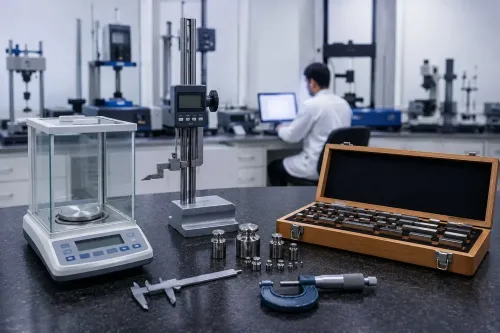
The Department called on states and Union Territories to notify their GATC Rules promptly and widen the range of instruments covered under the mechanism. Expanded GATCs are expected to strengthen verification infrastructure, improve the availability of verifiers, and enable faster service delivery to industries, traders, and consumers.
Notably, the meeting also clarified a jurisdictional boundary: unlike the repealed Standards of Weights and Measures Act, 1976, the current Legal Metrology Act, 2009 does not permit inter-state verification of weights and measures. GATCs approved by the Director of Legal Metrology, Government of India, may carry out verification and re-verification only within the state or UT for which approval has been granted. The clarification was issued to prevent operational ambiguity and ensure uniform implementation.
Capacity Building and Digital Delivery
Training programmes for Legal Metrology Officers will be organised through the Indian Institute of Legal Metrology (IILM), Ranchi, to strengthen technical capacity. The e-Maap portal was highlighted as the primary vehicle for faster, seamless service delivery, alongside the strengthening of third-party verification mechanisms and inclusion of newly added categories of weighing and measuring instruments under GATC frameworks.
The Department reiterated that while procedural compliances are being simplified to support honest businesses and traders, strict enforcement against fraud, tampering, and violations affecting consumer interests will continue. The broader goal, officials said, is a transparent, modern regulatory ecosystem that balances business facilitation with consumer protection. Further review meetings with other regional clusters of states are expected as the rollout continues.
Point of View
The states delay. The fact that revised Enforcement Rules are still 'in advanced stages of drafting' — months after the central amendments — suggests implementation inertia that a single review meeting is unlikely to fix. The jurisdictional clarification on GATCs, while technically correct, also exposes a structural gap: a business operating across state lines must now navigate multiple verification regimes, which is a new friction point that the reform's Ease of Doing Business framing has not yet addressed.
NationPress
11 Oct 2026
Frequently Asked Questions
What are the Jan Vishwas reforms under the Legal Metrology Act?
The Jan Vishwas reforms amend the Legal Metrology Act, 2009 to decriminalise minor procedural offences, replace licensing with a registration-based framework, and introduce 'Improvement Notices' for first-time violations before any penal action is taken. The reforms aim to improve Ease of Doing Business while maintaining consumer protection.
What is an 'Improvement Notice' under the Legal Metrology framework?
An Improvement Notice is a new mechanism under the Jan Vishwas reforms that requires authorities to issue a formal notice to businesses committing a first-time procedural violation under specified sections of the Legal Metrology Act, before initiating any penal action. It is designed to encourage voluntary compliance and reduce litigation.
Can Government Approved Test Centres verify weights and measures across state lines?
No. Under the Legal Metrology Act, 2009, GATCs approved by the Director of Legal Metrology, Government of India, can only conduct verification and re-verification within the state or UT for which they have been approved. Inter-state verification, which was permitted under the repealed Standards of Weights and Measures Act, 1976, is not allowed under the current law.
Which states participated in the 28 May review meeting?
The meeting included officials from Andhra Pradesh, Karnataka, Kerala, Tamil Nadu, Telangana, and the Union Territory of Puducherry. The review was convened by the Centre's Department of Consumer Affairs to assess progress on Legal Metrology reform implementation.
How will Legal Metrology Officers be trained under the new framework?
Training programmes for Legal Metrology Officers will be organised through the Indian Institute of Legal Metrology (IILM) in Ranchi. The initiative is intended to strengthen technical capacity and support effective implementation of the Jan Vishwas reforms across states and Union Territories.