Legal Metrology rules amended: high-capacity scale verification cut to 20%
Synopsis
India has quietly rewritten a key compliance rule for heavy industry: the standard-weight requirement for verifying high-capacity scales has been slashed from 50% to just 20% of maximum capacity, backed by a repeatability test. It is a technically modest but practically significant reform that cuts real costs for logistics, warehouses, and weighbridge operators — and signals a broader push to align India's metrology framework with international standards.
Key Takeaways
The Department of Consumer Affairs amended the Legal Metrology (General) Rules, 2011 on 6 July to ease verification of high-capacity weighing instruments.
The mandatory standard-weight requirement has been reduced from 50 per cent (or one tonne, whichever was greater) to 20 per cent of maximum capacity.
The new approach requires a successful repeatability test before the reduced weight quantity is applied.
Industries, warehouses, logistics operators, and weighbridge owners stand to benefit from lower transportation and handling costs.
The reform is based on internationally accepted metrological principles and is part of a broader series of Legal Metrology compliance reforms.
The Department of Consumer Affairs has amended the Legal Metrology (General) Rules, 2011 to significantly reduce the standard-weight requirement for verifying high-capacity weighing instruments, introducing a repeatability-based scientific approach in place of the earlier volume-based mandate. The change, announced on Monday, 6 July, is expected to ease compliance burdens across industries, warehouses, logistics operators, and weighbridge owners nationwide.
What Changed in the Rules
Under the previous framework, verification of high-capacity weighing instruments required standard weights of at least one tonne or 50 per cent of the instrument's maximum capacity — whichever was greater. The amended rules replace this with a repeatability-based method that reduces the mandatory quantity to just one-fifth (20 per cent) of maximum capacity, provided the instrument passes a successful repeatability test first.
The Ministry of Consumer Affairs, Food and Public Distribution stated that the reform is grounded in internationally accepted metrological principles. A repeatability test, it noted, establishes the consistency and stability of a weighing instrument, enabling reliable verification with a substantially smaller quantity of standard weights.
Impact on Industry and Logistics
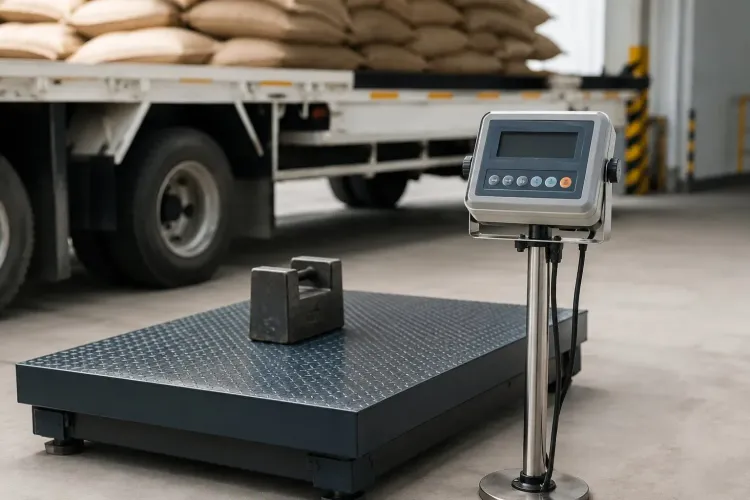
The practical implications are considerable. Transporting and handling large quantities of standard weights — sometimes running into multiple tonnes — has historically added cost and logistical complexity for industries operating high-capacity weighbridges. The revised requirement is expected to lower these transportation and handling costs directly.
Sectors likely to benefit include heavy manufacturing, bulk commodities, road freight logistics, and port operations, where high-capacity weighing instruments are routine. Notably, the reform also improves the efficiency of Legal Metrology verification activities carried out by government authorities, allowing better utilisation of verification resources without sacrificing accuracy.
The Government's Position
'The amendment reflects the Department's continued commitment to modernising the Legal Metrology framework through evidence-based regulatory reforms that balance facilitation of trade with robust consumer protection,' the official statement said.
The Department added that this amendment is part of a broader, ongoing effort to simplify compliance, reduce regulatory burden, strengthen the verification ecosystem, and promote the use of technology within the Legal Metrology framework.
Broader Regulatory Context
This is not an isolated move. The Department of Consumer Affairs has undertaken a series of reforms in recent years aimed at modernising India's weights-and-measures regulatory architecture. The shift toward internationally harmonised verification standards aligns India's framework with global metrological best practices, a step that trade and industry bodies have long advocated.
With this amendment now in effect, the government says it aims to create a more efficient, transparent, and industry-friendly regulatory environment — while maintaining the accuracy and fairness that underpin confidence in commercial transactions. Further technology-driven reforms to the Legal Metrology ecosystem are expected in the coming months.
Point of View
But the real-world cost savings for bulk-commodity logistics and heavy industry are tangible — moving multi-tonne standard weights to remote weighbridges is an under-reported compliance cost that has long irked operators. What deserves scrutiny is enforcement quality: a repeatability-based system is only as reliable as the inspectors administering it. If the Department does not invest equally in training Legal Metrology officers on the new protocol, the reform risks becoming a paper concession. The alignment with international metrological standards is a genuine step forward; the test is whether field implementation follows the policy intent.
NationPress
5 Oct 2026
Frequently Asked Questions
What is the Legal Metrology (General) Rules amendment announced in July 2025?
The amendment reduces the mandatory standard-weight requirement for verifying high-capacity weighing instruments from 50 per cent of maximum capacity (or one tonne, whichever was greater) to just 20 per cent, provided the instrument passes a repeatability test. It was announced by the Department of Consumer Affairs on 6 July.
What is a repeatability test in the context of Legal Metrology?
A repeatability test checks the consistency and stability of a weighing instrument by running multiple measurements under the same conditions. Under the amended rules, passing this test is a prerequisite before the reduced 20 per cent standard-weight quantity can be used for verification.
Who benefits from the Legal Metrology rule change?
Industries, warehouses, logistics operators, and weighbridge owners are the primary beneficiaries. The change reduces the cost and complexity of transporting large quantities of standard weights to verification sites, particularly for high-capacity instruments used in bulk commodities and heavy freight.
Does the amendment compromise weighing accuracy or consumer protection?
According to the Ministry of Consumer Affairs, Food and Public Distribution, the new approach maintains prescribed standards of verification accuracy and reliability. The reform is based on internationally accepted metrological principles, and the repeatability test ensures instrument stability before reduced weights are used.
Is this a standalone reform or part of a larger policy push?
It is part of a broader series of reforms by the Department of Consumer Affairs to simplify Legal Metrology compliance, reduce regulatory burden, and promote technology use in the verification ecosystem. Further reforms to the framework are expected in the coming months.