World Metrology Day 2025: How India's weights and measures framework protects consumers

Synopsis
On World Metrology Day 2025, India's government highlighted how the Legal Metrology Act, 2009 — backed by digital tools like the eMaap Portal and OIML certification authority — is quietly underpinning fair trade and consumer protection at every petrol pump, jewellery counter, and hospital billing desk in the country.
Key Takeaways
World Metrology Day is observed on 20 May every year, commemorating the signing of the Metre Convention on 20 May 1875 .
India's Legal Metrology Act, 2009 governs instruments at petrol pumps, grocery stores, jewellery shops, hospitals, electricity meters, and packaged commodities.
The eMaap Portal , One Nation One Time initiative, and authority to issue OIML certification are enhancing transparency and global trade integration.
The National Physical Laboratory and Regional Reference Standard Laboratories support national measurement standards and verification.
The 2025 theme — 'Metrology: Building Trust in Policy Making' — emphasises measurement science's role in evidence-based governance.
The day was formally established in 1999 by the International Committee for Weights and Measures ; BIPM and OIML jointly coordinate celebrations.
India's legal metrology ecosystem is playing a growing role in safeguarding fair trade, consumer protection, and industrial quality by enforcing accurate weights and measures across commercial transactions, according to a government statement released on Wednesday, 20 May 2025, on the occasion of World Metrology Day. The statement underscored how the country's measurement infrastructure has matured from ancient standards into a modern, digitally integrated regulatory framework.
The Legal Foundation
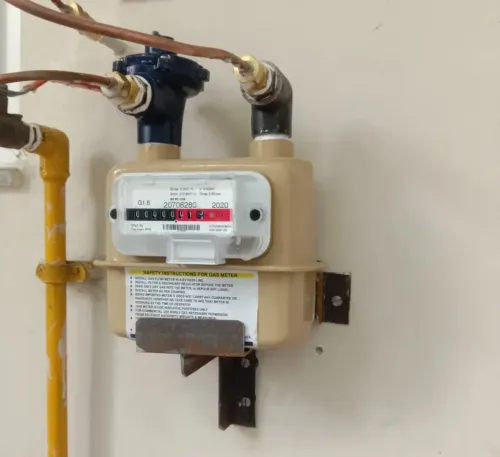
At the core of India's system is the Legal Metrology Act, 2009, which provides the regulatory backbone for weighing and measuring instruments used in everyday commerce. The Act governs instruments deployed at petrol pumps, grocery stores, jewellery shops, hospitals, electricity meters, and water supply systems, among others. It also covers packaged commodities, ensuring consumers receive the correct quantity and value for their purchases. The framework is designed to prevent short-measurement, inaccurate billing, and other unfair trade practices that erode consumer confidence.
Institutions and Digital Initiatives
Key institutions such as the National Physical Laboratory and Regional Reference Standard Laboratories underpin national measurement standards and verification systems. On the digital front, initiatives including the eMaap Portal, the One Nation One Time programme, and India's authority to issue OIML certification are enhancing transparency and operational efficiency. These measures are also deepening India's integration with global measurement and quality infrastructure, supporting smoother cross-border trade, according to the government statement.
What World Metrology Day Represents
World Metrology Day is observed every year on 20 May to commemorate the signing of the Metre Convention on 20 May 1875 — a landmark agreement that laid the institutional and scientific foundation for a globally uniform metric measurement system. The day was formally established in 1999 by the International Committee for Weights and Measures. The International Bureau of Weights and Measures (BIPM) and the International Organisation of Legal Metrology (OIML) jointly coordinate the annual celebrations.
2025 Theme: Metrology in Governance
The theme for World Metrology Day 2025 is 'Metrology: Building Trust in Policy Making', spotlighting measurement science's role in evidence-based and transparent governance. The theme is particularly relevant as governments globally lean on data-driven policy to address economic and public health challenges. In India's context, it reflects the growing use of standardised measurement in regulatory decision-making, from food safety to energy billing.
India's Evolving Measurement Ecosystem
India's legal metrology framework has advanced through successive legislative reforms, institutional capacity-building, and digital governance initiatives. The government statement noted that the ecosystem is continuously adapting to address changing trade practices, emerging technologies, and expanding consumer protection requirements. Notably, India's integration with international measurement bodies positions it to align domestic standards with global benchmarks — a prerequisite for export competitiveness in sectors ranging from pharmaceuticals to precision engineering.
As measurement science becomes increasingly central to both commerce and governance, India's metrology infrastructure is expected to see further upgrades in the years ahead.
Point of View
But it is the invisible infrastructure of every commercial transaction in India — from the fuel dispensed at a highway pump to the gold weighed at a jewellery counter. The government's World Metrology Day statement reads as a progress report, but the real question is enforcement density: how consistently are verification systems applied across India's vast informal retail sector? Digital tools like the eMaap Portal are a step forward, yet their reach in tier-3 towns and rural markets remains unclear. As India pushes for manufacturing and export competitiveness, aligning domestic measurement standards with OIML benchmarks is not just a consumer protection issue — it is a trade diplomacy one.
NationPress
19 Sept 2026
Frequently Asked Questions
What is World Metrology Day and why is it celebrated on 20 May?
World Metrology Day is an annual observance on 20 May that commemorates the signing of the Metre Convention on 20 May 1875, which established the foundation for a globally uniform metric measurement system. It was formally instituted in 1999 by the International Committee for Weights and Measures, with BIPM and OIML jointly coordinating celebrations each year.
What is the Legal Metrology Act, 2009 and how does it protect Indian consumers?
The Legal Metrology Act, 2009 is India's primary law governing the accuracy of weighing and measuring instruments used in commercial transactions, covering petrol pumps, grocery stores, jewellery shops, hospitals, electricity meters, and packaged commodities. It prevents short-measurement, inaccurate billing, and unfair trade practices, thereby protecting consumers' right to correct quantity and value.
What is the theme for World Metrology Day 2025?
The theme for World Metrology Day 2025 is 'Metrology: Building Trust in Policy Making', which highlights measurement science's role in evidence-based and transparent governance. It reflects the growing reliance on standardised data in regulatory and policy decisions globally.
What digital initiatives is India using to modernise its metrology framework?
India has launched the eMaap Portal, the One Nation One Time programme, and has been granted authority to issue OIML certification — all aimed at improving transparency, efficiency, and consumer satisfaction. These initiatives also support India's integration with global measurement and quality infrastructure.
Which institutions support India's national measurement standards?
The National Physical Laboratory and Regional Reference Standard Laboratories are the key institutions supporting India's national measurement standards and instrument verification systems. They form the scientific backbone of the country's legal metrology framework.