Energy storage: States agree 15-fold expansion for 24x7 power
Synopsis
States have agreed to a 15-fold jump in energy storage, backed by NTPC and SECI plans of 40GWh each. They have also committed to clearing government power dues within a quarter by moving official connections to prepaid smart meters. The Centre's message is clear: 24x7 power must come from renewables plus storage, not costly short-term market buys.
Key Takeaways
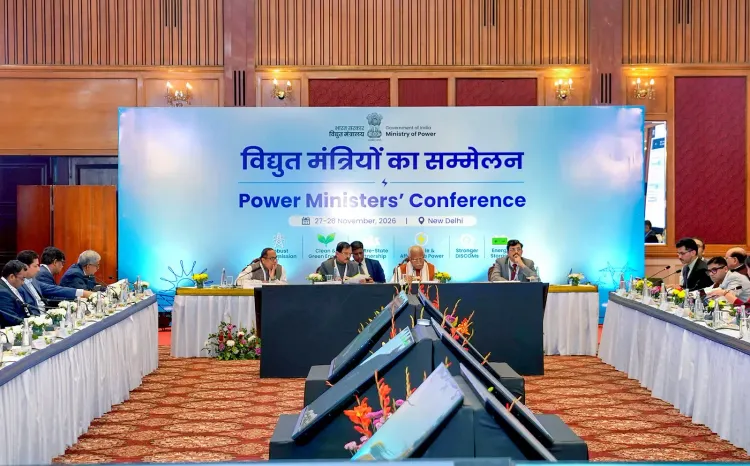
States agreed to a 15-fold expansion in energy storage at a two-day power ministers' conference in New Delhi .
NTPC and SECI have upcoming storage plans of 40GWh each .
Revised Resource Adequacy Plans up to FY 2029-30 are to be submitted within one month .
Government electricity dues are to be cleared within a quarter , with all government connections moving to prepaid smart meters .
Of 14.5 lakh households taken up for grid inclusion, around 6.25 lakh are complete; the rest are targeted by March 2027 .
States will identify nuclear sites, including retired thermal plants, towards 100 GW nuclear capacity by 2047 .
The Centre has asked all states and Union Territories to install energy storage in mission mode and lean more on renewable energy plus storage to deliver reliable round-the-clock power during both solar and non-solar hours. The aim is to cut dependence on costly short-term market purchases, according to an official statement issued in New Delhi on Sunday, 29 November 2026. States agreed to drive a 15-fold expansion in storage capacity at a two-day power ministers' conference held in the capital over the weekend.
Key Developments on Energy Storage
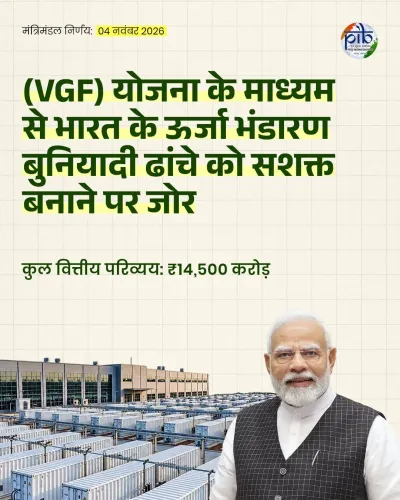
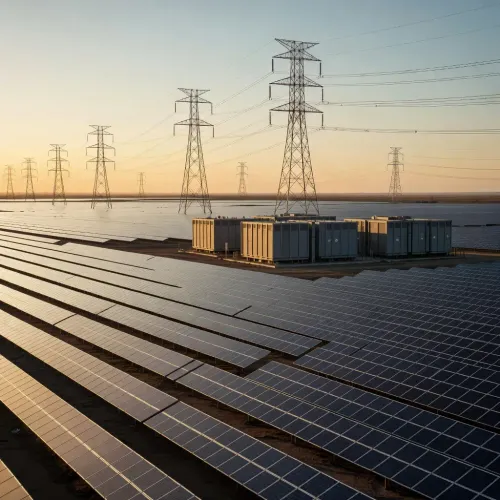
States will prioritise battery and pumped storage procurement. This will include their own investments as well as upcoming plans by NTPC and SECI of 40GWh each. Projects will be tracked end-to-end, from site selection to equipment delivery.
States also agreed to review their Resource Adequacy Plans for up to FY 2029-30 and submit them within one month. The revised plans must include verified transmission connectivity and realistic demand projections. Incremental capacity additions and resource tie-ups will be tracked every quarter.
Transmission and Grid Reforms
The statement said generation and transmission must progress in tandem. States agreed to immediately finalise Transmission Resource Adequacy roadmaps with clear line and substation targets. They will also adopt Tariff-Based Competitive Bidding (TBCB) for intra-State transmission (InSTS) and the revised CEA Technical Standards.
States further committed to faster feeder segregation and solarisation of agricultural feeders, which are intended to lower power purchase costs and subsidy burdens.
On nuclear power, states agreed to speed up site readiness, secure land and water, and identify suitable sites, including retired thermal power plant locations. The statement linked this to the Prime Minister's vision of 100 GW of nuclear power capacity by 2047.
Government Dues, Smart Meters and Consumer Trust
States agreed to clear pending government electricity dues within a quarter. All government connections will move to prepaid smart meters on an advance recharge basis instead of waiting for budgetary releases. The step is meant to end recurring government electricity arrears.
States with slow installation rates were urged to accelerate awards and saturate government, commercial and industrial consumers. To build consumer trust, utilities will install check meters to address billing issues and review consumer mobile apps. They will also initiate GIGWA audits of these apps and hold high-level reviews of unresolved grievances, the statement said.
Household Electrification Status
Union Minister of Power Manohar Lal said 14.5 lakh households have been taken up for grid inclusion. Of these, around 6.25 lakh have been completed, including households in off-grid mode.
Manohar Lal said all remaining households are expected to be covered by March 2027, except some in remote and hilly areas. States agreed to finish the remaining work in mission mode by that deadline.
Regulators and Discom Finances
A joint session with the Central Electricity Regulatory Commission (CERC) and State Electricity Regulatory Commissions (SERCs) stressed that timely regulatory decisions are critical to making distribution companies (discoms) financially sustainable. A key priority was minimising tariff disallowances and ensuring cost-reflective tariffs. The session emphasised that disallowances should not exceed the Return on Equity (RoE).
Participants also called for a more consultative regulatory approach, including pre-consultations before tariff orders are issued. According to the statement, this would ensure prudent cost pass-through, improve regulatory predictability, minimise disputes and avoid unnecessary litigation.
Attention now turns to the revised Resource Adequacy Plans due within a month, which will show how quickly states turn these commitments into contracted storage and transmission capacity.
Point of View
But execution, not ambition, has been the sector's bottleneck. Prepaid smart meters for government offices quietly concede an awkward truth: state governments themselves are among the worst defaulters on discom bills. The call to cap tariff disallowances at RoE shows that discom finances still depend on regulators allowing real costs. Without sound utility finances, storage tenders risk becoming another round of signed contracts with delayed payments.
NationPress
29 Nov 2026
Frequently Asked Questions
What did the Centre ask states to do on energy storage?
The Centre asked all states and Union Territories to install energy storage in mission mode and rely more on renewable energy plus storage for round-the-clock power. States agreed to drive a 15-fold expansion, prioritising battery and pumped storage.
What are the NTPC and SECI storage plans?
NTPC and SECI each have upcoming storage plans of 40GWh. States can procure through these plans as well as through their own investments.
Why are government connections moving to prepaid smart meters?
The shift is meant to end recurring government electricity arrears by operating connections on advance recharge rather than waiting for budgetary releases. States also agreed to clear pending government dues within a quarter.
When will household electrification be completed?
Union Power Minister Manohar Lal said remaining households are expected to be covered by March 2027, except some in remote and hilly areas. Around 6.25 lakh of the 14.5 lakh households taken up have been completed.
What role will retired thermal plants play in nuclear power?
States agreed to identify suitable nuclear sites, including retired thermal power plant locations. This supports the target of 100 GW of nuclear power capacity by 2047.