Spain snap election: 38.6 million eligible as voting begins
Synopsis
Spain is voting because of a housing defeat. Pedro Sanchez called the snap poll after the PP, Vox and Junts sank his housing measures. Now 38.6 million voters choose between him and a PP manifesto that promises to repeal the housing law, tighten immigration and spend 300 billion euros on infrastructure.
Key Takeaways
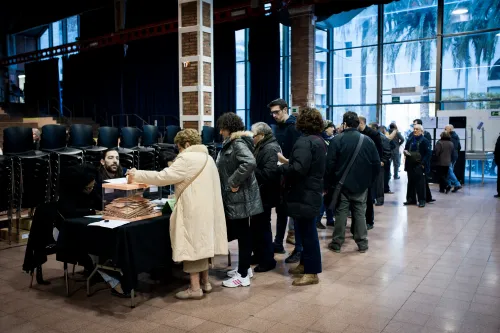
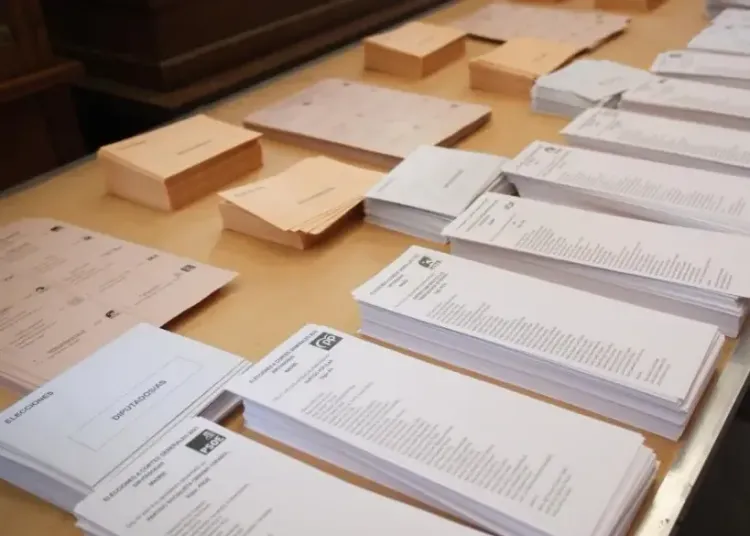
Voting in Spain's early general election began at 9 am local time on 29 November 2026 , with more than 38.6 million people eligible to vote.
Voters are electing all 350 members of the Congress of Deputies and 209 senators at over 22,000 polling places .
PM Pedro Sanchez called the poll in October after the PP , Vox and Junts voted down his housing measures.
Alberto Nunez Feijoo's PP has pledged to repeal the housing law, tighten immigration and fund a 300-billion-euro infrastructure plan over 15 years .
Parliament convenes on 23 December , and a PM candidate needs 176 votes to win the first confidence vote.
Voting in Spain's early general election began at 9 am local time (0800 GMT) on Sunday, 29 November 2026, with more than 38.6 million people eligible to elect all 350 members of the Congress of Deputies and 209 senators. Prime Minister Pedro Sanchez called the snap poll in October after the lower house rejected his government's housing measures. The vote is being held across Spain, with the nationwide result to be shaped from Madrid to the Canary Islands.
Key Developments on Polling Day
According to the Interior Ministry, Spain has set up more than 22,000 polling places nationwide. Polls are scheduled to close at 8 pm local time (1900 GMT).
The first provisional results are expected from 9 pm local time (2000 GMT). That timing allows voting to end in the Canary Islands, which run one hour behind the mainland.
Why Spain Is Voting Early
The election was triggered by a defeat on housing policy. Sanchez's Spanish Socialist Workers' Party now faces a challenge from the conservative People's Party (PP).
Notably, the PP joined the far-right Vox and the Catalan party Junts in voting down the government's housing measures. That combination of votes in the lower house left Sanchez without the backing he needed and led to the early dissolution.
What the People's Party Has Promised
On 10 November, the PP unveiled its election manifesto. It pledged tighter immigration controls, changes to housing policy and greater infrastructure investment.
PP leader Alberto Nunez Feijoo presented the proposals as a plan for “national reconstruction”. He promised to overhaul state administration and strengthen accountability.
On immigration, Feijoo pledged to ban mass, indiscriminate regularisations of irregular migrants. He promised to establish the identity of anyone crossing the border illegally within seven days and to carry out returns “without delay” under the new European mechanism.
The manifesto also proposes repealing the housing law. Feijoo outlined a 300-billion-euro (335 billion US dollars) infrastructure plan over 15 years, prioritising maintenance and modernisation of existing infrastructure over new construction.
On welfare, Feijoo pledged to raise pensions every year in line with the consumer price index (CPI) and to safeguard the public pension system. He also proposed merging minimum-income support and other benefits into a single scheme designed to help recipients enter employment, while letting them keep receiving support once they start work.
On fiscal discipline, Feijoo said a PP government would audit public spending within its first 100 days and submit a national budget every year. He also proposed that a general election be held if the budget is rolled over twice in a row.
What Happens After the Vote
The newly elected parliament is due to convene on 23 December 2026. After consulting party representatives, King Felipe VI will nominate a candidate for prime minister.
That candidate needs at least 176 votes in the lower house to win a first confidence vote. If the bid fails, a second vote is held 48 hours later, when a simple majority is enough to secure parliamentary approval.
With housing at the centre of the campaign, the count that begins on Sunday evening will show whether Spanish voters back Sanchez or hand the PP a mandate to reverse his housing agenda.
Point of View
Europe's most politically explosive affordability issue, and the opposition is now campaigning to scrap the housing law altogether. The coalition that defeated Sanchez joined the conservative PP, far-right Vox and Catalan nationalists Junts, which suggests their alliance was tactical rather than a shared governing agenda. That makes the 176-vote threshold the real story. Whoever finishes first may still struggle to turn a plurality into a stable government.
NationPress
29 Nov 2026
Frequently Asked Questions
Why is Spain holding an early general election?
Prime Minister Pedro Sanchez called the election in October after the lower house rejected his government's housing measures. The People's Party, Vox and Junts joined together to vote the measures down.
How many people can vote in Spain's 2026 general election?
More than 38.6 million people are eligible to vote. They are electing all 350 members of the Congress of Deputies and 209 senators at over 22,000 polling places nationwide.
When will Spain's election results be announced?
The first provisional results are expected from 9 pm local time (2000 GMT) on 29 November. Polls close at 8 pm, and the timing allows voting to finish in the Canary Islands, which are an hour behind the mainland.
What has the People's Party promised voters?
The PP has pledged to repeal the housing law, tighten immigration controls and fund a 300-billion-euro infrastructure plan over 15 years. It has also promised to raise pensions in line with CPI and audit public spending within 100 days.
How will Spain's next prime minister be chosen?
After parliament convenes on 23 December, King Felipe VI will nominate a candidate, who needs at least 176 votes to win the first confidence vote. If that fails, a second vote 48 hours later requires only a simple majority.