NEET paper leak: Centre to set up fast-track courts, Scindia warns guilty won't be spared
Synopsis
The Centre is moving to fast-track justice in the NEET paper leak scandal — literally. With a Cabinet proposal for dedicated fast-track courts imminent and multiple accused already arrested, Union Minister Scindia's Datia remarks signal the government is treating exam fraud as a national-priority law-and-order issue, not just an administrative lapse.
Key Takeaways
Union Minister Jyotiraditya Scindia announced on 24 July that the Centre is proposing fast-track courts for NEET paper leak cases.
The Cabinet proposal aims to ensure legal proceedings in NEET fraud cases begin at the earliest possible .
Action against those responsible has already been initiated on Prime Minister Modi's directions, Scindia said.
Investigating agencies have arrested several accused in connection with the alleged paper leak and related offences.
The government has introduced stringent new legal provisions against paper leaks and organised cheating in public examinations.
The Centre maintains a zero-tolerance policy on examination malpractice.
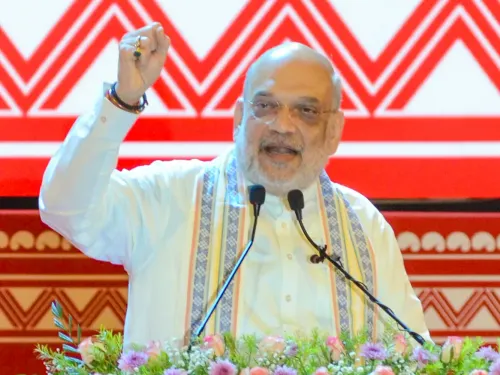
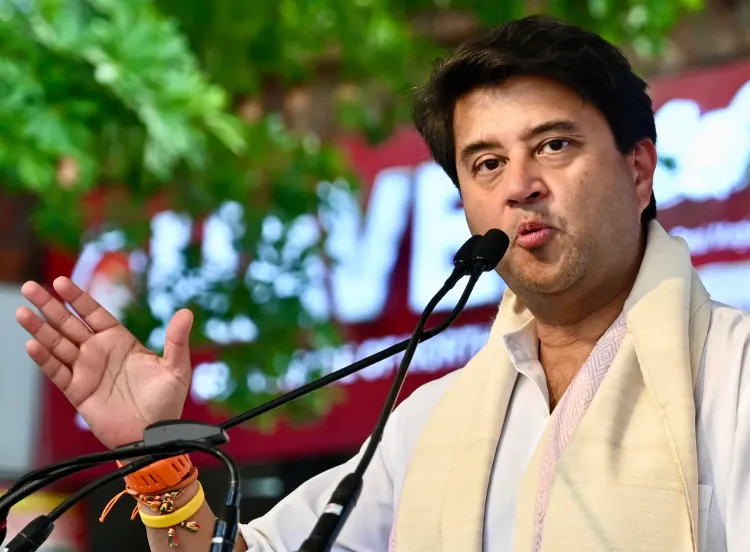
Union Minister Jyotiraditya Scindia on Friday, 24 July declared that the Centre is moving to establish fast-track courts specifically to expedite trials in NEET paper leak cases, warning that anyone found guilty of tampering with students' futures would face the strictest consequences. Scindia made the remarks while addressing reporters in Datia, where he was campaigning for Bharatiya Janata Party (BJP) candidate Ashutosh Tiwari ahead of the Assembly bypoll.
What the Government Has Announced
Scindia confirmed that a formal proposal to constitute fast-track courts for NEET-related cases is being placed before the Cabinet to ensure legal proceedings begin at the earliest. 'A proposal to set up fast-track courts is being placed before the Cabinet so that legal proceedings can begin at the earliest,' he said. He added that action against those responsible for the irregularities had already been initiated on the directions of Prime Minister Narendra Modi.
'For the Prime Minister, the government and the entire nation, students are the future of the country. Anyone found guilty of tampering with our children's future will face the strictest action,' Scindia stated.
Background: The NEET Controversy
The remarks come amid sustained controversy over alleged irregularities in the National Eligibility-cum-Entrance Test (NEET), India's sole undergraduate medical entrance examination. Allegations of paper leaks and organised malpractice triggered widespread concern among students and parents, prompting demands for a thorough, independent investigation. The scale of the outcry has made NEET one of the most politically charged examination controversies in recent memory.
Investigating agencies have already arrested several accused in connection with the alleged paper leak and related offences. The Centre has maintained a stated zero-tolerance policy towards examination malpractice and has introduced stringent legal provisions against paper leaks and organised cheating in public examinations.
Strengthened Legal Framework
Beyond fast-track courts, the government has moved to reinforce the broader legal architecture around examination fraud. New provisions targeting paper leaks and coordinated cheating in public examinations have been introduced, signalling an intent to treat such offences with the severity typically reserved for organised crime. Critics, however, argue that legislative intent must be matched by enforcement speed — precisely the gap that fast-track courts are intended to close.
What Happens Next
The Cabinet proposal for fast-track courts is expected to be taken up in the near term, after which designated benches could be operationalised for ongoing NEET-related prosecutions. Students and parents' groups have welcomed the announcement but are watching closely for concrete timelines. With multiple accused already in custody, the pace of trials will be the next key measure of the government's resolve.
Point of View
But they cannot substitute for the upstream reforms — decentralised question-paper security, real-time surveillance, and independent oversight — that would prevent the next leak. The government's zero-tolerance rhetoric will be judged by conviction rates and sentencing timelines, not Cabinet proposals.
NationPress
24 Jul 2026
Frequently Asked Questions
What has the Centre announced regarding NEET paper leak cases?
The Centre is placing a proposal before the Cabinet to set up fast-track courts dedicated to expediting trials in NEET paper leak cases. Union Minister Jyotiraditya Scindia confirmed this on 24 July, adding that action against those responsible has already begun on Prime Minister Modi's directions.
What is the NEET paper leak controversy?
The National Eligibility-cum-Entrance Test (NEET) is India's undergraduate medical entrance examination. Allegations of paper leaks and organised malpractice in a recent edition triggered widespread protests by students and parents, leading to demands for a thorough investigation and accountability.
Have any arrests been made in the NEET paper leak case?
Yes, investigating agencies have arrested several accused in connection with the alleged NEET paper leak and related offences. Legal action has been initiated against those found to be involved, according to official statements.
What new laws has the government introduced to tackle exam fraud?
The government has strengthened the legal framework by introducing stringent provisions specifically targeting paper leaks and organised cheating in public examinations. These provisions are designed to treat examination fraud as a serious criminal offence with severe consequences.
Why are fast-track courts being proposed for NEET cases?
Fast-track courts are being proposed to ensure that legal proceedings against the accused begin and conclude quickly, reducing the delays typical of the regular court system. The government has framed speedy justice as essential to deterrence and to restoring student confidence in competitive examinations.