Maharashtra ethanol industry in crisis as Centre bans sugarcane-based procurement
Synopsis
The Centre's October 16 directive banning procurement of sugarcane-derived ethanol has put ₹40,000 crore in Maharashtra investments and nearly ₹1 lakh crore in national ethanol-sector loans at NPA risk — threatening to unravel a decade-long green fuel transition that government policy itself built.
Key Takeaways
The Centre banned procurement of ethanol from sugarcane juice, sugar syrup, and B-heavy molasses under OMC guidelines issued on 16 October 2026 .
Out of a targeted 1,100 crore litres of ethanol procurement, all sugarcane-based sources have been excluded; only C-heavy molasses ethanol will be purchased.
Industry stakeholders warn investments worth ₹40,000 crore in Maharashtra and ₹1 lakh crore nationwide are at risk of turning into NPAs.
Maharashtra has 16 standalone distilleries with a combined capacity of 56 crore litres ; sugar factories hold an installed capacity of 3,750 million litres , utilised at just 30% in 2025–26.
Harshvardhan Patil of the National Federation of Cooperative Sugar Factories says ethanol blending had already saved ₹2 lakh crore in foreign exchange and channelled ₹1.75 lakh crore to farmers.
Cooperative mills are seeking Centre support to upgrade to multi-feed distilleries using maize and other grains to sustain year-round operations.
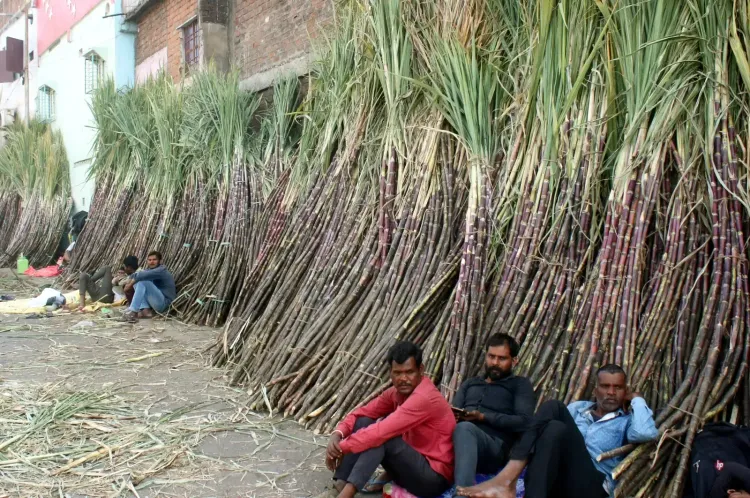
A central government directive issued on 16 October 2026 has plunged Maharashtra's sugar mills and standalone ethanol units into a severe financial crisis, banning the procurement of ethanol produced directly from sugarcane juice, sugar syrup, and B-heavy molasses for the upcoming ethanol supply year (1 November 2026 to 31 October 2027). Industry stakeholders warn that investments worth nearly ₹40,000 crore in Maharashtra's ethanol sector are now at serious risk.
What the New Policy Says
Under the revised guidelines, Oil Marketing Companies (OMCs) will procure ethanol exclusively from C-heavy molasses in the new supply year, as part of the Centre's broader effort to ensure adequate domestic sugar production. Out of a targeted 1,100 crore litres of ethanol procurement nationally, sugarcane-derived sources have been entirely excluded.
Industry representatives say that producing ethanol solely from C-heavy molasses is financially unviable at prevailing market selling prices. The policy effectively renders a large share of installed capacity — much of it built on government-backed incentives — commercially non-operational.
Scale of the Investment at Risk
According to a chairman of a leading sugar cooperative factory in Maharashtra, India's total installed ethanol manufacturing capacity stands at approximately 2,000 crore litres, of which 848 crore litres belongs to grain-based plants. Nationwide, cumulative investments in the ethanol sector total nearly ₹1 lakh crore.
Maharashtra alone houses 16 standalone and grain-based distilleries with a combined annual ethanol production capacity of approximately 56 crore litres. Data from the Maharashtra State Cooperative Sugar Factories Federation Ltd indicates that sugar factories in the state have an installed ethanol capacity of around 3,750 million litres. During the 2025–26 season, they supplied 1,250 million litres — utilising barely 30 per cent of installed capacity even before the new curbs took effect.
A high-level ministers' committee chaired by Chief Minister Devendra Fadnavis had projected that Maharashtra would have approximately 99 million tonnes of sugarcane available for crushing in the 2026–27 sugar season, with sugar production estimated at 9.6 million tonnes after diverting 1.5 million tonnes of sugar towards ethanol production.
Industry Leaders Raise the Alarm
Harshvardhan Patil, Chairman of the National Federation of Cooperative Sugar Factories and former Maharashtra Cooperation Minister, stated: 'Due to the Central Government's encouragement, sugar factories expanded distilleries and built ethanol projects, attracting ₹1 lakh crore in investments nationwide. Ethanol blending has saved ₹2 lakh crore in foreign exchange and provided ₹1.75 lakh crore to farmers. Now, this ethanol-driven economy risks collapsing, potentially leading to non-performing assets (NPAs) for banks to the tune of ₹1 lakh crore. What is to become of these established projects?'
B. B. Thombare, President of a Sugar Mills Association, said: 'Union Minister Nitin Gadkari worked continuously for 25 years to build an ethanol-based economy. The Central Government's decision will ruin this economy and destroy an industry that saved critical foreign exchange. Droughts and sugar shortages are temporary phenomena, and the government needed to adopt a supportive, nurturing policy for the long-term benefit of the country's ethanol sector.'
Capital Costs and the NPA Threat
The financial exposure is steep. According to industry sources, establishing a grain-based distillery with a daily capacity of 60 kiloliters costs between ₹120 crore and ₹135 crore, while a smaller 30-kiloliter plant requires between ₹50 crore and ₹60 crore in capital investment. With procurement bans now in force, newly established ethanol units are struggling to service interest and principal repayments on these loans — raising the prospect of widespread NPAs across the banking system.
This comes amid the government's own push to achieve a 20 per cent ethanol blending target in petrol — a goal that incentivised the very capacity expansion now left stranded. Critics argue the policy reversal undermines investor confidence in government-backed green energy transitions.
What the Industry Wants Next
Cooperative mills are pressing the government to support upgrades of their distilleries into multi-feed operations capable of processing maize and other grains, which would allow year-round production and reduce dependence on sugarcane availability. Stakeholders have also called on the Centre to adopt a longer-term, stable policy framework for the ethanol sector rather than making abrupt adjustments tied to seasonal sugar supply concerns. Whether the Centre revises its procurement guidelines before the supply year begins on 1 November 2026 will be closely watched by lenders, farmers, and the broader renewable energy ecosystem.
Point of View
Only to have the procurement floor yanked mid-cycle over seasonal sugar concerns. The ₹1 lakh crore NPA threat is not a hypothetical — it is the direct arithmetic of stranded capacity meeting fixed debt service. What is missing from the policy calculus is a transition mechanism: if sugar supply is the concern, a phased drawdown of sugarcane-sourced ethanol quotas rather than an outright ban would have achieved the same supply-protection goal without triggering a sector-wide balance-sheet crisis. The Centre needs to answer one question squarely — were the original incentives a long-term commitment or a short-term lever?
NationPress
22 Oct 2026
Frequently Asked Questions
What has the Centre decided about ethanol procurement from sugarcane?
The Centre, through OMC guidelines issued on 16 October 2026, has banned the purchase of ethanol derived from sugarcane juice, sugar syrup, and B-heavy molasses for the ethanol supply year running from 1 November 2026 to 31 October 2027. Only ethanol produced from C-heavy molasses will be procured, as the government seeks to protect domestic sugar production levels.
Why is the Maharashtra ethanol industry alarmed by this decision?
Maharashtra's sugar mills and distilleries had expanded their ethanol capacity substantially on the back of government incentives targeting a 20% ethanol blending goal. With sugarcane-based ethanol now excluded from procurement, industry bodies warn that investments worth ₹40,000 crore in the state — and ₹1 lakh crore nationally — face the risk of becoming non-performing assets, as units cannot cover loan repayments without procurement revenue.
How much ethanol capacity does Maharashtra currently have?
According to the Maharashtra State Cooperative Sugar Factories Federation Ltd, sugar factories in the state have an installed ethanol capacity of around 3,750 million litres. Maharashtra also has 16 standalone and grain-based distilleries with a combined annual capacity of approximately 56 crore litres. During 2025–26, only about 30% of installed capacity was utilised.
What is the broader impact on farmers and banks?
Industry leaders say ethanol blending had already channelled ₹1.75 lakh crore to farmers and saved ₹2 lakh crore in foreign exchange before this policy shift. If stranded units default on loans, banking-sector NPAs could reach ₹1 lakh crore, according to Harshvardhan Patil of the National Federation of Cooperative Sugar Factories.
What are sugar mills asking the government to do?
Cooperative mills are urging the Centre to fund upgrades that convert existing distilleries into multi-feed plants capable of using maize and other grains alongside sugarcane — enabling year-round production independent of sugar supply cycles. They are also calling for a stable, long-term ethanol policy rather than abrupt seasonal adjustments.