Lakadong Turmeric: Centre launches ₹175 crore global branding mission for Meghalaya

Synopsis
The Centre has committed ₹175.45 crore to turn Meghalaya's GI-tagged Lakadong turmeric into a global premium brand — with farmers' pay set to double to ₹80 per kg by 2030 and cultivation area nearly tripling to 7,000 hectares. With women making up 99% of processing participants and PM Modi having showcased the spice at the G7, this is the Northeast's most targeted agricultural branding push yet.
Key Takeaways
The Centre launched the Meghalaya Lakadong Turmeric Integrated Development Mission on 21 July with an outlay of ₹175.45 crore .
The mission targets more than 17,500 farmers in West Jaintia Hills and East Jaintia Hills .
Farmer remuneration is expected to nearly double to ₹80 per kg by 2030 ; cultivation area to expand from 2,500 hectares to 7,000 hectares .
Annual production target is 49,400 metric tonnes by 2030; export markets include the US, EU, Japan , and Gulf countries .
Women are expected to account for nearly 99% of participation in processing and institutional activities.
Jointly funded by Ministry of DoNER , NEC , Ministry of Agriculture , and the Meghalaya government .
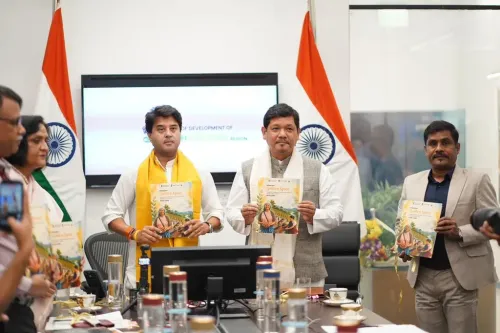
The Centre on Tuesday, 21 July unveiled a ₹175.45 crore integrated development mission to position Meghalaya's Geographical Indication (GI)-tagged Lakadong turmeric as a globally recognised premium spice, targeting doubled farmer incomes and a near-tripling of cultivation area over the next five years. The Meghalaya Lakadong Turmeric Integrated Development Mission was formally launched at Sanchar Bhavan in New Delhi.
Who Launched It and Who Was Present
Union Minister for Development of North Eastern Region Jyotiraditya M. Scindia launched the mission, describing it as 'Mission Golden Spice'. Meghalaya Chief Minister Conrad K. Sangma and the state's Agriculture Minister Timothy D. Shira were present at the event. Scindia framed the initiative as an embodiment of Prime Minister Narendra Modi's vision of transforming the Northeast into a key engine of India's economic growth.
Key Targets and What the Mission Covers
The mission is designed to benefit more than 17,500 farmers in West Jaintia Hills and East Jaintia Hills by strengthening the entire Lakadong turmeric value chain — from cultivation and quality certification to processing, branding, and exports. Farmers' remuneration is expected to nearly double to around ₹80 per kg by 2030, up from current levels. Cultivation area is targeted to expand from the present 2,500 hectares to nearly 7,000 hectares during the implementation period, with annual production aimed at 49,400 metric tonnes by 2030.
Funding and Institutional Support
The project is jointly funded by the Ministry of DoNER, the North Eastern Council (NEC), the Union Ministry of Agriculture and Farmers' Welfare, and the Meghalaya government. Scindia noted that the mission places particular emphasis on post-harvest infrastructure, processing capacity, and reducing distress sales — structural gaps that have historically prevented farmers from capturing the premium value of the crop.
Women at the Centre of the Mission
Officials said women are expected to account for nearly 99 per cent of participation in processing and institutional activities. Chief Minister Sangma highlighted that the state government has already put in place financial support mechanisms — including working capital access for farmers, self-help groups, and producer organisations — without requiring conventional banking collateral. Scindia also noted that Lakadong turmeric gained international visibility after Prime Minister Modi showcased it during the G7 Summit.
Global Market Ambitions
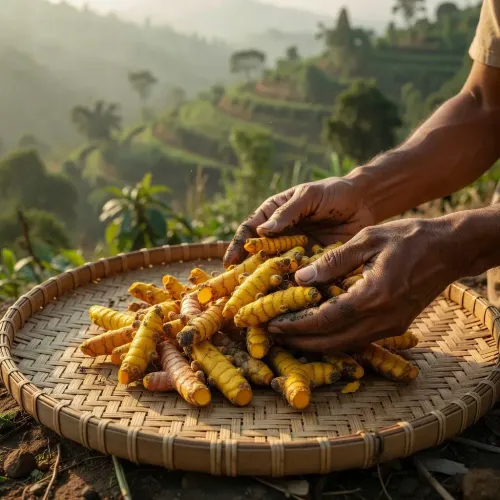
The mission targets premium international markets including the United States, the European Union, Japan, and Gulf countries. Sangma attributed the turmeric's exceptional quality — notably its high curcumin content — to the unique soil composition and ecological conditions of the Jaintia Hills. This comes amid a broader push by the Centre to convert Northeast India's agricultural distinctives into exportable, branded commodities rather than undifferentiated bulk produce.
Point of View
Which is a departure from the broad-basket agricultural schemes the Centre typically announces for the Northeast. The 99% women-participation target in processing is striking, but the absence of a clearly stated enforcement or verification mechanism raises the familiar question of whether such targets will be tracked or merely reported. The doubling of farmer remuneration to ₹80 per kg by 2030 is ambitious given current market volatility in spice exports; the mission's success will hinge on whether the branding infrastructure — not just the cultivation targets — is built out on schedule. That PM Modi showcased Lakadong at the G7 gives the crop political capital, but political attention and sustained export market development are different things.
NationPress
20 Oct 2026
Frequently Asked Questions
What is the Meghalaya Lakadong Turmeric Integrated Development Mission?
It is a ₹175.45 crore, five-year government programme launched on 21 July to develop, brand, and export Meghalaya's GI-tagged Lakadong turmeric as a global premium product. The mission covers the full value chain from cultivation to exports and is jointly funded by the Centre and the Meghalaya government.
Who will benefit from the Lakadong turmeric mission?
More than 17,500 farmers in West Jaintia Hills and East Jaintia Hills are the primary beneficiaries. Women are expected to make up nearly 99% of participants in processing and institutional activities, with self-help groups and producer organisations also included.
What are the income and production targets for Lakadong turmeric farmers?
Farmer remuneration is targeted to nearly double to around ₹80 per kg by 2030. Annual production is aimed at 49,400 metric tonnes by 2030, with cultivation area expanding from 2,500 hectares to nearly 7,000 hectares.
Which international markets is the mission targeting for Lakadong turmeric exports?
The mission aims to establish Lakadong turmeric in premium markets including the United States, the European Union, Japan, and Gulf countries. The crop's high curcumin content and GI tag are being positioned as key differentiators in these markets.
Why is Lakadong turmeric considered special?
Lakadong turmeric is known for its exceptionally high curcumin content, attributed to the unique soil and ecological conditions of the Jaintia Hills in Meghalaya. It holds a Geographical Indication (GI) tag and gained international visibility after Prime Minister Modi showcased it at the G7 Summit.