Centre to borrow ₹7.86 lakh crore in H2 FY27, Green Bonds at ₹15,000 crore
Synopsis
The Centre has locked in ₹7.86 lakh crore in H2 FY27 borrowings — well under the ₹17.2 lakh crore budgeted ceiling — as a record RBI dividend of ₹2.87 lakh crore and a narrowing fiscal deficit give New Delhi unusual room to tighten its debt programme without squeezing public spending targets.
Key Takeaways
The Centre will borrow ₹7.86 lakh crore in H2 FY27 through 23 weekly auctions . ₹15,000 crore of the H2 programme will be raised via Sovereign Green Bonds .
Full-year dated-securities borrowing is now projected at ₹15.9 lakh crore , below the ₹17.2 lakh crore budgeted by Finance Minister Nirmala Sitharaman .
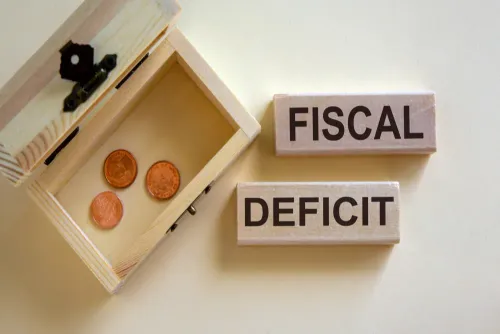
Fiscal deficit for April–July 2026 stood at ₹4.55 lakh crore ( 26.8% of target), better than ₹4.7 lakh crore ( 29.9% ) in the same period last year.
The RBI dividend of ₹2.87 lakh crore — up from ₹2.69 lakh crore last year — has reinforced the government's fiscal position.
The government targets a fiscal deficit of 4.3% of GDP in FY27 , tighter than the 4.4% achieved in FY26 .
The Central government on Friday, 25 September 2026, announced it will raise ₹7.86 lakh crore through market borrowings in the second half of FY27, including ₹15,000 crore via Sovereign Green Bonds. The Finance Ministry said the borrowing will be executed across 23 weekly auctions, keeping the government's debt-market calendar on a predictable schedule for investors.
Full-Year Borrowing Picture
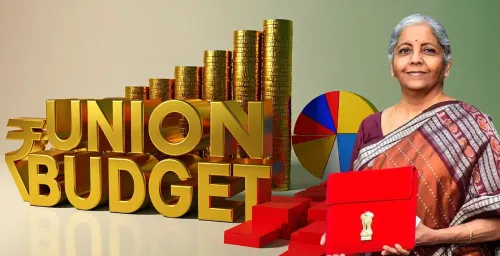
With the H2 programme now confirmed, total dated-securities borrowing for FY27 is expected to reach ₹15.9 lakh crore — notably lower than the ₹17.2 lakh crore that Finance Minister Nirmala Sitharaman had pencilled in the Union Budget to fund the fiscal deficit, projected at 4.3 per cent of GDP. The gap suggests the government is managing its cash needs more efficiently than budgeted, partly on the back of a larger-than-expected dividend from the Reserve Bank of India (RBI).
Fiscal Deficit Trends So Far
India's fiscal deficit for the April–July 2026 period stood at ₹4.55 lakh crore, equivalent to 26.8 per cent of the full-year target — an improvement over the same four-month window in the previous year, when the deficit was ₹4.7 lakh crore, or 29.9 per cent of the estimate. This year-on-year moderation signals tighter expenditure management and stronger receipts in the current cycle.
Revenue and Expenditure Breakdown
Total receipts in April–July reached ₹13.07 lakh crore, representing 35.8 per cent of the budget estimate, while overall expenditure was ₹17.62 lakh crore, at 32.9 per cent of the full-year outlay. Revenue receipts of ₹12.68 lakh crore comprised ₹8.45 lakh crore in tax revenue and ₹4.23 lakh crore in non-tax revenue. The non-tax line was boosted significantly by the RBI dividend of ₹2.87 lakh crore — up from ₹2.69 lakh crore transferred last year — which has measurably strengthened the government's fiscal position.
Consolidation Path and Green Finance
The government met its fiscal deficit target of 4.4 per cent of GDP in FY26 and has tightened the goal to 4.3 per cent for the current year as part of a multi-year consolidation roadmap. The inclusion of ₹15,000 crore in Sovereign Green Bonds within the H2 calendar reflects a continued push to deepen India's sustainable-finance market, which has attracted growing interest from ESG-focused foreign portfolio investors since the instrument's debut in FY23.
What to Watch
Bond markets will closely track the weekly auction calendar for any shifts in tenor preference — the government has historically leaned on longer-dated paper to extend the maturity profile of its debt. With the full-year borrowing expected well below the budgeted ceiling, yield pressures may ease marginally, though global rate signals and crude-oil prices remain key variables. The next set of fiscal data covering August receipts and expenditure will provide a clearer read on whether the consolidation trajectory is holding.
Point of View
A rare instance of the government under-borrowing relative to its own target. The driver is largely exogenous — the RBI's record ₹2.87 lakh crore dividend did the heavy lifting on non-tax revenue, flattering a fiscal position that underlying tax buoyancy alone could not have delivered. The inclusion of ₹15,000 crore in Sovereign Green Bonds is strategically sound but still a rounding error relative to India's actual green infrastructure financing needs. The consolidation story is real, but its durability depends on whether the RBI windfall recurs — and that is not a lever the Finance Ministry controls.
NationPress
25 Sept 2026
Frequently Asked Questions
How much will the Centre borrow in the second half of FY27?
The Central government will borrow ₹7.86 lakh crore in H2 FY27 through 23 weekly auctions , according to a Finance Ministry statement issued on 25 September 2026 . The programme includes ₹15,000 crore via Sovereign Green Bonds.
What is India's total borrowing for FY27?
Total dated-securities borrowing for FY27 is expected to reach ₹15.9 lakh crore , lower than the ₹17.2 lakh crore proposed in the Union Budget by Finance Minister Nirmala Sitharaman. The difference reflects better-than-expected non-tax receipts, led by the RBI dividend.
What is India's fiscal deficit position in FY27 so far?
For the April–July 2026 period, India's fiscal deficit stood at ₹4.55 lakh crore , which is 26.8 per cent of the full-year target — an improvement over the same period last year, when it was ₹4.7 lakh crore or 29.9 per cent of the estimate.
Why did non-tax revenue rise sharply in April–July 2026?
Non-tax revenue was boosted by an RBI dividend of ₹2.87 lakh crore paid to the Central government, up from ₹2.69 lakh crore the previous year. This larger transfer has strengthened the government's fiscal position and helped reduce the headline deficit.
What are Sovereign Green Bonds and why is the government issuing them?
Sovereign Green Bonds are government debt instruments whose proceeds are earmarked exclusively for environmentally sustainable projects. India first issued them in FY23 ; the ₹15,000 crore tranche in H2 FY27 is intended to deepen the domestic sustainable-finance market and attract ESG-focused foreign portfolio investors.