Raghav Chadha Exposes Doctor-Lab Kickback Deals in Parliament

Synopsis
AAP Rajya Sabha MP Raghav Chadha exposed 'cut money' kickback deals between doctors and diagnostic labs in Parliament on August 6, 2026, arguing the hidden commissions inflate patient bills and violate medical ethics rules that have existed since 2002.
Key Takeaways
AAP Rajya Sabha MP Raghav Chadha raised the issue of doctor-diagnostic lab kickbacks in Parliament on August 6, 2026 .
Diagnostic centres record the payments as 'marketing expenses'; doctors receive them as 'referral commissions' — both terms obscuring what is effectively a kickback.
The hidden cost is passed on to patients through inflated hospital and diagnostic bills.
Such commissions have been prohibited under the Indian Medical Council Ethics Regulations, 2002 for over two decades.
The National Medical Commission (NMC) is the current regulatory body empowered to enforce these prohibitions against errant doctors.
Patients are entitled to choose any accredited diagnostic facility and are not obligated to use a doctor's specific referral.
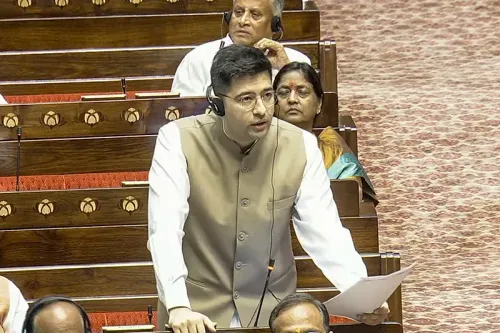
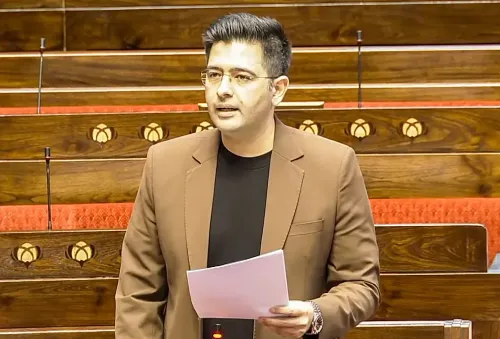
Every time a doctor sends you for a blood test or a scan, there may be a silent transaction happening — one that has nothing to do with your diagnosis and everything to do with who gets a cut. AAP Rajya Sabha MP Raghav Chadha raised this uncomfortable reality on the floor of Parliament on Thursday, August 6, 2026, calling out the 'cut money' arrangements between private doctors and diagnostic centres that quietly inflate patient bills across India.
The Referral Commission Racket — How It Works
The mechanics, as Chadha laid them out, are straightforward and damning. Diagnostic centres book the payments as 'marketing expenses.' Doctors pocket them as 'referral commissions.' The patient never sees this line item — but they pay it, buried inside their hospital bill. 'A silent transaction that isn't about your treatment,' Chadha said. 'It's about who referred you.' This is not a new problem. The Indian Medical Council (Professional Conduct, Etiquette and Ethics) Regulations, 2002 explicitly banned doctors from accepting any commission, gift, or kickback for referring patients to laboratories or diagnostic facilities. Yet the practice has persisted for over two decades, shape-shifting into euphemisms that make it harder to prosecute and easier to ignore.A Prohibition That Exists on Paper
The National Medical Commission (NMC), which now governs medical ethics in India, is the body empowered to enforce these prohibitions and take action against errant practitioners. Parliamentary interventions like Chadha's serve a pointed purpose: they create a public record, pressure regulators to act, and force the issue onto the agenda of health ministries that might otherwise let enforcement slide. The broader pattern is well-documented. State-level health inquiries and parliamentary discussions have repeatedly flagged how commercialisation in the private diagnostic sector drives unnecessary tests and inflated billing — costs borne entirely by patients who trust that the tests they are being sent for are medically necessary. AAP has consistently used such parliamentary moments to contrast the problem with its own model of free diagnostics under schemes like Mohalla Clinics in Delhi and expanded public lab access in Punjab.What Patients Need to Know Before Their Next Test
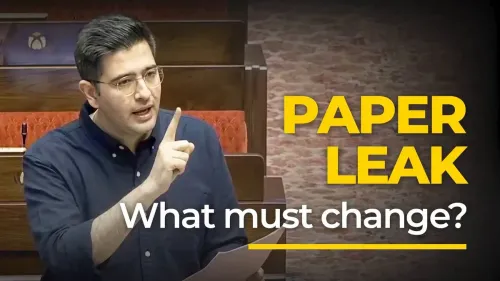
The practical implication is sharp: if your doctor refers you to a specific diagnostic centre rather than leaving the choice to you, it is worth asking why. Patients are legally entitled to seek tests at any accredited facility. No ethical obligation — and no medical guideline — requires you to use the centre your doctor names. Chadha's video of the parliamentary speech, shared directly with his followers, is a rare instance of a regulatory issue being explained in plain language to the people it affects most. Whether the NMC or the Union Health Ministry responds with enforcement action is the question Parliament has now put on the table — and the one patients will be watching.Point of View
And the unchecked commercialisation of India's private diagnostic sector. By framing it as a 'cut money' arrangement — a term that resonates strongly after its political salience in Bengal and elsewhere — he is deliberately connecting a technical ethics violation to a language of corruption the public already understands. For AAP, the move also reinforces a consistent narrative: the party's free public diagnostic infrastructure in Delhi and Punjab as the structural answer to a market that, left to itself, monetises the doctor-patient trust relationship. The real test is whether this parliamentary record translates into NMC enforcement circulars or health ministry directives — or whether it remains, like so many similar interventions before it, a compelling speech without regulatory consequence.
NationPress
20 Sept 2026
Frequently Asked Questions
What is the 'cut money' arrangement between doctors and diagnostic labs in India?
It refers to kickback payments that diagnostic centres or pathology labs make to doctors in exchange for patient referrals. Diagnostic centres book these as 'marketing expenses' and doctors receive them as 'referral commissions,' with the cost ultimately added to the patient's bill.
Is it legal for doctors to accept referral commissions from diagnostic centres in India?
No. The Indian Medical Council (Professional Conduct, Etiquette and Ethics) Regulations, 2002 explicitly prohibit doctors from accepting any commission, gift, or kickback for referring patients to laboratories or diagnostic facilities. The National Medical Commission now enforces these rules.
What did Raghav Chadha say in Parliament about diagnostic lab kickbacks?
On August 6, 2026, AAP Rajya Sabha MP Raghav Chadha described the arrangement as a 'silent transaction' that inflates patient bills — one driven not by medical need but by who referred the patient. He shared a video of his parliamentary speech urging people to watch it before their next medical test.
Which body regulates medical ethics and kickback violations in India?
The National Medical Commission (NMC) is India's current regulatory body for medical education and professional ethics, and it is empowered to take action against doctors who violate ethical guidelines, including those prohibiting referral commissions.
Can patients in India choose their own diagnostic centre instead of the one a doctor recommends?
Yes. Patients are legally entitled to get tests done at any accredited diagnostic facility of their choice. No medical guideline or ethical rule requires a patient to use the specific centre a doctor names in a referral.