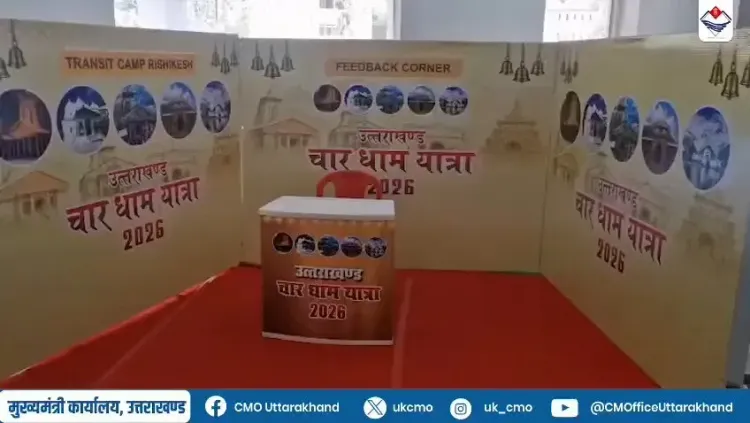
CM Office: Chardham Feedback Corner set up at Rishikesh transit camp
Synopsis
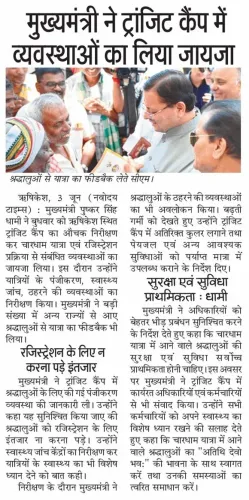
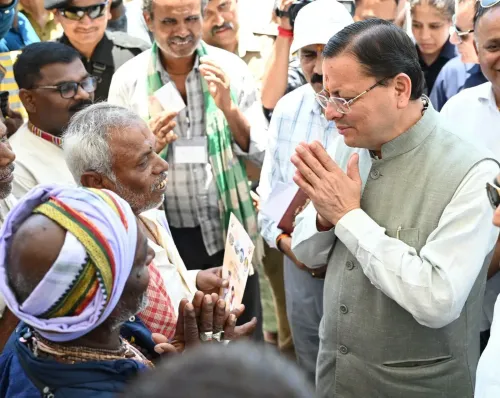
The Uttarakhand Chief Minister's Office has set up a Chardham Feedback Corner at the Rishikesh Transit Camp to create a direct dialogue channel between pilgrims and the state administration during the ongoing Char Dham Yatra season.
Key Takeaways
The Uttarakhand CM's Office announced a Chardham Feedback Corner at the Rishikesh Transit Camp on 22 June 2026 .
The corner is designed to strengthen dialogue and trust between the state administration and Char Dham Yatra pilgrims.
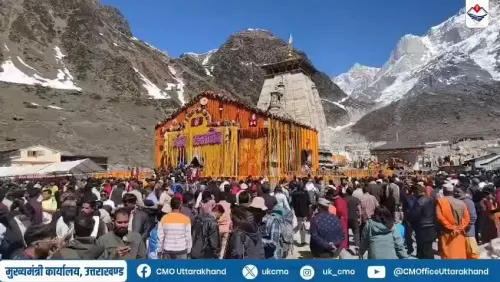
Rishikesh is the primary transit hub for millions of pilgrims heading to Yamunotri, Gangotri, Kedarnath and Badrinath .
Uttarakhand has deployed structured transit camps and registration systems at Rishikesh and Haridwar since 2018 to manage pilgrim flow.
The feedback model complements the Char Dham Pariyojana highway programme launched in 2016 to improve connectivity to the four shrines.
Whether the corner model scales to additional transit points in the current or future yatra seasons remains to be seen.
The Chief Minister's Office of Uttarakhand announced on Monday, 22 June 2026 that a dedicated Chardham Feedback Corner has been established at the Rishikesh Transit Camp, positioning the initiative as a bridge between the state administration and pilgrims undertaking the annual Char Dham Yatra.
The official post stated that the corner is serving as 'sanvaad aur vishwas majboot karne ka madhyam' — a medium to strengthen dialogue and trust between the administration and devotees. The feedback facility is part of the broader governance apparatus the Uttarakhand government deploys each yatra season to manage the millions of pilgrims who pass through Rishikesh en route to the four sacred shrines of Yamunotri, Gangotri, Kedarnath and Badrinath.
Context
Rishikesh functions as the primary transit hub for the Char Dham Yatra, with pilgrims from across India converging here before proceeding further into the Garhwal Himalayas. The transit camp serves as a staging point for registration, health checks, and logistical coordination. A feedback corner embedded within this camp gives pilgrims a direct, in-person channel to flag concerns — ranging from road conditions and accommodation to medical facilities — before they head deeper into the mountains.Policy Backdrop
Uttarakhand began deploying structured transit camps and pilgrim-registration systems at Rishikesh and Haridwar from 2018 onwards to regulate the surge in footfall that the yatra attracts each summer. These softer governance tools complement the Char Dham Pariyojana, the central and state infrastructure programme approved in 2016 to widen highways and cut travel time to all four shrines. The feedback corner model aligns with a pattern seen at other high-footfall religious sites in the state, where real-time grievance collection has been used to improve administrative responsiveness during peak seasons.Stakeholders and Impact
For pilgrims, the corner offers a low-barrier mechanism to communicate grievances or suggestions without navigating formal bureaucratic channels. For the state administration, aggregated feedback can surface recurring pain points — bottlenecks at check-posts, inadequate sanitation, or gaps in emergency medical cover — and allow course corrections mid-season rather than after the yatra concludes. Religious tourism is a core revenue and employment driver for Uttarakhand, making pilgrim satisfaction a governance priority beyond its symbolic value.What's Next
The announcement raises the question of whether the feedback corner model will be scaled to additional transit points along the yatra route in the current season or formalised ahead of the 2027 pilgrimage window. Official summaries of feedback collected at the Rishikesh corner — and any corrective actions taken in response — will be a key indicator of how substantively the initiative moves beyond symbolic outreach. The broader test is whether real-time pilgrim input translates into measurable improvements in on-ground logistics and safety.Point of View
High-visibility governance gesture that fits a well-established Uttarakhand playbook: pair hard infrastructure investment with softer citizen-engagement tools to signal administrative responsiveness during the yatra season. Its real value will be determined not by its existence but by whether feedback collected actually feeds into mid-season operational corrections. The initiative also reflects a broader national trend of state governments using physical feedback points at pilgrimage and tourist sites to pre-empt viral grievances on social media. If the model is institutionalised and expanded, it could meaningfully shift how Uttarakhand administers one of India's most logistically demanding annual pilgrimages.
NationPress
20 Sept 2026
Frequently Asked Questions
What is the Chardham Feedback Corner at Rishikesh?
The Chardham Feedback Corner is a dedicated facility set up at the Rishikesh Transit Camp by the Uttarakhand government to allow Char Dham Yatra pilgrims to share grievances, suggestions, and feedback directly with the state administration during the yatra season.
Where is the Rishikesh Transit Camp located?
The Rishikesh Transit Camp is located in Rishikesh, Uttarakhand, which serves as the main assembly and staging point for pilgrims before they proceed to the four Char Dham shrines — Yamunotri, Gangotri, Kedarnath, and Badrinath.
Why did Uttarakhand set up a feedback corner for Char Dham Yatra?
The state government set up the feedback corner to strengthen real-time dialogue between pilgrims and the administration, allowing officials to identify and address logistical or safety issues mid-season rather than after the yatra concludes.
What is the Char Dham Pariyojana?
The Char Dham Pariyojana is a central and state government infrastructure programme approved in 2016 to widen highways and improve road connectivity to the four Char Dham shrines in Uttarakhand, reducing travel time and enhancing safety for pilgrims.
When did Uttarakhand start transit camps for Char Dham Yatra?
Uttarakhand began deploying structured transit camps and pilgrim-registration systems at Rishikesh and Haridwar from 2018 onwards to manage the large volume of pilgrims who undertake the Char Dham Yatra each summer.