Uttarakhand Govt Strengthens Roads for Char Dham Yatra
Synopsis
The Uttarakhand government is reinforcing road infrastructure along the Char Dham Yatra corridor, with emphasis on Joshimath and Chamoli district. The effort aligns with the Union Cabinet-approved Char Dham Mahamarg Vikas Pariyojana, a 900-km all-weather road project sanctioned in 2016 to handle rising pilgrim footfall safely.
Key Takeaways
The Uttarakhand government has reaffirmed its commitment to continuously strengthening road infrastructure for the Char Dham Yatra .
Joshimath in Chamoli district is a key transit hub for pilgrims headed to Badrinath and Hemkund Sahib.
The Char Dham Mahamarg Vikas Pariyojana , approved in 2016 , covers over 900 km of roads linking the four shrines.
Slope stabilisation and all-weather connectivity are central goals alongside road widening in fragile Himalayan terrain.
Rising pilgrim footfall has made infrastructure resilience along these corridors a sustained state and central priority.
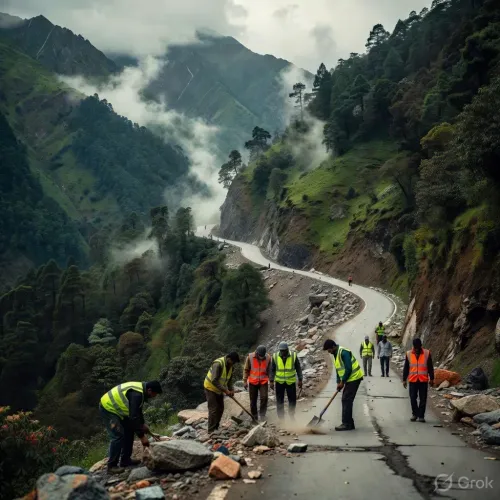
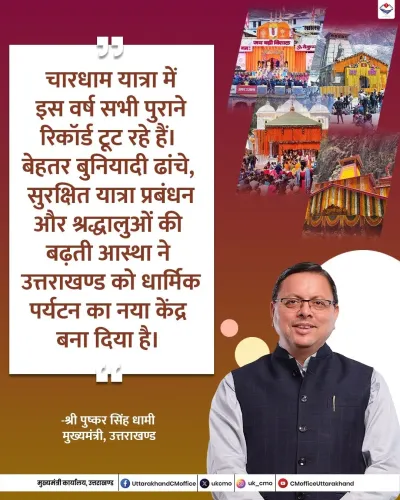
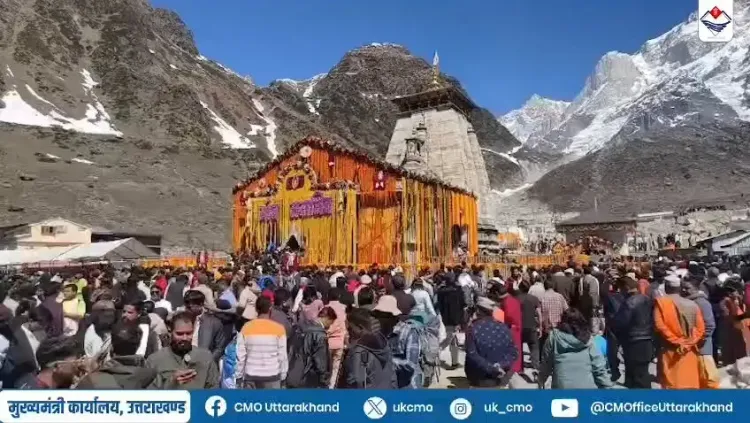
The roads that carry millions of pilgrims toward the sacred shrines of Badrinath, Kedarnath, Gangotri, and Yamunotri every year are getting a sustained upgrade — and the Uttarakhand government is making that push a headline priority ahead of the pilgrimage season.
The Chief Minister's Office of Uttarakhand posted on 6 August 2026 that the state government is continuously strengthening road infrastructure to make the Char Dham Yatra safe, smooth, and well-organised — with a specific focus on Joshimath and the Chamoli district corridor.
Why the Chamoli Corridor is the Pressure Point
Joshimath, a town in Chamoli district, is the critical transit hub for pilgrims heading to Badrinath and Hemkund Sahib. Every vehicle, every bus, every devotee on foot funnels through this narrow Himalayan gateway. When roads here fail — and in fragile mountain terrain, they can — the entire yatra machinery seizes up. The state's stated commitment to 'continuously strengthening' this corridor is a direct response to that vulnerability.
The Central Scheme Powering the Upgrades
The backbone of this effort is the Char Dham Mahamarg Vikas Pariyojana, approved by the Union Cabinet in 2016, which targets the widening and all-weather upgrading of over 900 kilometres of roads linking the four shrines. The Uttarakhand government's ongoing road-strengthening work sits within — and is reinforced by — this larger national framework. Slope stabilisation and drainage improvements along these Himalayan corridors have become as important as the asphalt itself, given the terrain's susceptibility to landslides and seasonal damage.
Rising Footfall, Rising Stakes
The Char Dham Yatra draws millions of devotees each season, and that number has climbed steadily in recent years, placing acute pressure on mountain roads not originally designed for such volumes. State and central governments have responded with coordinated investment in road widening, but the work must constantly race against weather, geology, and environmental clearance timelines in ecologically sensitive zones. The pilgrims who make this journey — many elderly, many travelling long distances — deserve infrastructure that matches their faith in the route.
The government's focus on Chamoli signals that the most congested and geologically demanding stretch of the yatra corridor remains a live operational priority, not a completed chapter.
Point of View
And road quality is its most visible deliverable. Framing infrastructure work through the lens of yatra safety — rather than pure connectivity — is deliberate; it ties state capacity directly to religious sentiment and mass public expectation. The Chamoli focus also signals awareness that the most politically and logistically sensitive stretch of the corridor still demands attention, even a decade after the 2016 central scheme was launched. Progress on specific project timelines and completion benchmarks will ultimately determine whether this commitment translates into electoral and administrative credibility.
NationPress
20 Sept 2026
Frequently Asked Questions
What is the Char Dham Yatra and which shrines does it cover?
The Char Dham Yatra is an annual Hindu pilgrimage in Uttarakhand covering four sacred shrines: Badrinath, Kedarnath, Gangotri, and Yamunotri. It attracts millions of devotees each season.
What is the Char Dham Mahamarg Vikas Pariyojana?
It is a central government scheme approved by the Union Cabinet in 2016 to widen and upgrade over 900 kilometres of roads connecting the four Char Dham shrines for all-weather connectivity.
Why is Joshimath important for Char Dham pilgrims?
Joshimath, located in Chamoli district, is a critical transit town for pilgrims travelling to Badrinath and Hemkund Sahib, making its road connectivity vital to the entire yatra.
What challenges does road construction face in the Char Dham corridor?
The Himalayan terrain is prone to landslides and seasonal damage, requiring slope stabilisation and drainage improvements alongside widening, while environmental clearances in ecologically sensitive zones add complexity.
Is the Uttarakhand government working alone on Char Dham road upgrades?
No, the state government's efforts are supported by the centrally-funded Char Dham Mahamarg Vikas Pariyojana, making it a joint state-centre infrastructure push.