Uttarakhand CM Office: UTDB Control Centre Runs 24x7 for Char Dham Yatra

Synopsis
The Uttarakhand CMO announced on 16 June 2026 that the UTDB Command and Control Centre is operating 24x7 for Char Dham Yatra 2026, with over 50 lakh registrations completed and more than 45,000 pilgrim complaints resolved, strengthening transparent pilgrimage management.
Key Takeaways
The UTDB Command and Control Centre is active 24 hours a day, 7 days a week during Char Dham Yatra 2026 .
More than 50 lakh (5 million) pilgrims have registered for the yatra through the UTDB platform.
Over 45,000 complaints have been resolved through the command centre's grievance redressal system.
The centre covers all four shrines: Badrinath, Kedarnath, Gangotri and Yamunotri .
The initiative builds on post- 2013 Kedarnath disaster reforms that introduced digital and infrastructure upgrades on Char Dham routes.
The model could be expanded with RFID tracking and deeper central-government integration ahead of the 2027 season.
The Chief Minister's Office of Uttarakhand announced on Tuesday, 16 June 2026 that the Uttarakhand Tourism Development Board (UTDB) Command and Control Centre is operating round the clock to ensure the ongoing Char Dham Yatra 2026 remains safe, accessible and well-organised, with registrations crossing 50 lakh and more than 45,000 complaints resolved through the system.
Context
The CMO's post, shared in Hindi, states: 'चारधाम यात्रा को सुरक्षित, सुगम और सुव्यवस्थित बनाने के लिए UTDB का कमांड एंड कंट्रोल सेंटर चौबीसों घंटे सक्रिय' ('The UTDB Command and Control Centre is active round the clock to make the Char Dham Yatra safe, smooth and well-organised'). The post further notes that pilgrimage management has become 'more transparent and robust' with the resolution of over 45,000 grievances alongside the registration milestone.
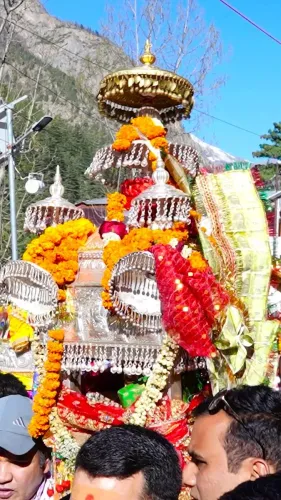
The Char Dham Yatra is the annual Hindu pilgrimage to the four Himalayan shrines of Badrinath, Kedarnath, Gangotri and Yamunotri in Uttarakhand, drawing millions of devotees each summer season. The pilgrimage is the single largest driver of the state's tourism economy and a major test of its administrative capacity every year.
Policy Backdrop
The deployment of a dedicated command and control infrastructure reflects a governance shift that accelerated after the 2013 Kedarnath disaster, in which flash floods and landslides caused widespread casualties among pilgrims. Since then, Uttarakhand has progressively layered digital platforms and real-time monitoring systems over physical infrastructure improvements along the Char Dham routes.
At the national level, the Char Dham all-weather road project, approved by the Union Cabinet in 2016, has sought to provide year-round road connectivity to the four shrines, reducing weather-related bottlenecks. The UTDB's 24x7 command centre sits within this broader effort to modernise pilgrimage logistics, combining grievance redressal, crowd management and emergency coordination under a single operational hub.
Indian states managing large-scale religious pilgrimages have broadly followed this pattern, adopting centralised control rooms and mandatory digital registration to improve crowd control and emergency response times — a model Uttarakhand has now embedded into its seasonal yatra governance framework.
Stakeholders and Impact
Pilgrims are the most direct beneficiaries: mandatory pre-registration through the UTDB platform allows authorities to track footfall at each shrine, manage queues and respond faster to medical or safety incidents. The resolution of more than 45,000 complaints during the season signals an active feedback loop between pilgrims and the administration.
Local communities and tour operators in the Char Dham corridor also stand to gain from more predictable pilgrim flows and reduced congestion at key transit points. Transparent management data can help operators plan capacity and assist state agencies in identifying infrastructure stress points ahead of peak footfall days.
What's Next
Authorities and observers will watch whether the registration and grievance data gathered during the 2026 season informs expanded digital tools — such as RFID tracking or real-time shrine-capacity dashboards — for the 2027 pilgrimage season. Possible coordination with the central government's national tourism helpline could further integrate state-level command infrastructure into a wider emergency-response network.
As pilgrim numbers on the Char Dham circuit continue to grow, the pressure on Uttarakhand's governance machinery will only intensify, making the command centre model a template that may see further technological upgrades in the seasons ahead.
Point of View
Using concrete metrics — 50 lakh registrations and 45,000-plus resolved complaints — to signal administrative competence at scale. This fits a broader pattern among Indian state governments of deploying digital-first pilgrimage management as both a safety imperative and a political signal of modernisation. The move is particularly significant for Uttarakhand, whose reputation and revenue are deeply tied to the Char Dham circuit following the reputational damage of the 2013 disaster. The real test will come in whether the data gathered this season translates into structural upgrades — RFID, capacity dashboards, inter-agency coordination — rather than remaining a seasonal operational exercise.
NationPress
15 Sept 2026
Frequently Asked Questions
What is the UTDB Command and Control Centre for Char Dham Yatra?
The UTDB (Uttarakhand Tourism Development Board) Command and Control Centre is a 24x7 operational hub set up to manage the Char Dham Yatra, handling pilgrim registrations, crowd monitoring, grievance redressal and emergency coordination across the four Himalayan shrines.
How many pilgrims have registered for Char Dham Yatra 2026?
According to the Uttarakhand Chief Minister's Office, more than 50 lakh (5 million) pilgrims had registered for Char Dham Yatra 2026 as of 16 June 2026.
How do I register for Char Dham Yatra 2026?
Registration for Char Dham Yatra is managed through the UTDB's official digital platform. Pilgrims are required to pre-register before visiting any of the four shrines — Badrinath, Kedarnath, Gangotri or Yamunotri.
What are the four shrines of Char Dham Yatra in Uttarakhand?
The four shrines of the Char Dham Yatra in Uttarakhand are Badrinath , Kedarnath , Gangotri and Yamunotri , all located in the Himalayan ranges of the state.
How has Uttarakhand improved Char Dham Yatra safety after the 2013 Kedarnath disaster?
After the devastating 2013 Kedarnath floods, Uttarakhand introduced mandatory digital registration, 24x7 command and control centres, and infrastructure upgrades including the Union Cabinet-approved Char Dham all-weather road project of 2016 to improve pilgrim safety and emergency response.