CM Sai: 515 New PACS Set Up in Chhattisgarh in Two Years
Synopsis
Chief Minister Vishnu Dev Sai says Chhattisgarh has set up 515 new Primary Agricultural Credit Societies in two years, deepening the state's cooperative network and widening institutional credit access for farmers and rural beneficiaries.
Key Takeaways
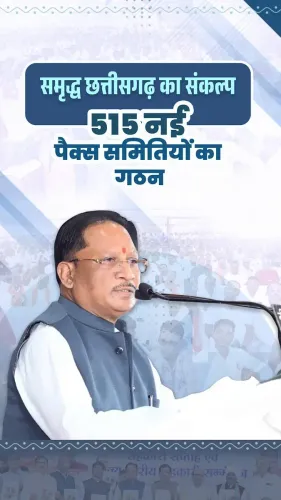
515 new PACS have been established in Chhattisgarh over the past two years , according to CM Vishnu Dev Sai.
The expansion is aimed at strengthening the cooperative credit structure and improving farmer access to institutional loans and inputs.
The announcement aligns with the Union Ministry of Cooperation's national drive, launched around 2022-23 , to set up multipurpose PACS in uncovered panchayats.
Chhattisgarh's large tribal and smallholder farming population stands to benefit most from the denser PACS network.
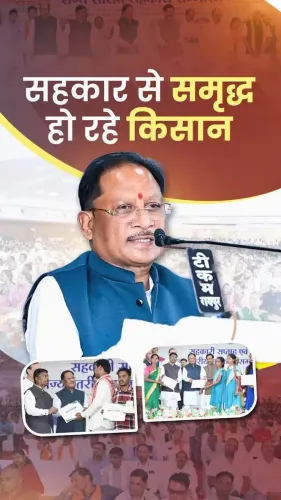
The government framed the achievement under the hashtag #SahkarSeSamriddhiKe5Saal , linking it to a five-year cooperative prosperity agenda.
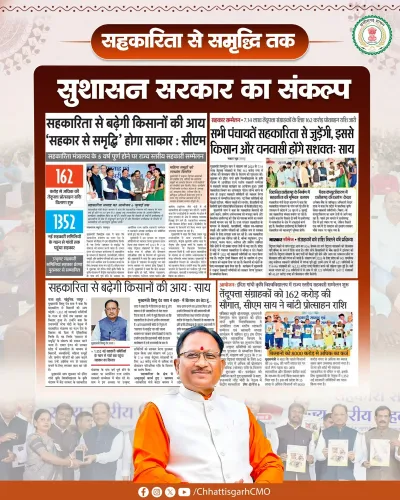
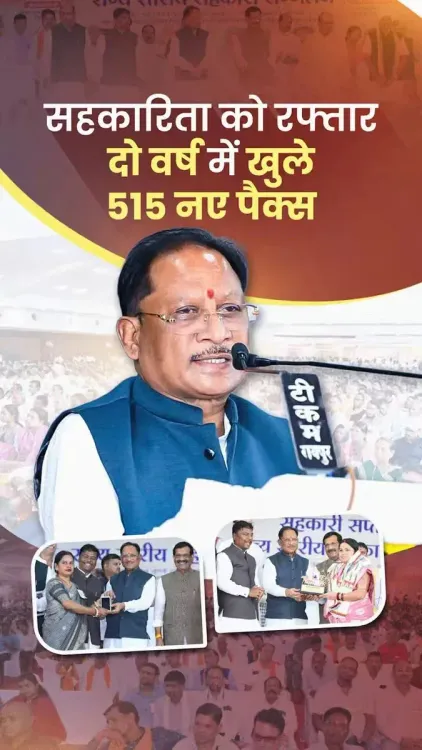
The Chief Minister's Office of Chhattisgarh, citing remarks by Chief Minister Vishnu Dev Sai, announced on Friday, 3 July 2026 that the state has established 515 new Primary Agricultural Credit Societies (PACS) over the past two years, strengthening the cooperative network and expanding benefits to farmers and other beneficiaries.
Context
In a statement shared by the official CMO account, CM Sai said: 'Packs ke kshetra mein Pradesh lagatar nayi uplabdhiyan hasil kar raha hai' ('The state is continuously achieving new milestones in the PACS sector'). He noted that the 515 new PACS established in two years have reinforced the cooperative system and delivered wide-ranging benefits to farmers and all associated stakeholders. The post carried hashtags including #SahkarSeSamriddhiKe5Saal — 'Five Years of Prosperity Through Cooperation' — signalling the announcement as part of a broader cooperative achievement narrative.
Policy Backdrop
PACS are village-level cooperative credit bodies that form the base of India's three-tier rural credit structure, providing crop loans, agricultural inputs, and other services to smallholder and tribal farmers. The Union Ministry of Cooperation, created in July 2021, gave dedicated policy focus to the sector and launched a national initiative around 2022-23 to establish new multipurpose PACS in panchayats lacking coverage and to computerise existing societies.
Chhattisgarh, a central Indian state with a large tribal and smallholder farming population, has historically relied on PACS to reach remote rural communities where commercial bank penetration is limited. The state's reported expansion mirrors parallel efforts across India to bring more villages under institutional cooperative credit coverage.
Stakeholders and Impact
The primary beneficiaries of expanded PACS coverage are small and marginal farmers who depend on cooperative societies for timely crop credit and inputs at regulated rates. Rural cooperative members, self-help groups, and other rural households linked to PACS also stand to gain from a denser network of societies.
A stronger cooperative base can reduce dependence on informal moneylenders, improve access to government-subsidised seeds and fertilisers, and serve as a channel for direct benefit transfers — outcomes that align with the #KisanKalyan (farmer welfare) and #ViksitBharat (Developed India) goals cited in the post.
What's Next
Analysts and policymakers will watch for state-level data on loan disbursement volumes, membership growth, and operational status of the 515 newly registered PACS to assess whether the expansion has translated into ground-level credit delivery. Further details are expected to surface in upcoming Chhattisgarh Legislative Assembly sessions or at national cooperative conferences. The government's continued emphasis on cooperative expansion under the #EmpoweringCooperatives agenda suggests further announcements on computerisation and service diversification of PACS are likely in the months ahead.
Point of View
Reinforcing both CM Sai's agrarian credentials and the party's broader rural outreach ahead of potential electoral cycles. By anchoring the claim in a specific number — 515 new PACS — the CMO moves beyond generic welfare rhetoric toward quantifiable governance metrics, a shift that invites scrutiny of disbursement data and operational outcomes. The hashtag #SahkarSeSamriddhiKe5Saal suggests the government is building a five-year cooperative narrative, likely to crescendo around the ministry's anniversary milestones. Whether the new societies are fully functional and credit-active will determine if the expansion is substantive policy or a registration-count exercise.
NationPress
2 Oct 2026
Frequently Asked Questions
How many new PACS have been set up in Chhattisgarh recently?
According to Chief Minister Vishnu Dev Sai, 515 new Primary Agricultural Credit Societies (PACS) have been established in Chhattisgarh over the past two years.
What is a PACS and how does it help farmers?
A Primary Agricultural Credit Society (PACS) is a village-level cooperative body that provides crop loans, agricultural inputs, and other services to farmers, especially smallholders who may not have easy access to commercial banks.
Why is the Union government focused on expanding PACS across India?
The Ministry of Cooperation , created in July 2021, launched a national initiative around 2022-23 to establish new multipurpose PACS in panchayats without coverage and to computerise existing ones, aiming to deepen rural institutional credit access.
Who is the Chief Minister of Chhattisgarh?
Vishnu Dev Sai is the Chief Minister of Chhattisgarh, sworn in December 2023, with stated priorities on agriculture and rural cooperative development.
What does SahkarSeSamriddhiKe5Saal mean?
Sahkar Se Samridhi Ke 5 Saal translates to 'Five Years of Prosperity Through Cooperation,' a hashtag used by the Chhattisgarh government to frame its cooperative expansion achievements within a five-year policy arc.