Chhattisgarh CMO Announces 125-Day Rural Jobs Push
Synopsis
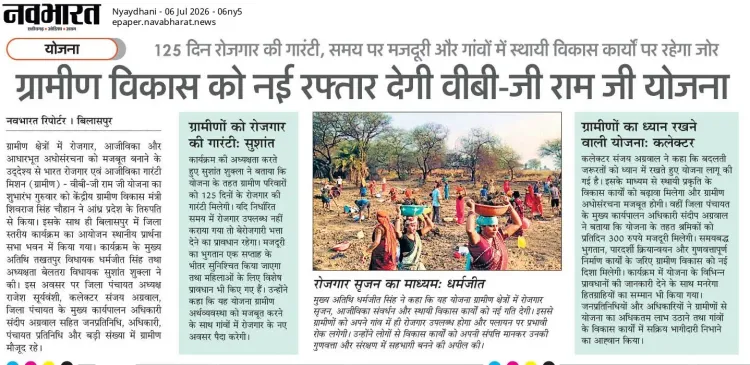
The Chhattisgarh Chief Minister's Office announced a 125-day rural employment guarantee on 6 July 2026, extending beyond the central MGNREGA baseline of 100 days to boost village economies and curb seasonal unemployment across the state.
Key Takeaways
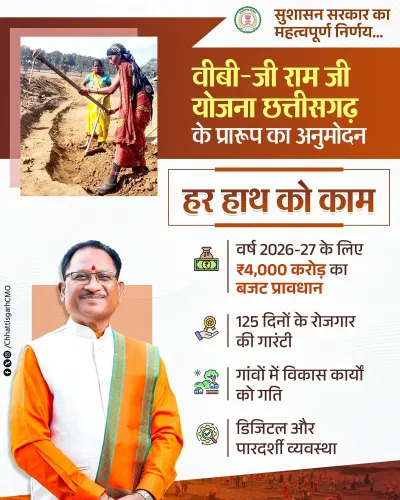
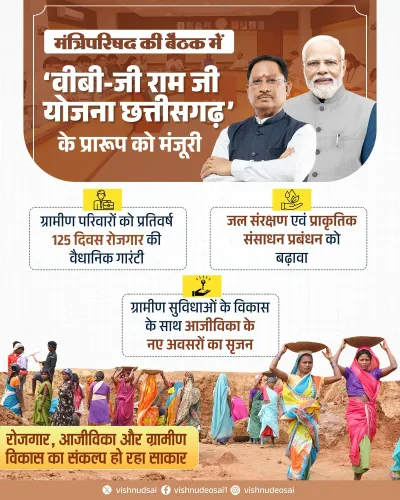
The Chief Minister's Office of Chhattisgarh announced a 125-day rural employment guarantee on 6 July 2026 .
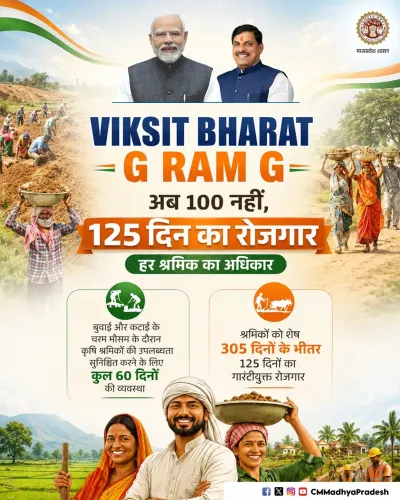
The scheme extends the national MGNREGA baseline by 25 additional days of wage work per rural household.
The initiative is linked to the state-level #VBGRAMG village employment and development programme.
Primary beneficiaries are rural households and agricultural labourers facing seasonal unemployment in Chhattisgarh .
The move follows a broader national pattern of states augmenting the central employment guarantee to curb distress migration and stimulate rural demand.
Budget allocations, district rollout timelines, and integration with central MGNREGA funds remain to be officially detailed.
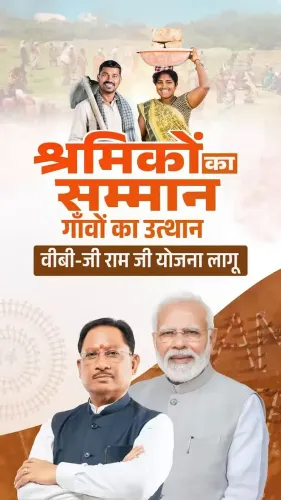
The Chief Minister's Office of Chhattisgarh announced on Monday, 6 July 2026, a rural employment initiative promising 125 days of guaranteed wage work for village households, framing it as a measure to accelerate rural economic growth across the state.
Context
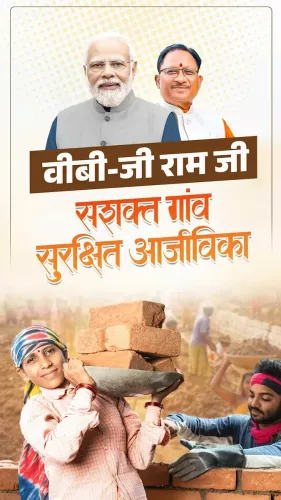
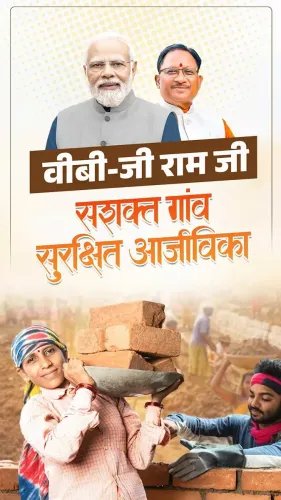
The post, shared in Hindi, declared: 'गांवों में बढ़ेंगे रोजगार के अवसर, विकास को मिलेगी नई रफ़्तार' ('Employment opportunities in villages will grow, development will gain new momentum'). It specifically tied the 125-day employment guarantee to strengthening the rural economy, invoking the hashtag #VBGRAMG alongside #RuralEmployment and #SustainableDevelopment.
Chhattisgarh is a central Indian state with a large tribal and forest-dependent rural population that faces acute seasonal unemployment, particularly during the lean agricultural months between harvests.
Policy Backdrop
India's foundational rural employment law, the Mahatma Gandhi National Rural Employment Guarantee Act (MGNREGA), enacted in 2005, guarantees up to 100 days of wage employment per year to rural households. The Chhattisgarh government's push for 125 days represents a 25-day extension beyond the central baseline, funded through state resources.
Several Indian states have periodically augmented the MGNREGA framework with additional workdays to cushion rural demand during lean seasons and curb distress migration to cities. Such state-level top-ups have become a recognisable feature of post-pandemic rural welfare policy, linking employment generation with local infrastructure creation and sustainable development goals.
The #VBGRAMG tag references a Chhattisgarh state-level village employment and development scheme, though its precise operational structure and fund allocation details are subject to official disclosure.
Stakeholders and Impact
The primary beneficiaries are rural households and agricultural labourers in Chhattisgarh, who depend on guaranteed employment during periods when farm work is unavailable. The additional 25 days of work can translate into meaningful supplementary income for families at the economic margin.
A stronger rural income base is also expected to stimulate local demand for goods and services, with multiplier effects on village-level commerce. District administrations will be responsible for identifying eligible works — typically rural infrastructure such as roads, ponds, and watershed projects — and mobilising registered job-card holders.
What's Next
Key questions for the rollout include state budget allocations earmarked for the 125-day provision, district-wise implementation timelines, and whether the additional days will be integrated with or run parallel to central MGNREGA funds. Transparency in wage disbursement and work measurement will be critical to the scheme's credibility on the ground.
If implemented at scale, the initiative could serve as a model for other states with large rural and tribal populations seeking to extend employment guarantees beyond the national floor — and will be closely watched as a test of Chhattisgarh's fiscal capacity to sustain expanded rural welfare commitments.
Point of View
Signalling the state government's intent to position rural welfare as a political and economic priority. Extending guaranteed workdays by 25 per cent over the national baseline is a fiscally consequential commitment in a state where a large share of the population depends on public employment schemes. The move fits a post-pandemic pattern of state governments competing to offer augmented safety nets, particularly ahead of electoral cycles, while also addressing genuine structural unemployment in tribal and forest-edge communities. The real test will be whether the state can sustain the additional fiscal burden and ensure timely wage payments at the district level.
NationPress
6 Jul 2026
Frequently Asked Questions
What is the Chhattisgarh 125-day rural employment scheme?
The Chhattisgarh government announced a scheme guaranteeing 125 days of wage employment to rural households, extending the national MGNREGA baseline of 100 days by 25 additional days through a state-funded initiative linked to the VBGRAMG programme.
How is this different from MGNREGA?
MGNREGA , the central government's 2005 law, guarantees up to 100 days of rural employment per year. Chhattisgarh's announcement adds 25 more days on top of this, funded by the state government rather than the central scheme.
Who benefits from the Chhattisgarh rural employment scheme?
The primary beneficiaries are rural households and agricultural labourers in Chhattisgarh , particularly those in tribal and forest-dependent communities who face seasonal gaps in farm work.
What is VBGRAMG in Chhattisgarh?
#VBGRAMG is a Chhattisgarh state-level scheme focused on village employment and rural development works. The Chief Minister's Office referenced it in the 6 July 2026 announcement, though detailed operational guidelines are subject to official disclosure.
Which other states have extended MGNREGA workdays?
Several Indian states have periodically announced additional workdays beyond the MGNREGA baseline to address lean-season distress and curb rural-to-urban migration, making Chhattisgarh's move part of a broader national pattern of state-level rural welfare augmentation.