Chhattisgarh CMO Hails India's Cultural Rise Under Modi
Synopsis
The Chief Minister's Office of Chhattisgarh has hailed India's cultural rise on the global stage, citing Yoga, Ayurveda, Nalanda, millets, and tribal art as evidence of a resurgent civilisational identity under PM Narendra Modi's twelve-year governance record.
Key Takeaways
The Chhattisgarh CMO posted on 18 June 2026 under #12YearsOfVikasBhiVirasatBhi , marking a political milestone tied to PM Modi's tenure.
Yoga, Ayurveda, Nalanda, millets, and tribal art are cited as India's key cultural exports gaining global recognition.
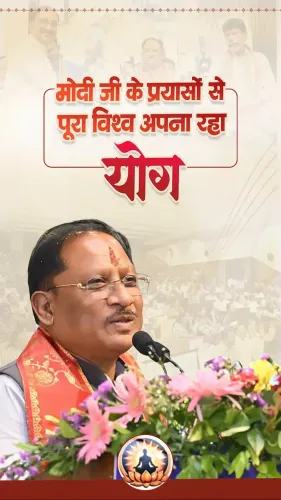
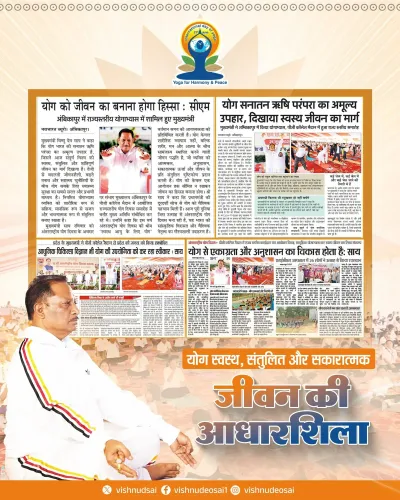
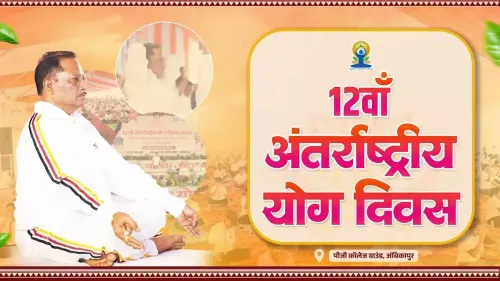
PM Modi proposed the International Day of Yoga to the UN in 2014 ; the resolution was adopted unanimously.
The UN declared 2023 the International Year of Millets following India's diplomatic push.
Chhattisgarh CM Vishnu Deo Sai was tagged, signalling the state government's alignment with the central cultural narrative.
State-level heritage tourism and artisan schemes in Chhattisgarh are areas to watch for policy follow-through.
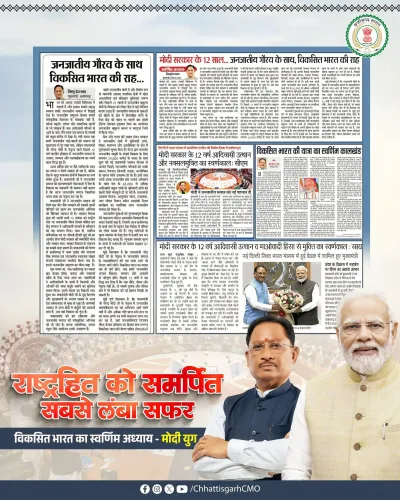
The Chief Minister's Office of Chhattisgarh on Thursday, 18 June 2026 posted a tribute to India's growing global cultural footprint, citing Yoga, Ayurveda, Nalanda, millets, and tribal art as pillars of a resurgent civilisational identity under Prime Minister Narendra Modi's leadership.
Context
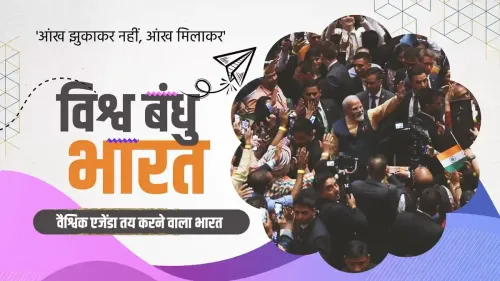
The post, shared from the official Chhattisgarh CMO handle and tagged to @PMOIndia and @vishnudsai, carries the hashtag #12YearsOfVikasBhiVirasatBhi — loosely translated as 'twelve years of both development and heritage.' The phrasing marks a political milestone tied to PM Modi's governance record and frames India's cultural assets as active instruments of global influence rather than relics of the past. The post states directly: 'India's heritage is no longer confined to its past — it is shaping the world's understanding of a confident, resurgent India.'Policy Backdrop
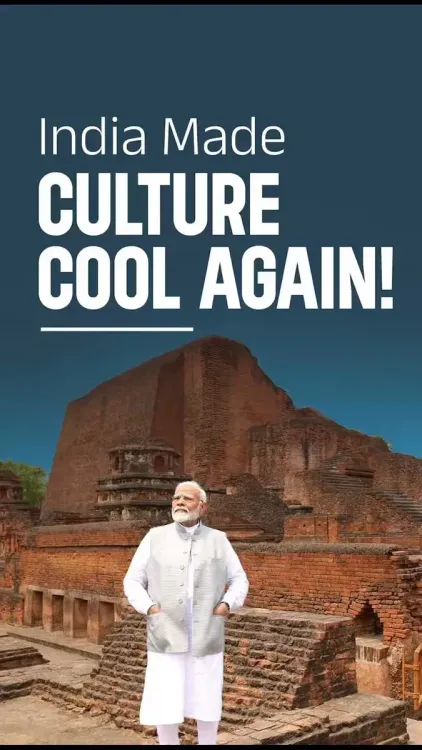
The messaging draws on a decade-long central government strategy of deploying culture as soft power. PM Modi proposed the International Day of Yoga to the UN General Assembly in 2014, a resolution that was adopted unanimously and has since made 21 June a globally observed occasion. India's sustained diplomatic push also led the United Nations to declare 2023 the International Year of Millets, elevating a crop deeply embedded in the food traditions of states like Chhattisgarh. The revival of Nalanda University as an international institution — backed by a parliamentary act — further anchors the narrative of India reconnecting with its intellectual heritage. The Ministry of AYUSH, established in 2014, has institutionalised the global promotion of Ayurveda and allied traditional medicine systems.Stakeholders and Impact
Chhattisgarh occupies a specific place in this cultural framework. The state is home to a significant tribal population whose art forms — including Bastar Dhokra metalcraft and Gond painting — have gained visibility in national and international cultural programming. Chief Minister Vishnu Deo Sai, a tribal leader himself, has aligned the state administration with central initiatives that spotlight indigenous heritage. Tribal artisans, Yoga and Ayurveda practitioners, and state cultural departments stand as the primary beneficiaries of policies that convert cultural identity into economic and diplomatic capital. The post's reference to tribal art signals the state government's intent to position Chhattisgarh's grassroots traditions within the larger national narrative.What's Next
The hashtag's twelve-year framing suggests this communication is part of a coordinated messaging campaign across BJP-governed states marking a political anniversary. Observers will watch for state-level announcements in Chhattisgarh tied to heritage tourism, artisan welfare schemes, or cultural programming aligned with upcoming international forums. As India continues to use multilateral platforms to advance its civilisational brand, state governments are increasingly serving as amplifiers of that narrative — translating central policy intent into local identity politics.Point of View
Amplifying a unified civilisational narrative timed to political anniversaries. By invoking Yoga, Nalanda, millets, and tribal art in a single breath, the communication deliberately bridges elite heritage and grassroots identity — a coalition-building move that is particularly resonant in a tribal-majority state like Chhattisgarh. The twelve-year framing of 'Vikas Bhi Virasat Bhi' is designed to counter any perception that development and cultural pride are competing priorities. Taken together, the post reflects a maturing soft-power playbook in which state capitals are as important as New Delhi in projecting India's global cultural ambitions.
NationPress
17 Sept 2026
Frequently Asked Questions
What is the meaning of Vikas Bhi Virasat Bhi?
'Vikas Bhi Virasat Bhi' translates from Hindi as 'both development and heritage,' a slogan used by the BJP to argue that economic progress and cultural preservation are complementary goals under PM Modi's governance.
What role has PM Modi played in promoting Indian culture globally?
PM Modi proposed the International Day of Yoga to the UN General Assembly in 2014, which was adopted unanimously, and India's diplomatic efforts led the UN to declare 2023 the International Year of Millets, among other cultural initiatives.
Why is Chhattisgarh relevant to India's cultural heritage push?
Chhattisgarh is home to significant tribal communities whose art forms, including Bastar Dhokra metalcraft and Gond painting, are part of the national cultural identity that the government promotes internationally.
What is the significance of the Nalanda University revival?
Nalanda University was revived as a modern international institution to reconnect India with its ancient legacy as a global centre of learning; it was backed by a parliamentary act and symbolises the civilisational heritage narrative.
What is India's International Year of Millets and why does it matter for Chhattisgarh?
The UN declared 2023 the International Year of Millets following India's push; millets are a staple crop in Chhattisgarh and the declaration elevated both the crop's global profile and the livelihoods of farmers in the region.