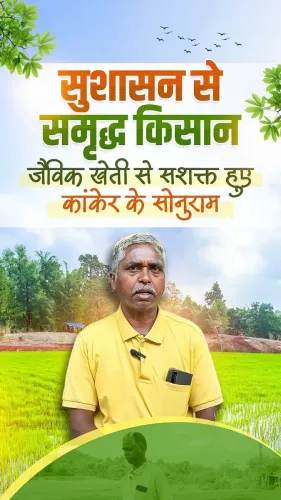
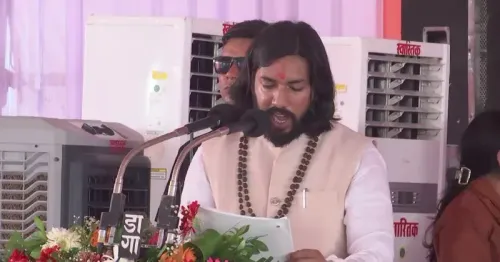
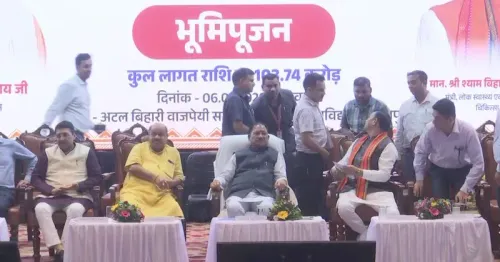
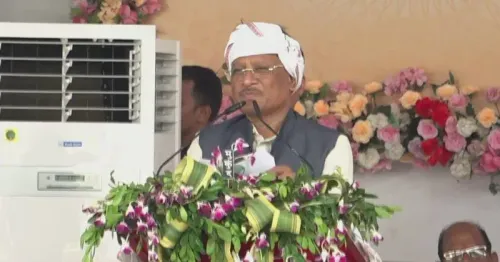
CM Sai's Office Hosts Organic Farming Workshop and Bhoomi Pujan
Synopsis
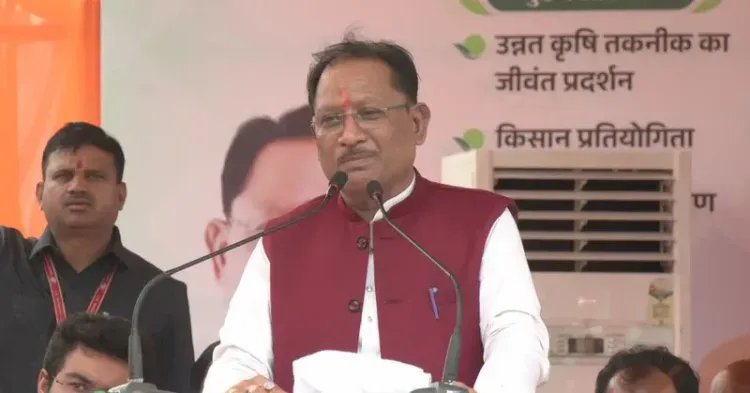
The Chief Minister's Office of Chhattisgarh on 20 June 2026 announced a combined organic farming workshop and bhoomi pujan-cum-inauguration event, reinforcing CM Vishnu Deo Sai's push to expand sustainable agriculture and infrastructure support for the state's smallholder farming communities.
Key Takeaways
The Chief Minister's Office of Chhattisgarh announced a 'Jaivik Kheti Karyashala tatha Bhoomi Pujan evam Lokarpan' programme on 20 June 2026 .
The event combines an organic farming workshop with a foundation-laying and inauguration ceremony, linking knowledge transfer with physical infrastructure.
The initiative aligns with the central government's Paramparagat Krishi Vikas Yojana , active since 2015 , which promotes cluster-based organic farming.
CM Vishnu Deo Sai , in office since December 2023 , has continued Chhattisgarh's alignment with national sustainable agriculture goals.
Primary beneficiaries are organic farmers and smallholders who stand to gain from reduced input costs and improved market access.
Follow-up details on new organic clusters, certification drives, and market-linkage arrangements from the event are awaited.
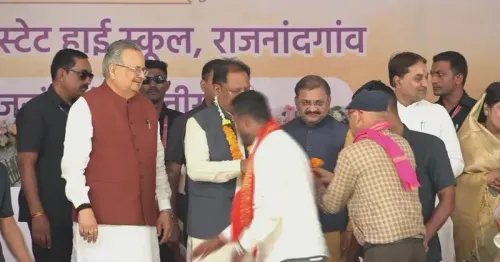
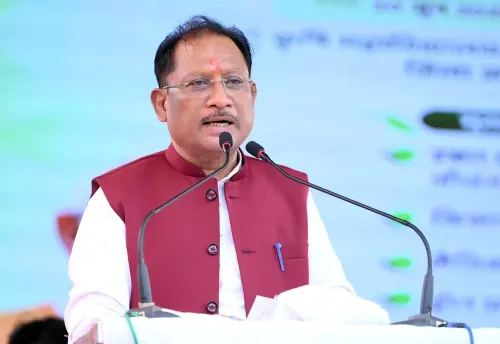
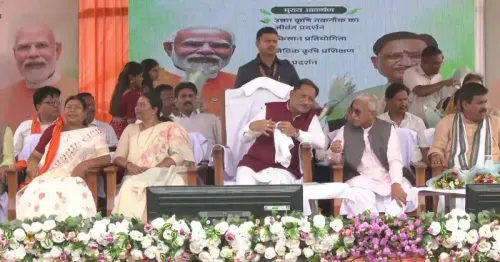
The Chief Minister's Office of Chhattisgarh announced a 'Jaivik Kheti Karyashala tatha Bhoomi Pujan evam Lokarpan' programme — an organic farming workshop combined with a foundation-laying and inauguration ceremony — on Saturday, 20 June 2026, signalling the state government's continued push to mainstream sustainable agriculture across the region.
Context
The event, described in Hindi as 'जैविक खेती कार्यशाला तथा भूमिपूजन एवं लोकार्पण' ('Organic Farming Workshop and Foundation-Laying cum Inauguration'), brings together multiple activities under one programme. Such combined events — pairing knowledge-sharing workshops with ground-breaking and commissioning ceremonies — are a common format in Chhattisgarh's agriculture outreach calendar, reflecting the state government's intent to link policy education with on-the-ground infrastructure.
Chhattisgarh is home to a large population of tribal and smallholder farmers who depend heavily on land productivity. Promoting organic methods in this context addresses both soil health and the economic vulnerability of communities that cannot easily absorb the rising cost of chemical inputs.
Policy Backdrop
The event aligns with the Paramparagat Krishi Vikas Yojana (PKVY), the central government's flagship scheme launched in 2015 to develop cluster-based organic farming across Indian states, including Chhattisgarh. Under PKVY, farmers are grouped into clusters, trained in organic practices, and supported through certification and market-linkage mechanisms.
Under Chief Minister Vishnu Deo Sai, who took office in December 2023, the state has continued to align its agriculture agenda with national sustainable farming goals. Workshops of this nature serve as a primary vehicle for disseminating organic cultivation techniques — covering composting, bio-pesticide use, soil testing, and crop rotation — to farmers who may have limited access to extension services.
Stakeholders and Impact
The primary beneficiaries of such programmes are organic farmers and smallholders across Chhattisgarh's rural districts. Organic farming workshops provide practical training that can reduce dependence on costly synthetic fertilisers and pesticides, directly improving farm-level profitability for marginal cultivators.
The bhoomi pujan and lokarpan components suggest that new physical infrastructure — potentially a processing unit, organic input centre, or demonstration farm — is also being commissioned as part of this initiative. Such facilities are critical for building a complete organic value chain, from cultivation through to certification and sale.
What's Next
Attention will now turn to the specifics announced at the event: the scale of new organic clusters being formed, the certification drives being initiated, and any market-linkage arrangements put in place to ensure farmers can sell organic produce at a premium. The state's track record in following through on such announcements — with consistent support for training, input supply, and buyer connections — will determine the on-ground impact for Chhattisgarh's farming communities.
As Indian states compete to expand their organic acreage and meet growing domestic and export demand for chemical-free produce, events like this one position Chhattisgarh within a broader national movement toward sustainable food systems.
Point of View
On-the-ground delivery alongside awareness outreach — a format that resonates strongly with rural constituencies. For CM Vishnu Deo Sai, championing organic farming carries both economic and political logic: it addresses genuine input-cost pressures on smallholders while fitting within the BJP-led central government's broader 'natural farming' narrative. The alignment with PKVY also ensures access to central funding, reducing the fiscal burden on the state. Whether this event translates into sustained cluster formation and market linkage, or remains a symbolic gesture, will be the real test of the initiative's depth.
NationPress
19 Sept 2026
Frequently Asked Questions
What is the 'Jaivik Kheti Karyashala' event announced by the Chhattisgarh CMO?
It is an organic farming workshop combined with a bhoomi pujan (foundation-laying) and lokarpan (inauguration) ceremony, announced by the Chief Minister's Office of Chhattisgarh on 20 June 2026 to promote sustainable agriculture in the state.
What is Paramparagat Krishi Vikas Yojana and how does it relate to Chhattisgarh?
Paramparagat Krishi Vikas Yojana (PKVY) is a central government scheme launched in 2015 to develop cluster-based organic farming. Chhattisgarh is among the states implementing it, using workshops and infrastructure events to train and support smallholder farmers.
Who is the Chief Minister of Chhattisgarh overseeing these agriculture programmes?
Vishnu Deo Sai has been the Chief Minister of Chhattisgarh since December 2023 and has continued the state's alignment with national sustainable and organic farming goals.
Who benefits from organic farming workshops in Chhattisgarh?
The primary beneficiaries are organic farmers and smallholders across Chhattisgarh's rural districts, who gain practical training in composting, bio-pesticide use, and crop rotation, helping reduce dependence on costly chemical inputs.
What does 'bhoomi pujan' and 'lokarpan' mean in the context of this event?
'Bhoomi pujan' refers to a traditional foundation-laying or ground-breaking ceremony for new infrastructure, while 'lokarpan' means a public inauguration or dedication. Together they indicate that new physical facilities — such as an organic input centre or processing unit — are being commissioned at the event.