Chhattisgarh CMO launches Koshal Fab to take state handicrafts global
Synopsis
The Chief Minister's Office of Chhattisgarh launched Koshal Fab on National Handloom Day 2026, aiming to connect the state's tribal handicraft traditions — bell metal, bamboo, terracotta — with global markets under the Make in India framework.
Key Takeaways
Koshal Fab was launched by the Chief Minister's Office of Chhattisgarh on 8 August 2026 .
The initiative aims to take Chhattisgarh's traditional handicrafts — including bell metal, bamboo, and terracotta products — into the global marketplace.
The launch was timed with National Handloom Day , observed every 7 August since 2015 to honour weavers and the handloom sector.
The initiative is aligned with the central government's Make in India scheme, launched in September 2014 .
Primary beneficiaries are tribal weavers and handicraft artisans across Chhattisgarh's rural communities.
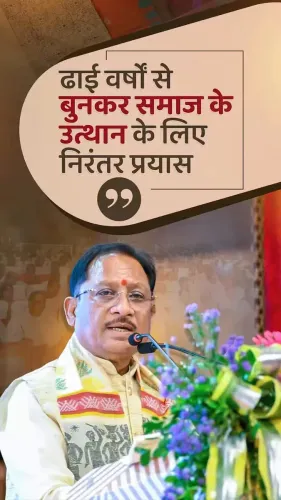
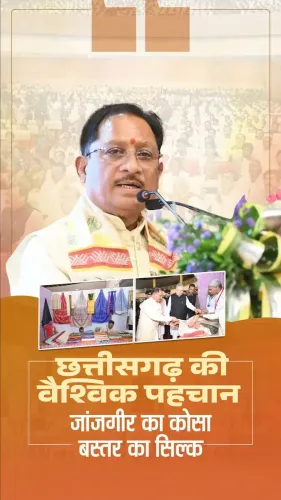
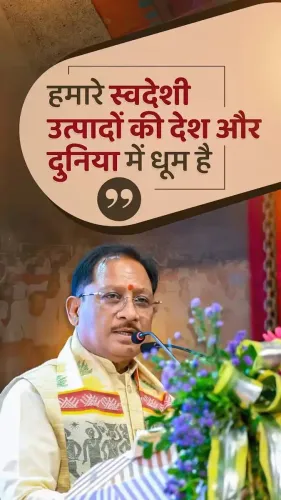
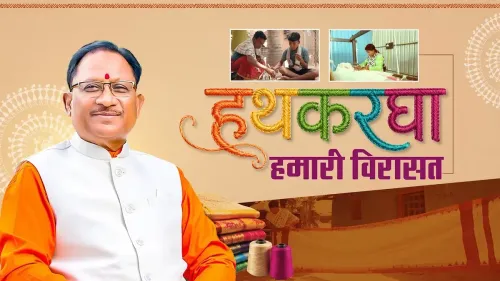
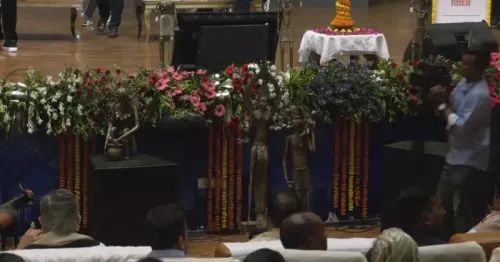
On the occasion of National Handloom Day, Chhattisgarh's tribal artisans got a new runway to the world. The Chief Minister's Office of Chhattisgarh announced the launch of Koshal Fab on 8 August 2026, positioning the state's centuries-old handicraft tradition as a contender in the global marketplace.
'परंपरा से प्रगति की ओर कोशल फैब के जरिए' — 'From tradition to progress, through Koshal Fab' — is the stated ambition. The announcement declares that Chhattisgarh's handicrafts will now 'establish their identity in the global market,' signalling a deliberate push beyond domestic boundaries.
What Koshal Fab is built on
Chhattisgarh carries one of India's richest artisanal inheritances — bell metal craft, bamboo weaving, and terracotta work rooted in its large tribal communities. These traditions have long sustained rural livelihoods, but market reach has historically been limited to regional haats and government emporiums. Koshal Fab is framed as the bridge between that heritage and a wider commercial stage.
The launch is timed precisely with National Handloom Day, observed every 7 August since 2015, a date chosen to honour weavers and amplify the sector's economic and cultural weight. The symbolism is deliberate: this is not a routine scheme announcement, it is a statement about where the state sees its artisans heading.
The Make in India thread running through this
The initiative carries the hashtag #MakeInIndia, anchoring it within the central government's flagship manufacturing and export promotion drive launched in September 2014. That alignment matters: it potentially opens doors to national export facilitation, e-commerce integration, and international trade fair participation that state-only programmes rarely access alone.
Across India, state governments have increasingly pursued branding and market-linkage programmes for traditional crafts — recognising that heritage skills, without distribution muscle, stay invisible to global buyers. Chhattisgarh's move fits that pattern, but the proof will be in the follow-through: artisan training pipelines, export certifications, and presence at international trade events.
For the weavers and craftspeople of Chhattisgarh, the question is no longer whether their work deserves a global audience — it is whether the infrastructure being built around them can actually deliver one.
Point of View
Maximising optics while signalling seriousness about rural economic diversification. The real test is whether market-linkage infrastructure follows the announcement. States that have succeeded in this space — notably Madhya Pradesh with its GI-tagged crafts and Telangana's handloom clusters — invested heavily in artisan skilling and export facilitation over years, not just in launch events. Chhattisgarh's tribal craft base is genuinely distinctive; the question is whether Koshal Fab becomes a sustained programme or a well-branded one-day headline.
NationPress
8 Aug 2026
Frequently Asked Questions
What is Koshal Fab in Chhattisgarh?
Koshal Fab is a Chhattisgarh government initiative launched on 8 August 2026 to promote the state's traditional handicrafts — including tribal bell metal, bamboo, and terracotta products — in global markets, aligned with the Make in India scheme.
Why was Koshal Fab launched on National Handloom Day?
National Handloom Day is observed on 7 August every year since 2015 to honour weavers and the handloom sector. The Chhattisgarh CMO timed the Koshal Fab launch around this date to amplify its significance and connect it to the national celebration of artisanal heritage.
How does Koshal Fab connect to Make in India?
The Koshal Fab announcement explicitly carries the Make in India hashtag, aligning the state initiative with the central government's 2014 scheme designed to promote Indian manufacturing and exports, potentially opening access to national export facilitation channels.
Which artisans benefit from Koshal Fab?
The primary beneficiaries are Chhattisgarh's tribal weavers and handicraft artisans who practise traditional crafts such as bell metal work, bamboo weaving, and terracotta, communities whose livelihoods depend on sustaining these heritage skills.
What is National Handloom Day and when is it observed?
National Handloom Day is observed on 7 August every year in India, instituted in 2015 to recognise the contribution of the handloom and handicraft sector to the economy and to India's cultural heritage.