Chhattisgarh CMO pays tribute to Bankim Chandra on birth anniversary
Synopsis
The Chief Minister's Office of Chhattisgarh paid tribute to Bankim Chandra Chattopadhyay, composer of India's national song 'Vande Mataram', on his birth anniversary on 27 June 2026, honouring him as a literary icon and a source of nationalist inspiration.
Key Takeaways
The Chhattisgarh Chief Minister's Office posted a tribute to Bankim Chandra Chattopadhyay on his birth anniversary on 27 June 2026 .
Bankim Chandra Chattopadhyay (1838–1894) composed Vande Mataram in 1875 , which later became India's national song.
The Constituent Assembly adopted Vande Mataram as India's national song in 1950 .
The CMO described Chattopadhyay as a literary figure and a source of nationalist inspiration, offering koti-koti naman (countless salutations).
Such tributes are part of a broader pattern of Indian state governments honouring 19th-century nationalist icons on their birth anniversaries.
The Chief Minister's Office of Chhattisgarh on Friday, 27 June 2026, paid tribute to Bankim Chandra Chattopadhyay, the composer of India's national song Vande Mataram, on the occasion of his birth anniversary, honouring him as a literary giant and a wellspring of nationalist spirit.
Context
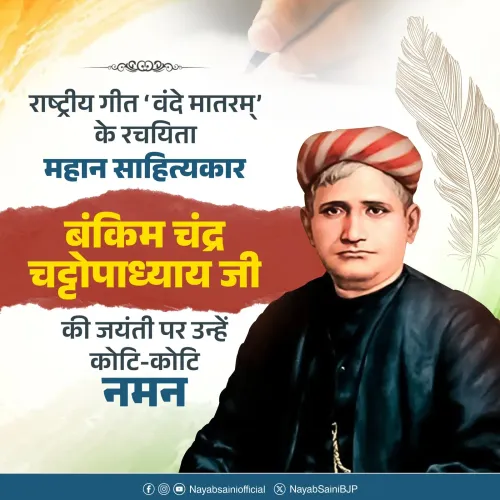
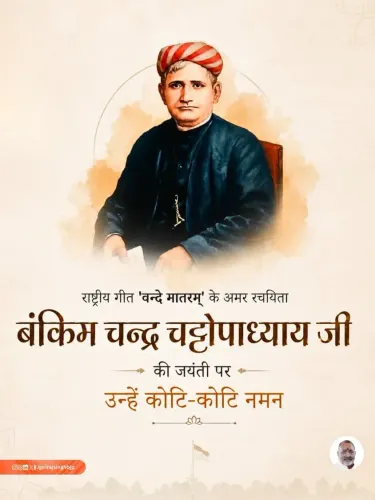
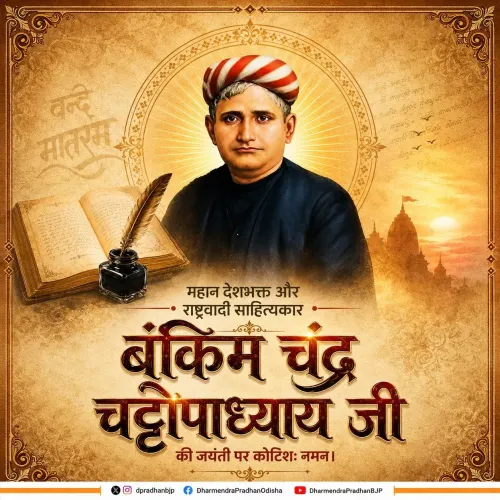
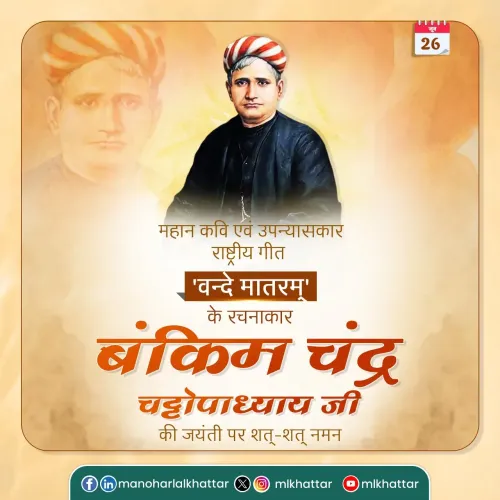
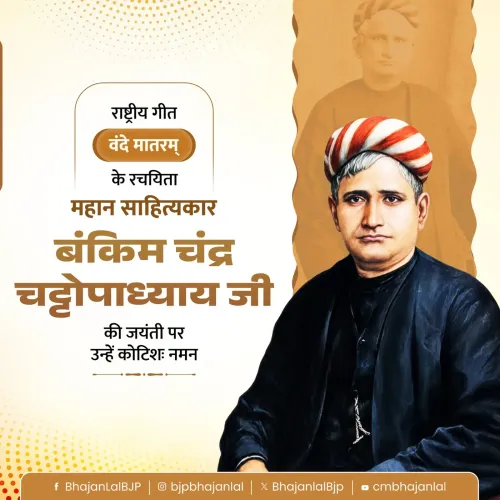
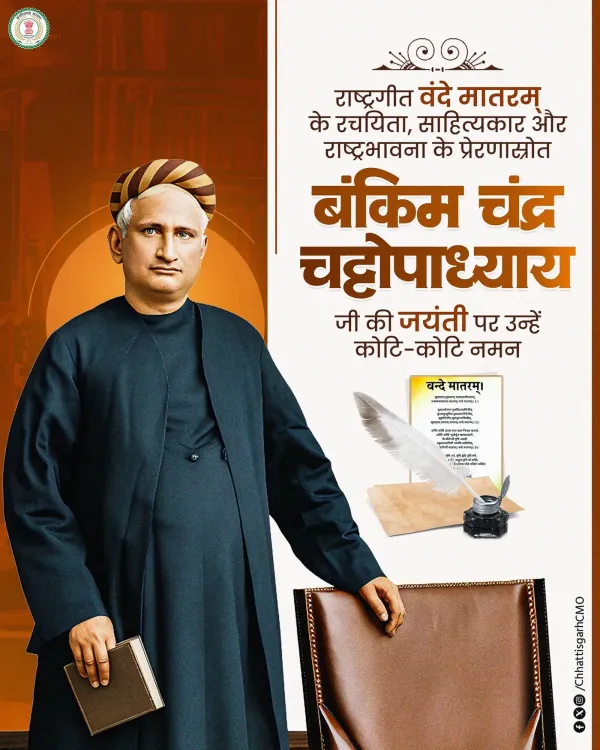
The post, shared on the official X account of the Chhattisgarh Chief Minister's Office, offered koti-koti naman (countless salutations) to the 19th-century Bengali writer, describing him as the composer of the national song 'Vande Mataram', a literary figure, and an enduring source of nationalist inspiration. The message was accompanied by an image and carried the hashtags #बंकिम_चंद्र_चट्टोपाध्याय_जी and #साहित्यकार.
Bankim Chandra Chattopadhyay was born on 27 June 1838 in Kantalpara, Bengal. He remains one of the most celebrated figures of the Bengal Renaissance and the broader anti-colonial literary tradition in India.
Policy Backdrop
Vande Mataram was originally composed by Chattopadhyay in 1875 and later woven into his landmark novel Anandamath (1882). The poem became a rallying cry during India's independence movement and was adopted as the country's national song by the Constituent Assembly in 1950, alongside the national anthem.
Indian state governments across party lines routinely issue official tributes to 19th-century nationalist writers on their birth anniversaries. These commemorations are part of a broader pattern of cultural outreach that connects contemporary governance with historical symbols of national awakening, particularly figures associated with the Bengal Renaissance and early anti-colonial thought.
Stakeholders and Impact
Such official tributes resonate with literary circles, educators, and students across India, reinforcing the place of figures like Chattopadhyay in the national cultural consciousness. For Chhattisgarh, a state with a strong tradition of honouring national icons, the message signals continuity in the government's public engagement with India's civilisational heritage.
The hashtag #साहित्यकार (meaning 'literary figure') situates the tribute within a wider conversation about the role of writers in shaping national identity — a theme that carries continued relevance in contemporary Indian public discourse.
What's Next
Similar commemorative statements from other state governments and cultural institutions are expected around this date each year. Literary organisations and academic bodies may also mark the occasion with events celebrating Chattopadhyay's contributions to Bengali and Indian literature. The broader pattern of such tributes reflects an ongoing official effort to keep the memory of pre-independence nationalist icons alive in public life — a practice likely to continue as India approaches significant milestones in its post-independence history.
Point of View
While ceremonial, serve a dual purpose: they keep historical figures relevant in public discourse and subtly frame contemporary governance within a continuum of national pride. As India approaches further milestones in its post-independence journey, these official acts of remembrance are likely to grow in frequency and visibility.
NationPress
26 Jun 2026
Frequently Asked Questions
Who was Bankim Chandra Chattopadhyay?
Bankim Chandra Chattopadhyay (1838–1894) was a Bengali novelist and poet, best known as the composer of Vande Mataram , which became India's national song. He was a towering figure of the Bengal Renaissance and the anti-colonial literary movement.
Why is Bankim Chandra Chattopadhyay's birth anniversary celebrated?
His birth anniversary on 27 June is observed to honour his literary legacy and his contribution to India's nationalist movement, particularly through the composition of Vande Mataram in 1875 .
What is 'Vande Mataram' and why is it significant?
Vande Mataram is India's national song, composed by Bankim Chandra Chattopadhyay in 1875 and later adopted by the Constituent Assembly in 1950 . It served as a powerful rallying cry during the independence movement.
Why did the Chhattisgarh CMO post a tribute to Bankim Chandra Chattopadhyay?
The Chief Minister's Office of Chhattisgarh posted the tribute as part of the official observance of Chattopadhyay's birth anniversary on 27 June 2026 , a practice common among Indian state governments to honour national icons.
What does 'koti-koti naman' mean?
Koti-koti naman is a Hindi phrase meaning 'countless salutations' or 'salutations from millions', commonly used in official tributes to express deep reverence for a historical figure.