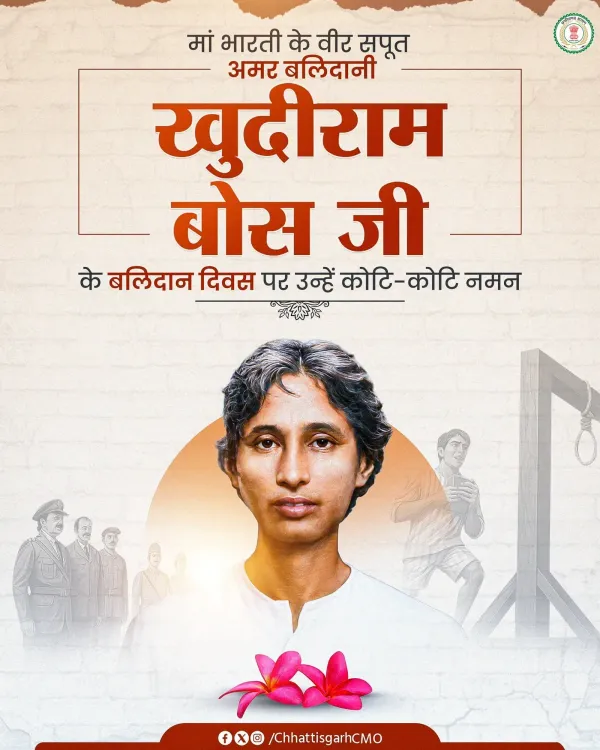
Chhattisgarh CMO pays tribute to martyr Khudiram Bose
Synopsis
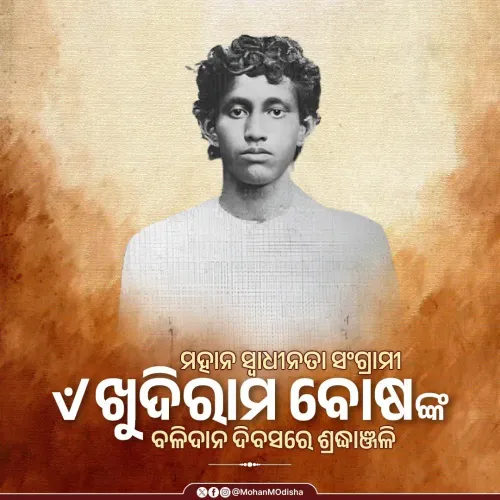
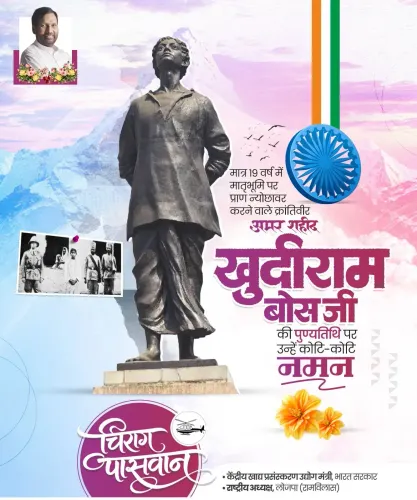
The Chief Minister's Office of Chhattisgarh honoured revolutionary martyr Khudiram Bose on his martyrdom anniversary, calling him a brave son of Mother India. Bose was executed by British authorities in 1908 at age 18 for his role in India's anti-colonial resistance.
Key Takeaways
The Chief Minister's Office of Chhattisgarh posted a tribute to revolutionary martyr Khudiram Bose on 11 August 2026 .
Khudiram Bose was executed by British authorities in 1908 at the age of 18 , making him one of India's youngest martyrs.
He was associated with the Jugantar group, an early armed anti-colonial resistance movement in Bengal.
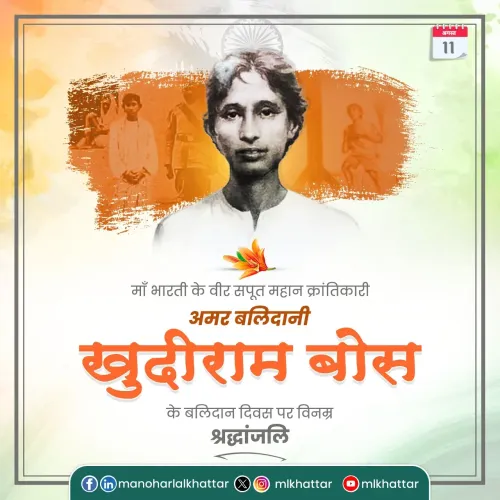
The tribute described him as 'Maa Bharati ke veer saput, amar balidani' — a brave son of Mother India and an immortal martyr.
Official commemorations of freedom fighters are a routine practice across Indian state governments, cutting across party lines.
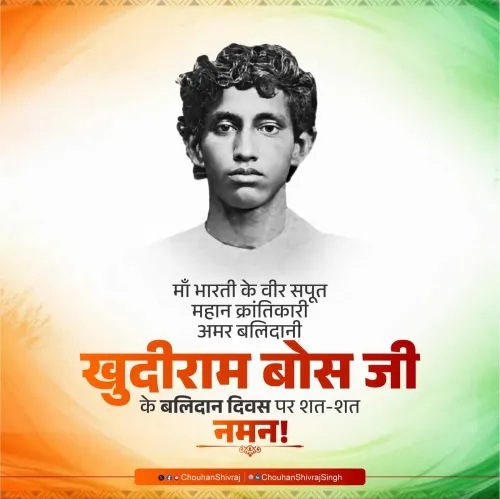
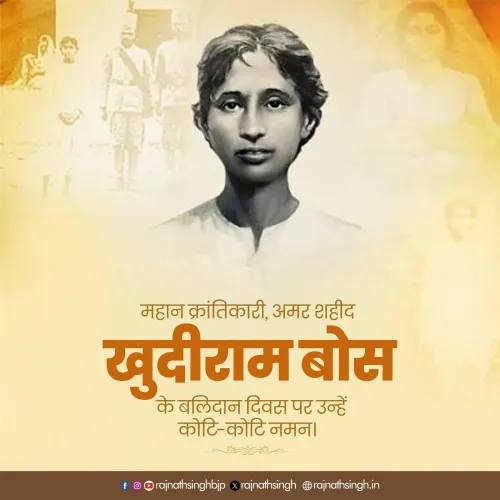
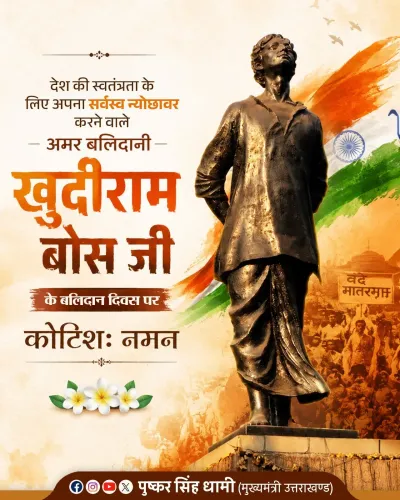
A teenage revolutionary who walked to the gallows without flinching — Khudiram Bose gave his life for India's freedom at just 18 years of age, and his sacrifice continues to draw solemn remembrance from governments across the country. On Tuesday, 11 August 2026, the Chief Minister's Office of Chhattisgarh paid homage to the young martyr on his balidan diwas [martyrdom anniversary].
The official post offered kotishaḥ naman — salutations in the millions — to Bose, describing him as 'Maa Bharati ke veer saput, amar balidani' ['a brave son of Mother India, an immortal martyr']. The tribute was shared with the hashtags #khudiram_bose and #खुदीराम_बोस, joining a broader wave of official commemorations that mark his legacy each year.
Who was Khudiram Bose?
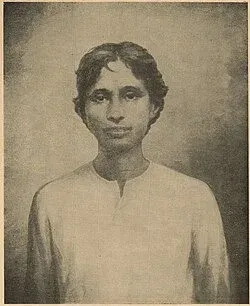
Khudiram Bose was a Bengali revolutionary associated with the Jugantar group, one of the early armed resistance movements against British colonial rule. He was executed by British authorities in 1908, becoming one of the youngest martyrs of India's independence struggle. His defiance in the face of death made him an enduring symbol of fearless patriotism, invoked across generations and party lines.
Why official tributes to freedom fighters matter
Indian state governments and political offices routinely issue public tributes to pre-independence revolutionaries on martyrdom and birth anniversaries. The practice cuts across party affiliations and serves as an affirmation of continuity with the freedom struggle narrative — a shared national memory that governments invoke to connect present-day governance with the sacrifices of the past. The Chhattisgarh CMO's post is part of this well-established tradition of official commemoration.
Bose stands alongside figures such as Bhagat Singh and Chandrashekhar Azad in the pantheon of revolutionary martyrs whose anniversaries draw similar messages from state and central government offices alike.
Point of View
Used by governments across the spectrum to assert alignment with the freedom struggle. The Chhattisgarh CMO's homage to Khudiram Bose fits this pattern — a low-stakes but symbolically resonant gesture that reinforces nationalist credentials. Such commemorations rarely generate policy outcomes but serve a consistent cultural-political function: keeping the martyrdom narrative alive in public discourse, particularly among younger, social-media-active audiences who engage with hashtag-driven remembrance.
NationPress
11 Aug 2026
Frequently Asked Questions
Who was Khudiram Bose?
Khudiram Bose was an Indian revolutionary from Bengal, associated with the Jugantar group, who was executed by British colonial authorities in 1908 at the age of 18 for his role in the armed resistance movement against British rule.
Why is Khudiram Bose remembered as a martyr?
Khudiram Bose is remembered as one of the youngest martyrs of India's independence struggle. His fearless acceptance of execution at age 18 made him an enduring symbol of anti-colonial resistance and patriotic sacrifice.
What did the Chhattisgarh CMO post about Khudiram Bose?
The Chief Minister's Office of Chhattisgarh posted a tribute on his martyrdom anniversary, describing him as a 'brave son of Mother India and an immortal martyr' and offering salutations in his memory.
What was the Jugantar group?
Jugantar was one of the early armed revolutionary organisations in Bengal that actively resisted British colonial rule in the early twentieth century. Khudiram Bose was associated with this group.
Do Indian state governments regularly pay tribute to freedom fighters?
Yes. Indian state governments and political offices across party lines routinely issue public tributes to pre-independence revolutionaries on their birth and martyrdom anniversaries as part of standard national commemoration practice.