Rahul Gandhi Defends Manmohan Singh's Legacy as PM

Synopsis
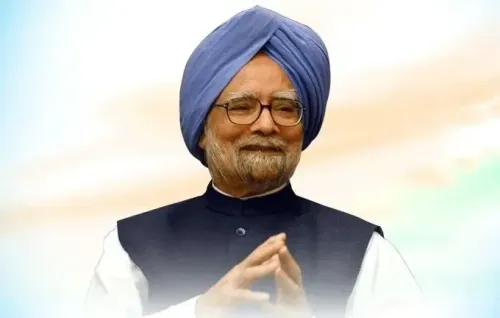
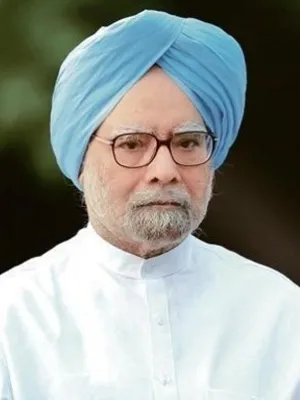
Congress leader Rahul Gandhi on August 11, 2026 publicly defended former PM Manmohan Singh, calling integrity allegations hollow and arguing Singh's 2004-2014 tenure is gaining recognition as a period of decisive economic and social advancement in India.
Key Takeaways
Rahul Gandhi posted on August 11, 2026 defending Manmohan Singh 's record as Prime Minister.
Gandhi called allegations against Singh's integrity 'mischievous and indefensible' and said they have been 'exposed as hollow.' He described the 2004-2014 UPA period as 'a period of decisive economic, political, and social advancement in Indian history.' Singh's tenure included landmark welfare legislation and some of India's highest GDP growth rates, alongside major corruption controversies.
Singh's foundational legacy dates to 1991 , when as Finance Minister he introduced India's landmark economic liberalisation reforms.
The post is part of Congress's ongoing effort to counter BJP narratives about UPA-era governance failures.
A pointed defence of Manmohan Singh's record as Prime Minister landed on social media on Tuesday, August 11, 2026, as Congress leader Rahul Gandhi declared that allegations against Singh's integrity had been 'exposed as hollow' and that his decade in power was earning recognition as 'a period of decisive economic, political, and social advancement in Indian history.'
The allegation Gandhi is pushing back against
Gandhi's post is a direct rebuttal to a sustained political narrative — prominent in BJP messaging — that the UPA era (2004–2014) was defined by corruption scandals and policy paralysis. The Congress leader frames those charges as 'mischievous and indefensible,' arguing that history is now correcting the record. The post stops short of naming a specific trigger, but its language — 'increasingly being recognised' — signals a claim that mainstream and historical opinion is shifting.
Manmohan Singh's record: what the defence rests on
Manmohan Singh served as Prime Minister from 2004 to 2014, presiding over a period that included some of India's highest GDP growth rates and the passage of landmark rights-based welfare legislation. His credentials as an economist trace back further: as Finance Minister in 1991, Singh authored the liberalisation reforms that dismantled the licence raj and set the template for modern Indian economic policy — a legacy that even critics rarely contest.
Yet the UPA years also produced high-profile corruption controversies that became the central plank of the BJP's 2014 campaign. The battle over how that decade is remembered has never really ended — it runs through parliamentary debates, academic reviews, and now, social media.
Congress's long-running contest over the UPA narrative
Gandhi's statement is the latest move in an ongoing effort by Congress to reclaim the UPA story. The party has consistently countered BJP attacks by pointing to GDP growth figures, the Mahatma Gandhi National Rural Employment Guarantee Act (MGNREGA), the Right to Information Act, and food security legislation as evidence of substantive governance. The argument is not new, but the framing — 'history will' judge — suggests Congress believes the passage of time and possibly forthcoming academic or institutional assessments are moving in its favour.
Whether that confidence is warranted will depend partly on how economic historians and future parliamentary commissions weigh growth against governance failures — a contest of narratives that shows no sign of resolution.
Point of View
Well into the BJP's third term, suggests the party sees an opening, possibly in academic or institutional reassessments, to rehabilitate the UPA brand ahead of the next electoral cycle. The risk is that invoking Singh's legacy without new evidence simply re-litigates old grievances rather than building fresh political ground.
NationPress
25 Sept 2026
Frequently Asked Questions
What did Rahul Gandhi say about Manmohan Singh?
Rahul Gandhi said on August 11, 2026 that allegations against Manmohan Singh's integrity have been 'exposed as hollow' and that Singh's record as Prime Minister is being recognised as a period of decisive economic, political, and social advancement in Indian history.
When was Manmohan Singh Prime Minister of India?
Manmohan Singh served as Prime Minister of India from 2004 to 2014, leading two consecutive UPA governments.
What is Manmohan Singh known for in Indian economic history?
Manmohan Singh is widely credited with introducing India's landmark economic liberalisation reforms in 1991 as Finance Minister, dismantling the licence raj and setting the foundation for modern Indian economic policy.
Why does Congress defend the UPA government record?
Congress regularly defends the UPA era by highlighting GDP growth rates, welfare legislation such as MGNREGA, and the Right to Information Act, countering BJP claims that the period was defined primarily by corruption and policy paralysis.
What is Rahul Gandhi's current political position?
Rahul Gandhi is the Leader of the Opposition in the Lok Sabha and a Congress MP representing the Rae Bareli constituency.