How Did Rahul Gandhi Honor the Visionary Leader Manmohan Singh on His Death Anniversary?
Synopsis
Rahul Gandhi pays tribute to the late Prime Minister Manmohan Singh, recognizing his profound impact on India's economy and global stature. His legacy of service, humility, and visionary leadership continues to inspire millions. This article delves into Singh's remarkable journey and the economic reforms that reshaped India.
Key Takeaways
Rahul Gandhi pays homage to Dr.
Manmohan Singh on his death anniversary.
Singh is recognized for his impactful economic policies.
His leadership transformed India's global identity.
Singh's legacy continues to inspire future generations.
He held various key positions in government, shaping India's economic framework.
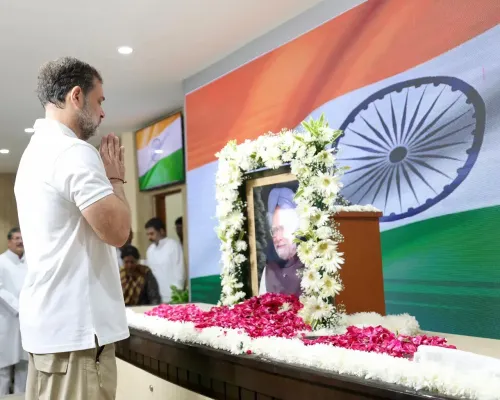
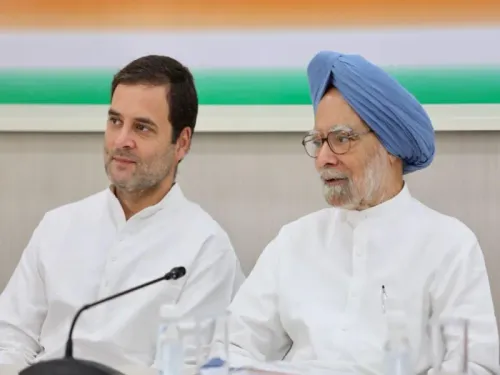
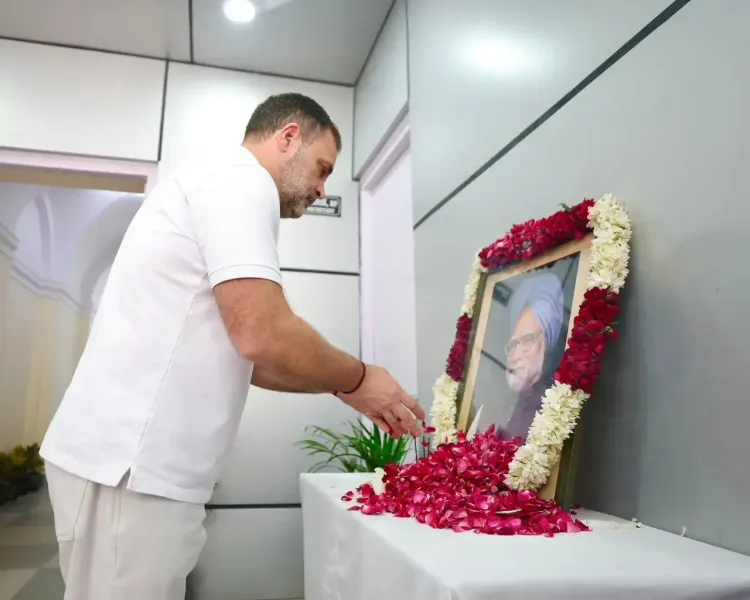
New Delhi, Dec 26 (NationPress) The Leader of Opposition in the Lok Sabha, Rahul Gandhi, paid homage to the former Prime Minister Dr. Manmohan Singh on the occasion of his death anniversary, honoring him as a visionary leader whose economic policies significantly strengthened India's position on the global stage.
On the first anniversary of Dr. Singh's passing, Rahul Gandhi laid floral tributes at the Congress office located at 24, Akbar Road, New Delhi.
In a message shared on the social media platform X, he stated: “A humble tribute to the former Prime Minister of India, Dr. Manmohan Singh ji, on his death anniversary.”
Rahul Gandhi highlighted that Dr. Singh’s leadership was transformative for India’s economy and improved the lives of millions.
“Through his visionary leadership, he empowered India economically. His groundbreaking initiatives and decisive actions for the disadvantaged and impoverished populations granted India a renewed identity globally. His humility, diligence, and honesty will continue to inspire us all,” Rahul Gandhi expressed in his post.
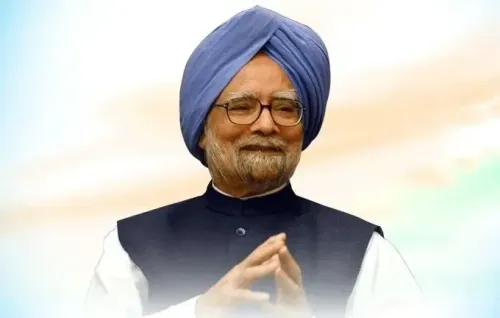
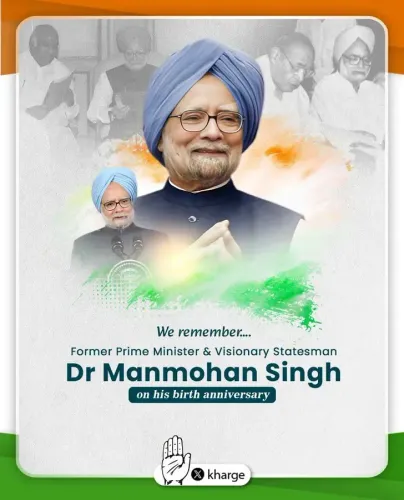
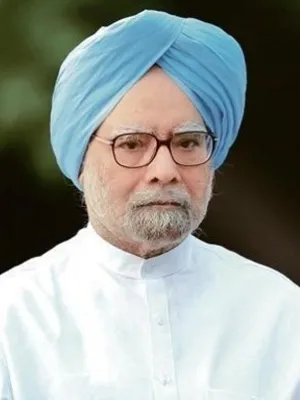
Dr. Manmohan Singh, who served as India’s 14th Prime Minister, is celebrated as an eminent economist, thinker, and scholar. His public career is marked by dedication, an academic approach to governance, approachability, and a modest personality.
Born on September 26, 1932, in a village in the Punjab region of undivided India, Dr. Singh exhibited academic prowess from his youth. He completed his matriculation from Punjab University in 1948 before embarking on an extraordinary academic journey overseas.
Dr. Singh received a First Class Honours degree in Economics from the University of Cambridge in 1957 and completed his D.Phil in Economics at Nuffield College, Oxford University, in 1962. His influential book, 'India’s Export Trends and Prospects for Self-Sustained Growth', published by Clarendon Press, Oxford, in 1964, critiqued India’s inward-looking trade policy and showcased his profound understanding of economic development.
His academic credentials were bolstered by teaching roles at Punjab University and the esteemed Delhi School of Economics. He also briefly worked with the United Nations Conference on Trade and Development (UNCTAD) Secretariat, which led to his role as Secretary-General of the South Commission in Geneva from 1987 to 1990.
In 1971, Dr. Singh entered the Government of India as an Economic Advisor in the Ministry of Commerce. In 1972, he was appointed Chief Economic Advisor in the Ministry of Finance, marking the start of his influential contribution to India's economic policy.
Over the years, Dr. Singh held several pivotal public service roles, including Secretary in the Ministry of Finance, Deputy Chairman of the Planning Commission, Governor of the Reserve Bank of India, Advisor to the Prime Minister, and Chairman of the University Grants Commission.
His tenure as Finance Minister from 1991 to 1996 was a defining moment in India’s economic narrative. In the face of a severe balance-of-payments crisis, he implemented comprehensive economic reforms that liberalized the economy and established a foundation for enduring growth. These reforms brought him global acclaim and are intrinsically linked to his vision and leadership.
Throughout his lifetime, Dr. Singh was the recipient of numerous national and international awards, including the Padma Vibhushan in 1987, the Jawaharlal Nehru Birth Centenary Award of the Indian Science Congress in 1995, and various international honors, including the Asia Money and Euro Money awards for Finance Minister of the Year. He also received honorary degrees from prestigious institutions such as Cambridge and Oxford.
Dr. Singh represented India at various international platforms and led delegations to significant global events, including the Commonwealth Heads of Government Meeting in Cyprus and the World Conference on Human Rights in Vienna in 1993.
In his political journey, Dr. Manmohan Singh served as a Rajya Sabha member from 1991 and held the position of Leader of Opposition between 1998 and 2004. He was sworn in as Prime Minister on May 22, 2004, and began his second term on May 22, 2009, leaving behind a legacy characterized by integrity, intellect, and commitment to the nation.
Point of View
It is essential to recognize Dr. Manmohan Singh as a pivotal figure in India's economic transformation. His policies have laid the groundwork for India's modern economy, and his leadership style offers valuable lessons in integrity and humility. In honoring his legacy, we must continue to draw inspiration from his vision for a prosperous and equitable India.
NationPress
13 Oct 2026
Frequently Asked Questions
What was Dr. Manmohan Singh's role during the economic crisis?
During the 1991 economic crisis, Dr. Manmohan Singh implemented significant reforms that liberalized India's economy, paving the way for sustained growth and stability.
How did Rahul Gandhi honor Dr. Singh?
Rahul Gandhi paid floral tributes and shared a heartfelt message on social media, celebrating Dr. Singh's contributions to India's economy and his legacy of leadership.
What are some of the key awards received by Dr. Singh?
Dr. Singh received numerous honors, including the Padma Vibhushan, the Jawaharlal Nehru Birth Centenary Award, and various international accolades for his contributions to finance and governance.
What is Dr. Singh's educational background?
Dr. Manmohan Singh earned a First Class Honours degree in Economics from the University of Cambridge and a D.Phil in Economics from Nuffield College, Oxford University.
What is the significance of Dr. Singh's leadership style?
Dr. Singh's leadership is characterized by humility, intellect, and a commitment to service, setting a benchmark for future leaders in India.