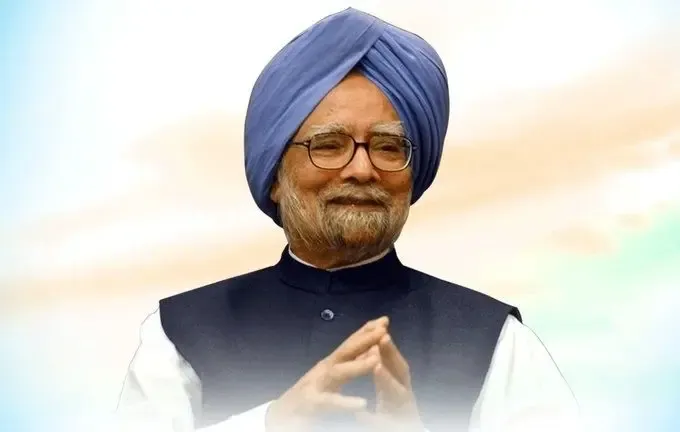
Did Manmohan Singh Transform Modern India? Congress Remembers His Legacy on Death Anniversary
Synopsis
The Congress party commemorates the death anniversary of Dr. Manmohan Singh, honoring his influential role in reshaping India's economy and fostering inclusive governance. Leaders reflect on his humility, integrity, and lasting legacy in nation-building.
Key Takeaways
Manmohan Singh's economic reforms transformed India's economy.
He was known for his integrity and humility.
His leadership fostered inclusive governance.
Singh's legacy continues to inspire future generations.
He received numerous national and international awards.
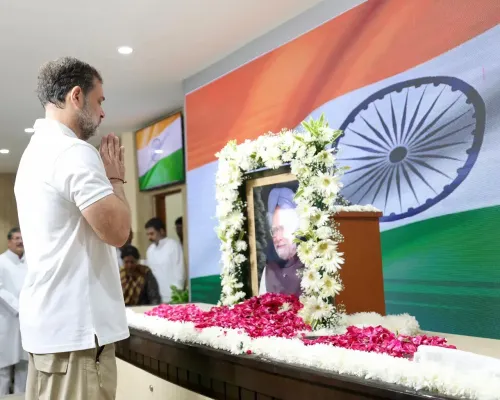
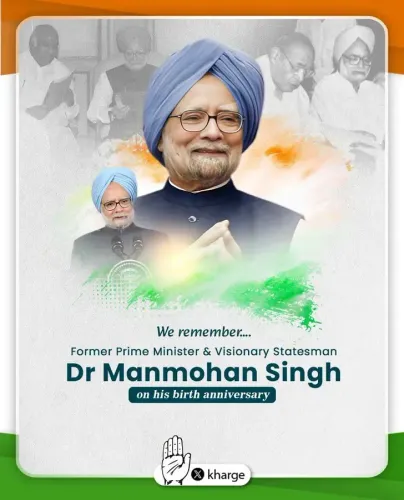
New Delhi, Dec 26 (NationPress) The Congress party on Friday commemorated the death anniversary of former Prime Minister Dr. Manmohan Singh, honoring him as a visionary figure who significantly altered India's economic landscape and created opportunities for countless individuals through comprehensive reforms and inclusive governance.
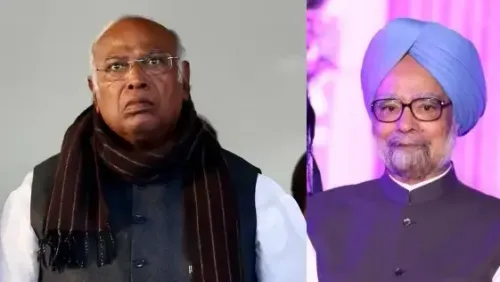
Congress President Mallikarjun Kharge, Congress MP Priyanka Gandhi Vadra, and various senior party members expressed their respects on social media, celebrating the former Prime Minister's humility, integrity, and substantial contributions to nation-building.
Kharge, in a post on the social media platform X, stated that on the first anniversary of Dr. Singh's passing, the nation reflects on his transformative influence in shaping modern India with profound respect.
"On his first punyatithi, we commemorate the immense contributions of Former Prime Minister Dr. Manmohan Singh to India's nation-building. A transformative leader, he redefined the nation’s economic trajectory and created opportunities for millions through economic reforms, lifting countless individuals out of poverty," Kharge remarked.
He emphasized that Dr. Singh was celebrated for his humility, wisdom, and moral integrity, leading the country with dignity and compassion.
“Renowned for his humility, integrity, and wisdom, he governed with dignity and compassion, ensuring that progress was inclusive and welfare reached the most vulnerable. The rights-based paradigm illustrates this approach. Under his vision, we built a stronger India,” stated the Congress president.
In further tribute, Kharge expressed, “We extend our heartfelt homage to a statesman whose legacy of dedicated public service and enduring reforms will continue to motivate future generations. A humble homage.”
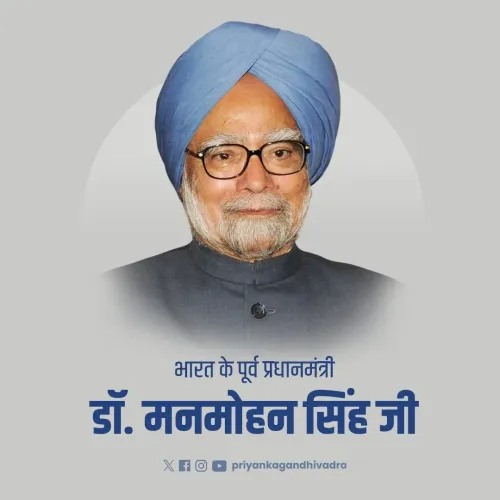
Priyanka also paid respects to Dr. Singh as a committed public servant and an exemplary leader. In her post on X, she remarked, "Respectful tribute to former Prime Minister of India, former Finance Minister, and Governor of the Reserve Bank of India, Dr. Manmohan Singh ji on his death anniversary."
She characterized him as a staunch advocate for equality and a courageous yet dignified leader.
"Dr. Manmohan Singh was a strong advocate for equality, a resolute, courageous, and dignified figure, wholly devoted to the nation's progress. His simplicity, honesty, and commitment to his country will forever inspire us all," she added.
Senior Congress leader Sachin Pilot also honored Dr. Singh, underscoring his scholarship and policy vision.
"On the death anniversary of former Prime Minister Dr. Manmohan Singh ji, I pay my heartfelt tribute to him. His scholarship, visionary leadership, and policy decisions have steered the country’s development and made a historic contribution to strengthening the Indian economy and making it self-reliant," Pilot stated.
The Congress party, in an official post on X, remembered Dr. Singh as a statesman of integrity, humility, and foresight.
"On the death anniversary of Dr. Manmohan Singh, we honor a statesman of integrity, humility, and vision. His leadership fortified India’s economy and democracy. Tributes to the Prime Minister who served the nation selflessly and with determination," the party stated.
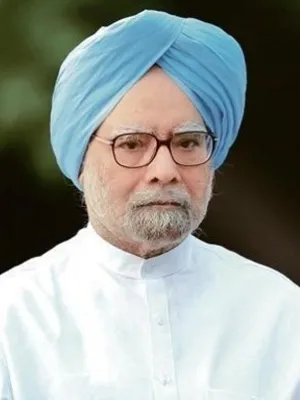
India's 14th Prime Minister, Dr. Manmohan Singh, is widely recognized as one of the nation’s most distinguished economists and public intellectuals. He earned a reputation as a thinker, scholar, and administrator admired for his diligence, academic rigor, accessibility, and unpretentious demeanor.
Born on September 26, 1932, in a village in the Punjab region of undivided India, Dr. Singh exhibited academic brilliance from an early age. He completed his matriculation at Punjab University in 1948 before embarking on an illustrious academic journey abroad. He earned a First Class Honours degree in Economics from the University of Cambridge in 1957 and later a D.Phil in Economics from Nuffield College, Oxford University, in 1962.
His groundbreaking work, India's Export Trends and Prospects for Self-Sustained Growth, published by Clarendon Press, Oxford, in 1964, provided an early critique of India's inward-looking trade policies and showcased the depth of his economic insight.
Dr. Singh also taught at Punjab University and the prestigious Delhi School of Economics, further solidifying his academic credentials. He later served at the United Nations Conference on Trade and Development (UNCTAD) Secretariat, which foreshadowed his role as Secretary-General of the South Commission in Geneva between 1987 and 1990.
In 1971, Dr. Singh joined the Government of India as Economic Advisor in the Ministry of Commerce. He was appointed Chief Economic Advisor in the Ministry of Finance in 1972, marking the start of a long and distinguished career in public administration. Over the years, he held several key positions, including Secretary in the Ministry of Finance, Deputy Chairman of the Planning Commission, Governor of the Reserve Bank of India, Advisor to the Prime Minister, and Chairman of the University Grants Commission.
Dr. Singh's term as Finance Minister from 1991 to 1996 signified a pivotal moment in India's economic history. During a period of severe economic crisis, he spearheaded sweeping reforms that liberalized the Indian economy and laid the groundwork for sustained growth. His leadership during this era gained global acclaim and remains a subject of study and celebration.
Throughout his lifetime, Dr. Singh received numerous national and international accolades, including the Padma Vibhushan in 1987. He was also awarded the Jawaharlal Nehru Birth Centenary Award of the Indian Science Congress, the Asia Money Award, and Euro Money Award for Finance Minister of the Year, as well as the Adam Smith Prize from the University of Cambridge. He was conferred honorary doctorates by several leading universities, including Cambridge and Oxford.
Dr. Singh represented India at major international forums and led delegations to significant global conferences, including the Commonwealth Heads of Government Meeting in Cyprus and the World Conference on Human Rights in Vienna in 1993.
In his political career, he served as a Rajya Sabha member from 1991 and as Leader of the Opposition from 1998 to 2004.
Dr. Manmohan Singh was sworn in as Prime Minister on May 22, 2004, and was re-elected for a second term on May 22, 2009, leaving behind a legacy characterized by integrity, intellect, and dedication to the nation.
Point of View
Dr. Manmohan Singh's legacy is a cornerstone of modern India's development narrative. As a key architect of economic reforms, his influence continues to resonate across generations. His dedication to inclusive governance and integrity in public service exemplifies the qualities that should guide future leaders.
NationPress
30 Sept 2026
Frequently Asked Questions
What was Dr. Manmohan Singh's role in India's economy?
Dr. Manmohan Singh served as Finance Minister and later as Prime Minister, where he implemented significant economic reforms that liberalized the Indian economy and fostered sustained growth.
When was Dr. Manmohan Singh born?
Dr. Manmohan Singh was born on September 26, 1932, in a village in the Punjab region of undivided India.
What awards did Dr. Manmohan Singh receive?
Throughout his life, Dr. Singh received numerous accolades, including the Padma Vibhushan and several honorary doctorates from prestigious universities.
What is Dr. Manmohan Singh's legacy?
His legacy is marked by integrity, economic reforms, and a commitment to inclusive governance, inspiring future leaders in India.
When did Dr. Manmohan Singh pass away?
Dr. Manmohan Singh passed away on December 26, 2023, and his death anniversary is commemorated by the Congress party annually.