CM Sai: Chhattisgarh Now Fully Free from Naxalism

Synopsis
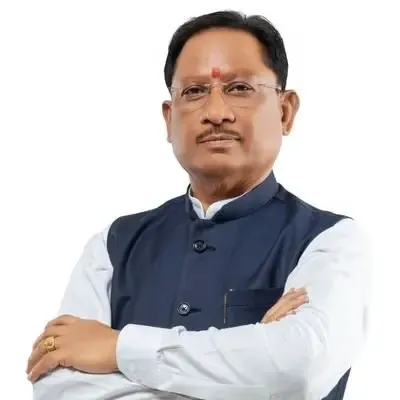
Chhattisgarh CM Vishnu Deo Sai declared on 11 October 2026 that the state is fully free from Naxalism, pointing to 4,000-plus surrenders and the Niyad Nellanar scheme transforming Bastar as evidence of success.
Key Takeaways
Chhattisgarh CM Vishnu Deo Sai declared the state completely free from Naxalism on 11 October 2026 .
More than 4,000 Naxalites have surrendered, cited as proof of the state's rehabilitation policy.
CM Sai credited PM Narendra Modi's leadership and resolve for enabling the security turnaround.
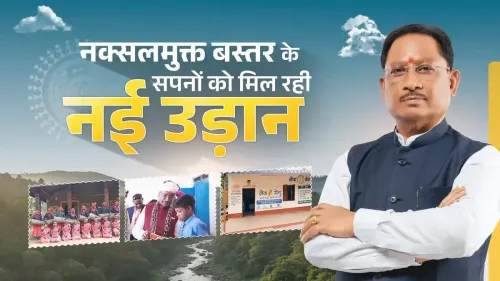
The 'Niyad Nellanar' scheme is being positioned as the development framework now transforming the Bastar division .
The scheme targets basic services — roads, schools, health centres — in villages historically inaccessible due to insurgent presence.
The post was tagged #ChhattisgarthSalutesModiJi , framing the announcement within a BJP governance narrative.
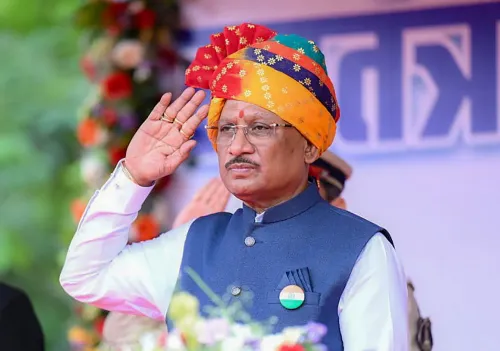
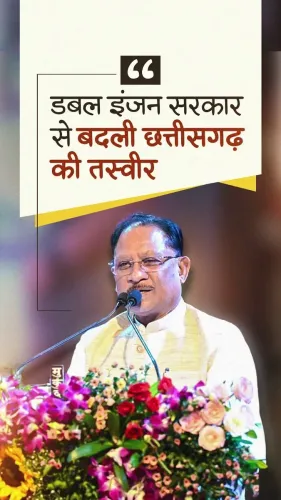
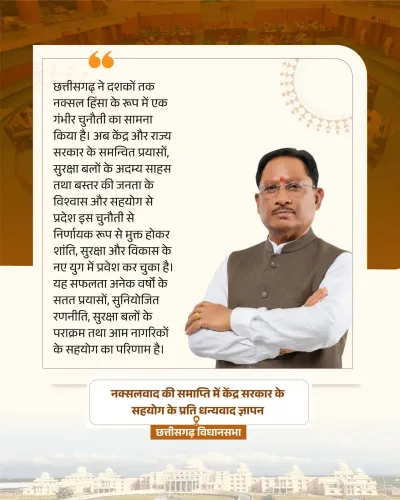
After decades of insurgent violence that claimed thousands of lives and kept vast swathes of central India in a grip of fear, Chhattisgarh Chief Minister Vishnu Deo Sai has declared on Sunday, 11 October 2026 that the state is now completely free from Naxalism — crediting the resolve and leadership of Prime Minister Narendra Modi for the transformation.
4,000 Surrenders and a Rehabilitation Policy That Worked
The headline number is striking: more than 4,000 Naxalites have surrendered, which CM Sai describes as proof of the state's effective rehabilitation policy. Surrenders at this scale are not simply a security statistic — they represent a systematic programme of bringing former combatants back into civic life, with incentives, skill training, and social reintegration. The sheer volume suggests the policy moved well beyond token gestures into a durable institutional framework.
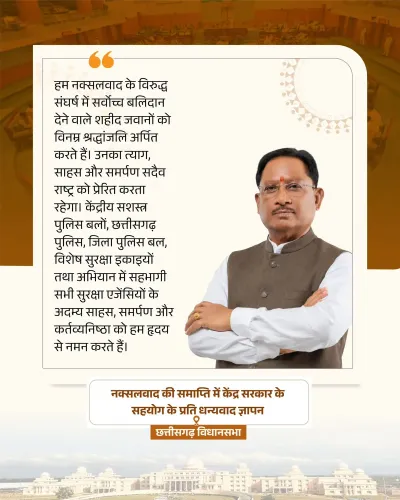
Sai's post, written in Hindi, states: '4 hazar se adhik Naxaliyon ka aatmasamarpan hamari prabhavi punarvasa niti ki safalta ka praman hain' — 'The surrender of more than 4,000 Naxalites is proof of the success of our effective rehabilitation policy.' The framing is deliberate: not just military victory, but governance delivering results.
'Niyad Nelllanar' Scheme: Bastar Writes a New Chapter
Alongside the security narrative, CM Sai flags the 'Niyad Nellanar' scheme as the development engine now reshaping the Bastar division — the forested, mineral-rich southern belt that was long the heartland of Left-Wing Extremism in Chhattisgarh. The scheme's name translates loosely to 'your good village' in the Gondi language, signalling its community-facing design. It aims to deliver basic services — roads, schools, health centres, ration access — directly to villages that were historically unreachable because of insurgent presence.
The political logic is clear: fill the administrative vacuum that Naxalism exploited. Where the state once could not send a teacher or a nurse, it now claims to be building infrastructure. For Bastar's tribal communities, who bore the heaviest cost of the decades-long conflict, this pivot from counter-insurgency to development spending marks a qualitative shift in how they experience central government.
Modi's Role in the Turnaround — and the Political Subtext
The post is tagged #ChhattisgarhSalutesModiJi and directly addresses PM Modi's account, signalling that this announcement carries a political salute as much as a policy update. CM Sai's attribution of the breakthrough to Modi's 'firm will and decisive leadership' fits the BJP's broader national narrative ahead of upcoming electoral cycles — framing internal security gains as dividends of strong central governance.
Chhattisgarh has been the deadliest theatre of Left-Wing Extremism in India for most of the post-2000 period, with security forces and civilians suffering significant casualties year after year. A credible end to that chapter — if the ground reality matches the declaration — would be among the most consequential internal-security achievements of any government in recent memory.
The question that now follows the victory lap: whether the development infrastructure promised under Niyad Nellanar reaches the most isolated hamlets before the conditions that bred the insurgency — land dispossession, administrative neglect, lack of livelihoods — reassert themselves.
Point of View
Fusing a security milestone with a governance brand — 'Modi delivered what decades of governments could not.' The 4,000-surrender figure, if substantiated, would validate the dual-track approach of intensified counter-insurgency paired with structured rehabilitation, a model debated in Indian security policy circles for years. The spotlight on Niyad Nellanar reveals the administration's awareness that military success alone is fragile: development absorption must follow swiftly in Bastar's tribal belt or the social conditions that sustained the insurgency risk returning. Politically, the timing ties a landmark internal-security win to Modi's personal brand ahead of future electoral cycles, making Chhattisgarh a potential template the BJP will project nationally.
NationPress
11 Oct 2026
Frequently Asked Questions
Is Chhattisgarh really free from Naxalism in 2026?
Chhattisgarh CM Vishnu Deo Sai declared on 11 October 2026 that the state is completely free from Naxalism, citing over 4,000 surrenders and the success of the state's rehabilitation policy. The government attributes this to PM Modi's leadership and sustained security operations.
What is the Niyad Nellanar scheme in Chhattisgarh?
Niyad Nellanar — meaning roughly 'your good village' in Gondi — is a development scheme targeting the Bastar division, aiming to deliver roads, schools, health centres, and essential services to villages that were previously inaccessible due to Naxal presence.
How many Naxalites surrendered in Chhattisgarh?
According to CM Vishnu Deo Sai's statement on 11 October 2026, more than 4,000 Naxalites have surrendered in Chhattisgarh, which the government describes as proof of its effective rehabilitation policy.
What is Bastar's connection to Naxalism in India?
Bastar division in southern Chhattisgarh has historically been the most intense theatre of Left-Wing Extremism in India, with dense forests and tribal communities making it a stronghold for Naxal groups for decades.
What did Vishnu Deo Sai say about PM Modi and Naxalism?
CM Sai credited PM Narendra Modi's 'firm will and decisive leadership' for Chhattisgarh becoming Naxal-free, posting on X with the hashtag #ChhattisgarhSalutesModiJi on 11 October 2026.