CM Chhattisgarh: Gem Diamonds Found in Mahasamund
Synopsis
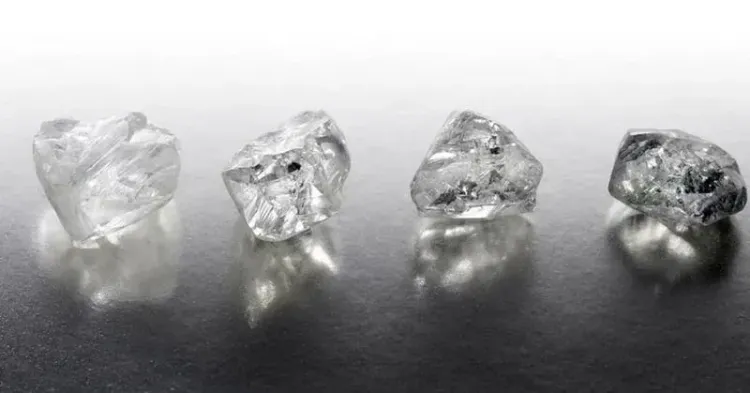
The Chhattisgarh CMO announced on 23 June 2026 that gem-quality diamonds have been discovered in Mahasamund district, potentially establishing a new diamond belt and opening fresh avenues for mineral exploration, investment and economic development in the state.
Key Takeaways
The Chief Minister's Office of Chhattisgarh announced gem-quality diamond discoveries in Mahasamund district on 23 June 2026 .
The state government described the find as a significant milestone on India's mineral map and a marker of untapped potential.
Chhattisgarh's Bastar craton shares geological features with established diamond fields in neighbouring Madhya Pradesh .
India's National Mineral Policy 2019 provides the framework for private-sector exploration and block auctions that could follow a confirmed deposit.
A commercially viable deposit could reduce India's dependence on rough-diamond imports and benefit the downstream cutting-and-polishing industry in Surat .
Formal mineral-block notifications and reconnaissance permits from the state government are the key next steps to watch.
The Chief Minister's Office of Chhattisgarh announced on Tuesday, 23 June 2026 that gem-quality diamonds have been discovered in Mahasamund district, describing the find as a significant milestone on India's mineral map and a marker of the state's untapped geological potential.
Context
The official post by the Chhattisgarh CMO states that the discovery 'could pave the way for new opportunities in exploration, investment and economic development, further strengthening Chhattisgarh's contribution to India's growth story.' The announcement was accompanied by the hashtags #DiamondBelt and #Mahasamund, signalling the state government's intent to position the district as a prospective new diamond corridor within the country.
Mahasamund is a district in central Chhattisgarh situated within geological formations that have long been noted for mineral-bearing potential. While the state is already a major contributor to India's coal, iron ore, bauxite and limestone output, a confirmed gem-quality diamond deposit would mark a qualitatively new addition to its mineral portfolio.
Policy Backdrop
India's National Mineral Policy 2019 revised earlier exploration frameworks to accelerate private-sector participation and reduce the country's dependence on imported precious minerals. The policy liberalised reconnaissance and prospecting norms, making it easier for both public agencies and private investors to bid for unexplored mineral blocks.
The Geological Survey of India, the central government body responsible for systematic mineral mapping, has historically played a key role in identifying new deposits across states. Chhattisgarh's Bastar craton shares geological characteristics with established diamond fields in neighbouring Madhya Pradesh — a feature that has drawn renewed survey interest in the region in recent years. The Mahasamund find, if confirmed at commercial scale, would align with the broader Atmanirbhar Bharat push to develop domestic sources of high-value minerals.
Stakeholders and Impact
Mining investors and exploration companies are the most immediate stakeholders, as a verified gem-quality deposit typically triggers a sequence of reconnaissance permits, feasibility studies and eventual block auctions under the Mines and Minerals (Development and Regulation) Act. For local communities in Mahasamund, the prospect raises questions about land use, employment generation and revenue sharing under district mineral foundation norms.
At the national level, a new domestic diamond belt could reduce India's reliance on rough-diamond imports, which feed a cutting-and-polishing industry concentrated in Surat, Gujarat that is one of the world's largest. Any commercially viable output from Mahasamund would therefore have supply-chain implications well beyond the state's borders.
What's Next
Analysts and industry observers will watch for formal notifications from the Chhattisgarh government on mineral-block demarcation and any fresh reconnaissance permits granted to public or private explorers in the district. A structured auction process under the National Mineral Policy 2019 framework would be the next procedural step if geological surveys validate the deposit's commercial viability.
The announcement places Chhattisgarh at the centre of India's emerging conversation about self-sufficiency in precious minerals — and the pace of follow-through on exploration licensing will determine whether the state translates geological promise into sustained economic gain.
Point of View
Suggesting the state is positioning Mahasamund for a similar cycle of exploration auctions and media attention. Coming against the backdrop of the National Mineral Policy 2019's push for domestic precious-mineral self-sufficiency, the find gives the state government a concrete data point to attract both central funding and private capital. Whether the announcement translates into measurable economic outcomes will depend on how quickly formal exploration permits and block auctions follow.
NationPress
22 Sept 2026
Frequently Asked Questions
Where were gem-quality diamonds discovered in Chhattisgarh?
Gem-quality diamonds were discovered in Mahasamund district in Chhattisgarh, as announced by the Chief Minister's Office on 23 June 2026.
What is the significance of the Mahasamund diamond discovery?
The discovery could establish a new diamond belt in central India, open avenues for mineral exploration and investment, and reduce India's dependence on rough-diamond imports, according to the Chhattisgarh government.
Which agency is responsible for mineral exploration in India?
The Geological Survey of India is the central government body responsible for systematic mineral mapping and identifying new deposits across states.
How does India's National Mineral Policy 2019 relate to this discovery?
The National Mineral Policy 2019 liberalised exploration norms and encourages private-sector participation in new mineral blocks, providing the regulatory framework under which Mahasamund deposits could be auctioned for commercial development.
Does Chhattisgarh have geological conditions suitable for diamonds?
Yes. Chhattisgarh's Bastar craton shares geological characteristics with established diamond fields in neighbouring Madhya Pradesh , which is why the region has attracted renewed survey interest in recent years.