CM Sai's Chhattisgarh Pitches ₹8 Lakh Crore Investment Vision
Synopsis
The Chief Minister's Office of Chhattisgarh announced on November 10, 2026 that CM Vishnu Deo Sai's business-climate reforms will benefit 15 lakh MSMEs, backed by investment proposals exceeding ₹8 lakh crore, positioning the state as a rising industrial hub.
Key Takeaways
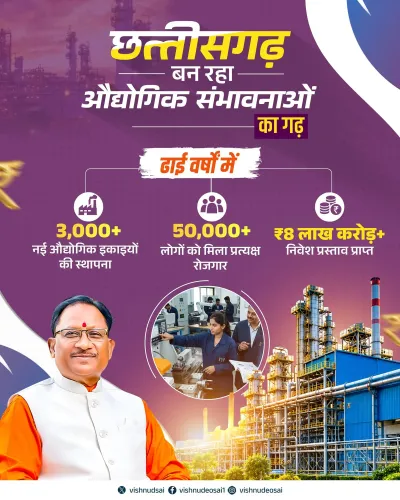
The Chief Minister's Office of Chhattisgarh announced on November 10, 2026 that the state has attracted investment proposals worth over ₹8 lakh crore .
CM Vishnu Deo Sai's Ease of Doing Business reforms are targeted at benefiting 15 lakh MSMEs across the state.
Chhattisgarh is seeking to diversify beyond its traditional mineral and steel base into broader manufacturing and services sectors.
The push mirrors investment-attraction strategies seen in states like Gujarat , Tamil Nadu , and Madhya Pradesh .
The critical test ahead is converting proposal-stage investment commitments into operational industrial projects and jobs on the ground.
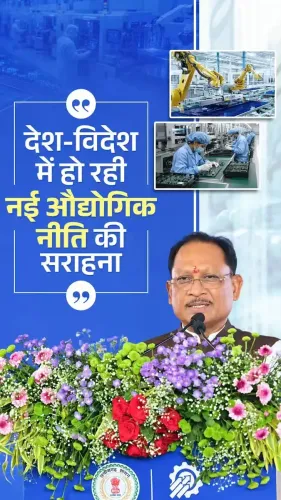
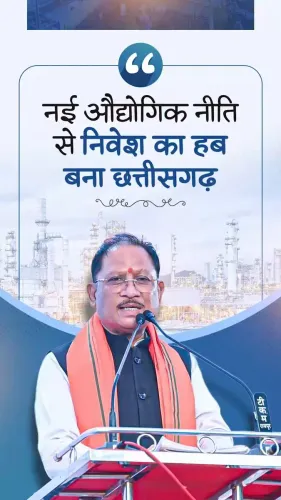
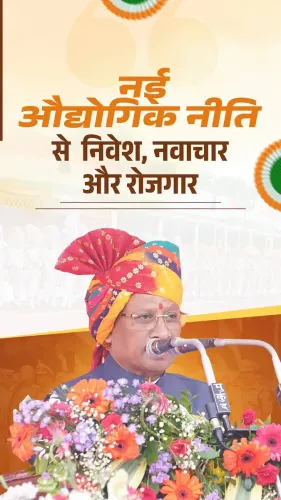
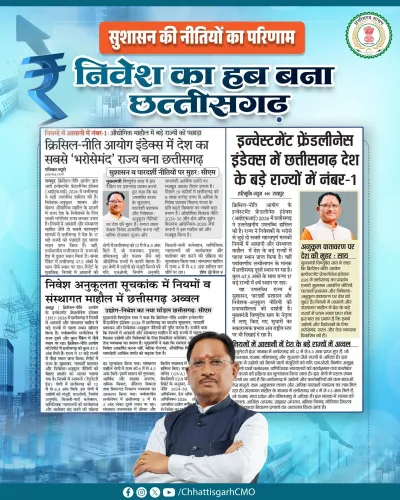
A central Indian state once defined by its coal and steel corridors is now staking a claim as one of India's fastest-rising investment destinations — and the numbers being put forward are hard to ignore. The Chief Minister's Office of Chhattisgarh declared on Tuesday, November 10, 2026 that the state has drawn investment proposals worth over ₹8 lakh crore, while landmark business-climate reforms are set to benefit 15 lakh MSMEs operating across the state.
The announcement frames Chief Minister Vishnu Deo Sai, who took office in December 2023 after the BJP's return to power in Chhattisgarh, as the architect of a policy reset that prioritises industrial diversification, simplified compliance, and employment generation. The post positions the state squarely within the national Viksit Bharat narrative — developed, self-reliant, open for business.From Mineral Belt to Manufacturing Magnet
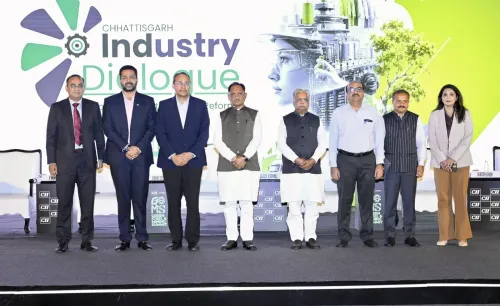
Chhattisgarh has long punched above its weight in raw resources — iron ore, coal, and sponge steel — but that concentration also made the state vulnerable to commodity cycles. The Sai government's push around Ease of Doing Business reforms signals an intent to widen that base. Single-window clearances, reduced compliance burdens, and sector-specific incentives are the levers states across India have pulled since the mid-2010s; Chhattisgarh is now sharpening its own version of that toolkit. The playbook is familiar from Gujarat, Tamil Nadu, and Madhya Pradesh — states that converted investor-summit pledges into factory floors by pairing land-bank readiness with faster approvals. Chhattisgarh is now competing in the same league, using its mineral advantage as a draw while trying to signal that the regulatory environment is no longer a friction point.
15 Lakh MSMEs and What the Reform Promise Means
The figure of 15 lakh MSMEs is striking in scale. Micro, small, and medium enterprises are India's employment backbone, and any state that meaningfully reduces their compliance load — fewer inspections, faster registrations, easier credit linkages — tends to see faster formalisation and job creation downstream. The reforms cited in the CMO's post, if fully implemented, would affect everyone from a small steel fabricator in Raipur to an agro-processing unit in Jagdalpur. The ambition aligns with the national objective of lifting manufacturing's share in GDP, with MSMEs as the primary vehicle. What matters next is the conversion rate: how many of those ₹8 lakh crore in proposals translate into ground-level projects, operational plants, and actual payrolls.
The Investment Proposal Pipeline — and the Real Test Ahead
Investment proposal announcements are a standard currency of state-level economic communication — the sharper accountability question is always implementation. Chhattisgarh will face scrutiny on how quickly land, power, and logistics connectivity can be delivered to investors who have signalled intent. With investor summits and industrial policy updates expected in the coming months, the state's ability to show project groundbreakings — not just MoU signings — will determine whether the ₹8 lakh crore headline becomes a legacy-defining achievement for CM Sai or remains a work-in-progress. The competition from neighbouring states is unrelenting. Chhattisgarh's window to convert momentum into infrastructure is now.
Point of View
Using large proposal figures to signal governance competence. The ₹8 lakh crore headline and the 15 lakh MSME commitment serve a dual purpose: appealing to national investors while reassuring small-business communities that the state's growth agenda is not confined to heavy industry. The real test for CM Sai will be closing the credibility gap between announced proposals and commissioned plants — a gap that has historically undermined similar state-level investment narratives. If Chhattisgarh can demonstrate ground-level conversion, it could emerge as a genuine counterweight to the more established investment magnets of western and southern India.
NationPress
10 Nov 2026
Frequently Asked Questions
What are the investment proposals announced for Chhattisgarh?
The Chief Minister's Office of Chhattisgarh announced investment proposals worth over ₹8 lakh crore as of November 2026, aimed at driving industrial growth and employment in the state.
How many MSMEs will benefit from Chhattisgarh's new reforms?
According to the CMO's announcement, the state's landmark Ease of Doing Business reforms are set to benefit 15 lakh MSMEs operating in Chhattisgarh.
Who is the Chief Minister of Chhattisgarh in 2026?
Vishnu Deo Sai is the Chief Minister of Chhattisgarh. He assumed office in December 2023 after the BJP's victory in the state assembly elections.
What is Chhattisgarh's Ease of Doing Business reform about?
The Ease of Doing Business reforms under CM Vishnu Deo Sai focus on simplifying regulations, reducing compliance burdens for businesses and MSMEs, and improving single-window clearance systems to attract investment.
Is Chhattisgarh a good destination for industrial investment?
Chhattisgarh is positioning itself as a rising industrial hub, leveraging its strong mineral and steel base while introducing policy reforms. The state has announced proposals exceeding ₹8 lakh crore, though the actual conversion of these proposals into projects remains the key metric to watch.