China's Tibet green energy push masks dual-use military build-up near India
Synopsis
China's clean-energy push in Tibet is not what it appears. Behind the solar farms and hydropower dams lies a rapidly thickening web of dual-use infrastructure — power for PLA radars, garrisons, and drones — that analysts say is quietly consolidating Beijing's military grip on the Himalayan plateau, directly opposite India's most sensitive border sectors.
Key Takeaways
Tibet's renewable capacity grew by an estimated 2,600 MW in 2025 alone, driven by two large projects, according to the Takshashila Institution's Geospatial Bulletin .
Solar installations near Shigatse and Gar County show proximity to military facilities, pointing to an 'energy-security nexus' , analysts say.
CSIS describes Beijing's approach as a 'grey-zone infrastructure strategy' using civilian infrastructure for coercive leverage over India and Nepal.
Hydropower dams on the Yarlung Tsangpo raise downstream water-security concerns for India and other South Asian nations.
Border electrification enables permanent PLA settlements and all-weather surveillance facing Arunachal Pradesh , Sikkim , and Ladakh .
Analysts recommend sustained satellite monitoring and open-source analysis to track the dual-use character of Tibet's energy projects.
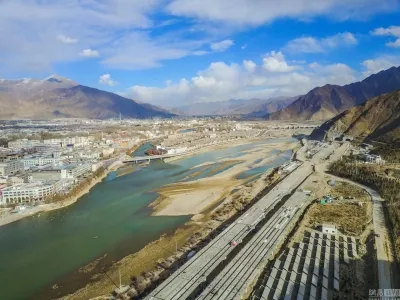
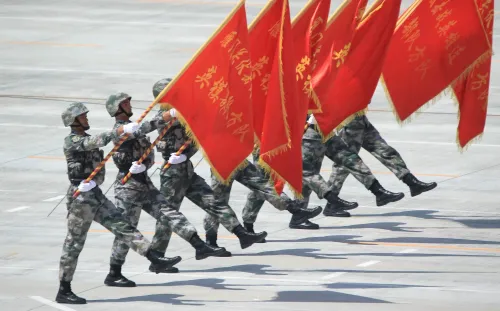
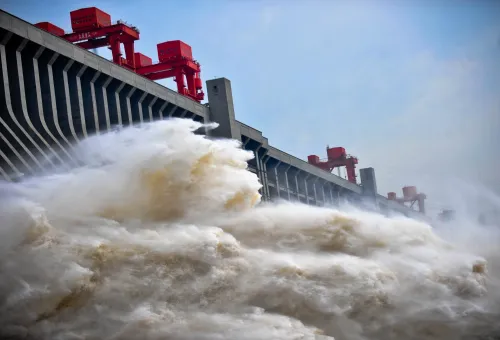
China's rapid expansion of hydropower, solar, wind, and ultra-high-voltage (UHV) transmission infrastructure across the Tibetan Autonomous Region (TAR) is simultaneously building a dense web of dual-use assets capable of sustaining long-term People's Liberation Army (PLA) operations near the Indian border, according to an analysis published in Bitter Winter by Italian journalist Marco Respinti. Beijing presents the build-out as a clean-energy transformation, but independent geospatial research and strategic studies suggest the infrastructure serves military logistics as much as civilian development.
The Scale of Tibet's Energy Expansion
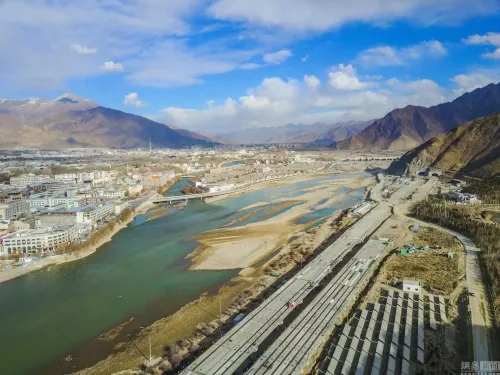
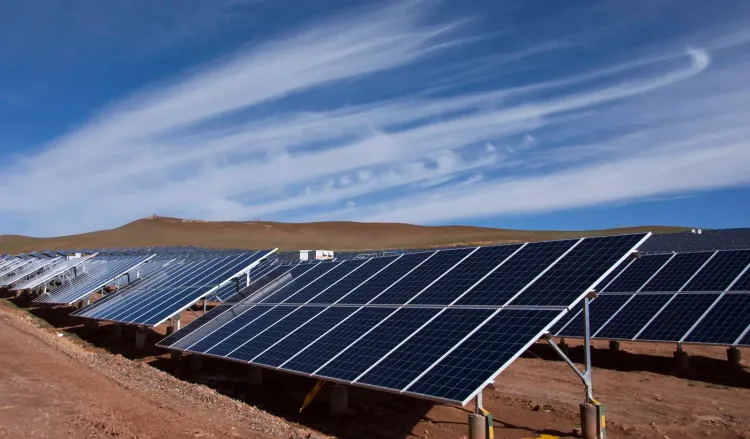
Independent geospatial work by the Takshashila Institution, a New Delhi-based think tank, documents a sharp acceleration in renewable capacity additions across Tibet. According to its Geospatial Bulletin, Tibet added several gigawatts of renewable capacity between 2013 and 2025, with annual jumps of 700 MW in 2023, 860 MW in 2024, and an estimated 2,600 MW in 2025 — the last figure driven by just two large projects.
The Takshashila analysis flags solar installations near Shigatse, including sites in proximity to airport infrastructure, and plants in Gar County whose grid connections point to what the bulletin describes as a growing 'energy-security nexus' between solar farms and nearby military facilities.
The Dual-Use Infrastructure Argument
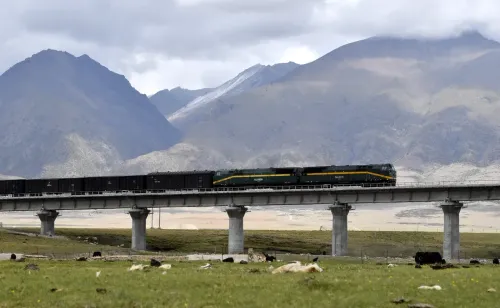
A seminar sponsored by Delhi's Institute of Chinese Studies characterised Tibet as a 'high-altitude power base' where dense solar arrays, new hydropower stations, and UHV transmission lines sit in close proximity to key logistics corridors and PLA bases. Reliable power, analysts noted, supplies the electricity required for radar systems, communications networks, drone operations, and permanent garrison facilities — assets critical to sustained high-altitude military presence.
Separately, a report by the Center for Strategic and International Studies (CSIS), based in Washington, D.C., describes Beijing's approach as a 'grey-zone infrastructure strategy' on the Tibetan Plateau — using dams, roads, rail, and digital systems to gain coercive leverage over neighbours including India and Nepal without crossing into open conflict.
Water Security and Environmental Risks
The hydropower dimension adds a separate layer of concern for downstream nations. Dams on transboundary rivers such as the Yarlung Tsangpo raise longstanding questions about water flow management and the potential use of reservoirs as coercive instruments — what critics have termed 'water bombs'. Beyond strategic risk, the industrialisation of the plateau at scale is assessed by some researchers as a factor that could alter regional climate patterns and accelerate glacial melt, with consequences for river systems that sustain hundreds of millions of people across South Asia.
What It Means for India and South Asia
The electrification of border villages, microgrids, and garrisons along sectors facing Arunachal Pradesh, Sikkim, and Ladakh enables permanent settlements, all-weather surveillance, and rapid force mobilisation, according to the analysis — even as the infrastructure carries the outward label of green development. For New Delhi, Kathmandu, Thimphu, and Dhaka, the challenge is to distinguish between genuine civilian development and infrastructure that anchors hard-power presence on the Himalayan crest line.
The Bitter Winter article argues that sustained satellite monitoring, open-source geospatial analysis, and structured dialogue on transboundary river risks will be essential if India and its South Asian neighbours are to craft a response that balances their own clean-energy ambitions with the imperatives of border security. This comes amid already-elevated India-China border tensions following the 2020 Galwan clash and subsequent partial disengagement processes that remain incomplete in several sectors.
Point of View
Shared with like-minded neighbours, that tracks the military footprint embedded in civilian infrastructure in near real time.
NationPress
30 Aug 2026
Frequently Asked Questions
How is China using Tibet's renewable energy projects for military purposes?
According to analysts and geospatial research, China's solar farms, hydropower stations, and UHV transmission lines in Tibet are positioned near PLA bases and logistics corridors, providing reliable electricity for radars, communications, drones, and garrisons. The infrastructure is outwardly labelled as civilian green development but serves military logistics in parallel.
How much renewable capacity has Tibet added in recent years?
The Takshashila Institution's Geospatial Bulletin documents additions of 700 MW in 2023, 860 MW in 2024, and an estimated 2,600 MW in 2025, the last figure driven by just two large projects. Tibet's total renewable capacity has grown by several gigawatts since 2013.
What is the 'grey-zone infrastructure strategy' described by CSIS?
The Center for Strategic and International Studies (CSIS) uses this term to describe Beijing's use of dams, roads, rail, and digital systems on the Tibetan Plateau to gain coercive leverage over neighbours like India and Nepal without resorting to open military conflict. It falls below the threshold of armed aggression while steadily shifting the strategic balance.
Why are dams on the Yarlung Tsangpo a concern for India?
The Yarlung Tsangpo flows downstream into India as the Brahmaputra, a river critical to the water security of millions in Assam and beyond. Analysts warn that Chinese control of upstream dams could be used to manipulate water flows, and the potential sudden release of large volumes has been described as a 'water bomb' risk.
Which Indian border regions are most exposed to Tibet's military infrastructure build-up?
Analysts highlight Arunachal Pradesh, Sikkim, and Ladakh as the sectors most directly facing Tibet's expanding energy and logistics infrastructure. Border electrification and microgrid installation in these areas enables permanent PLA settlements and all-weather surveillance capabilities opposite these Indian territories.