India-Uzbekistan partnership can bridge Central and South Asia: Uzbek media
Synopsis
Ahead of PM Modi's visit to Tashkent, Uzbekistan's state news agency has published a detailed assessment arguing that India and Uzbekistan are positioned to become the primary bridge between Central and South Asia — with critical minerals, the Chabahar corridor, and shared strategic autonomy as the pillars of a deepening partnership.
Key Takeaways
Uzbekistan's state news agency (UzA) says the India-Uzbekistan partnership can become a main bridge between Central and South Asia .
At least six high-level bilateral contacts have taken place between the two countries since 2017 .
Uzbekistan holds reserves of 32 types of minerals critical for the green economy transition.
India has reaffirmed investment in Chabahar port as a key node in the North-South trade corridor.
PM Modi 's upcoming visit to Tashkent is expected to consolidate agreements and set new strategic priorities.
Both nations advocate strategic autonomy and cooperation free from bloc politics, per the UzA report.
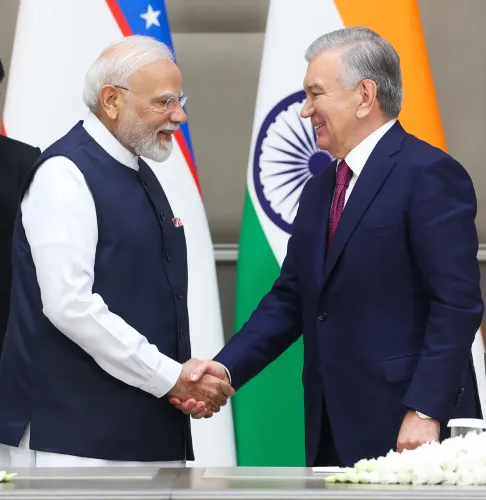
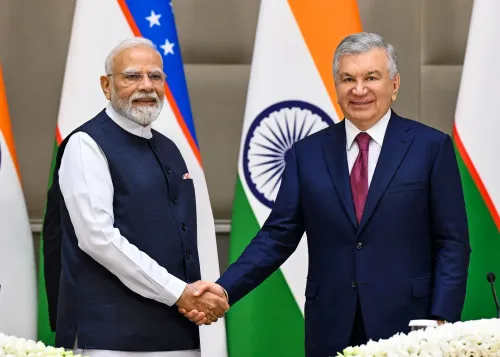
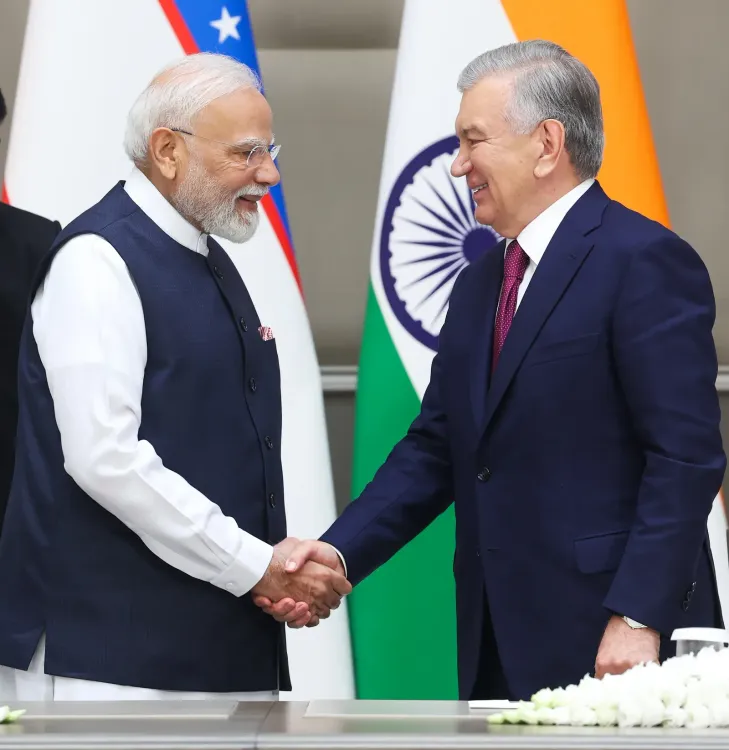
The convergence of India and Uzbekistan's strategic trajectories could make their bilateral partnership one of the principal bridges linking Central Asia and South Asia, according to a report by the Uzbekistan National News Agency (UzA) published ahead of Prime Minister Narendra Modi's upcoming visit to Tashkent.
What the Uzbek Report Says
The UzA report describes the two nations' relationship as having entered 'a period of institutional strengthening, expanded economic content, and a gradual transition toward joint value creation.' It attributes this momentum to the firm political will of both countries' leaderships, the absence of fundamental contradictions, historical closeness, and the complementarity of their economies.
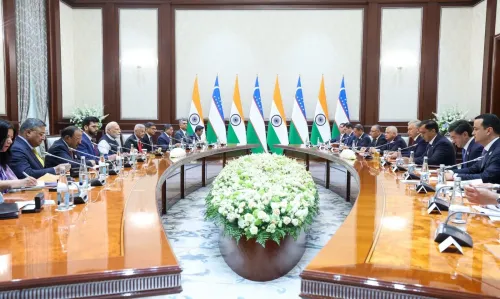
The report noted that at least six high-level bilateral contacts have taken place in both in-person and virtual formats since 2017, giving political dialogue a 'systematic trusting character.' Additional stability has come through the India–Central Asia Summit, foreign policy consultations, an intergovernmental commission, and inter-parliamentary exchanges.
Modi Visit Expected to Deepen Ties
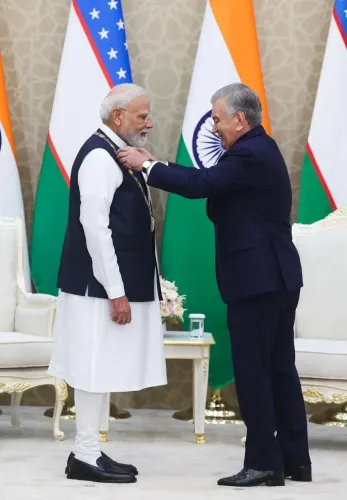
The UzA report said the upcoming visit by Prime Minister Modi 'will undoubtedly provide an additional impetus to bilateral interaction, allowing the consolidation of agreements reached and the determination of new priorities for the strategic partnership.' The visit is seen as a milestone in formalising the relationship's institutional depth.
Shared Strategic Priorities
According to the report, India and Uzbekistan share positions on strengthening the United Nations' central role, countering terrorism, stabilising Afghanistan, and shaping a multipolar world order. Both countries, the report highlighted, 'pursue a policy of strategic autonomy, advocating cooperation free from bloc thinking' — a convergence that reportedly makes their ties resilient to external pressures.
On connectivity, India has reaffirmed its commitment to the North-South trade corridor despite geopolitical turbulence in the Middle East, including continued investment in Chabahar port infrastructure, a critical link in that corridor.
Critical Minerals and Green Economy
Uzbekistan holds reserves of 32 types of minerals deemed critical for the transition to a green economy, according to the report. India's rapidly growing sectors — electronics, batteries, electric vehicles, and renewable energy — are driving demand for copper, uranium, and rare earth materials, and New Delhi is actively seeking to diversify supply sources.
The report envisions joint value chains rather than simple raw-material trade: geological exploration, processing of green metals, components for electronics and solar energy, and manufacturing of fertilisers and chemical products. 'India will gain a more stable resource base, while Uzbekistan will gain capital, technology, and steady demand,' the UzA report noted, adding that this model aligns with the core principle of what it calls the 'New Uzbekistan.'
What Comes Next
With PM Modi's visit imminent, both governments are expected to consolidate existing agreements and chart new priorities under their strategic partnership framework. The minerals and connectivity dimensions are likely to feature prominently, as both sides look to translate political goodwill into tangible economic outcomes.
Point of View
Suggesting Tashkent is signalling intent ahead of the Modi visit. The minerals dimension is the real story here: India's critical-mineral dependency is a structural vulnerability, and Uzbekistan's 32-mineral reserve base offers a diversification play that neither side has fully monetised. Whether the two can move from bilateral goodwill to actual joint processing and value-chain integration — rather than another raw-material export arrangement — will determine whether this partnership lives up to its bridge-building rhetoric.
NationPress
30 Aug 2026
Frequently Asked Questions
What did Uzbekistan's state media say about India-Uzbekistan ties?
The Uzbekistan National News Agency (UzA) published a report stating that the convergence of India and Uzbekistan's strategic trajectories can make their partnership one of the main bridges between Central and South Asia. The report cited shared political will, complementary economies, and the absence of fundamental contradictions as key drivers.
Why is PM Modi visiting Tashkent?
PM Modi's visit to Tashkent is aimed at consolidating existing bilateral agreements and determining new priorities for the India-Uzbekistan strategic partnership. According to the UzA report, the visit is expected to give 'additional impetus' to bilateral interaction.
What role does Chabahar port play in India-Uzbekistan relations?
Chabahar port in Iran is a critical link in the North-South trade corridor that India is investing in to connect South Asia with Central Asia and beyond. India has reaffirmed its commitment to developing Chabahar's infrastructure despite ongoing geopolitical turbulence in the Middle East.
What critical minerals does Uzbekistan hold that interest India?
Uzbekistan holds reserves of 32 types of minerals critical for the green economy, including copper, uranium, and rare earth materials. India's growing electronics, battery, electric vehicle, and renewable energy sectors are driving demand for these resources, making Uzbekistan a strategic supply partner.
How many high-level meetings have India and Uzbekistan held since 2017?
At least six high-level bilateral contacts have taken place between India and Uzbekistan in both in-person and virtual formats since 2017, according to the UzA report. These have been supplemented by the India-Central Asia Summit, intergovernmental commissions, and inter-parliamentary exchanges.